

Sheffield snooker players face match-fixing investigation
As the Snooker World Championship begins its final week at the Crucible, seven Sheffield-based players are being investigated for match-fixing.
2021 Masters champion Yan Bingtao and world no. 9 Zhao Xintong train at the Victoria's Snooker Academy in the city, and are both implicated in the investigation.
Both players would be making a bid for snooker's biggest prize this week, but are suspended pending the conclusion of a private hearing.
Five more who train together at Sheffield's Ding Junhui Snooker Academy are also involved in the hearings which could result in lengthy bans.
The Academy has created a strong community of Chinese players who socialise together, and play each other in the run up to tournaments to build match fitness.
China's new generation of stars are taking snooker by storm, but the investigation could damage their reputation. The most serious offences could be punished by a ban of well over a decade, but they could get a reduced penalty if they can prove they were coerced.
Speaking to BBC podcast Snookered, promoter and manager Barry Hearn said: "We will go through the proper systems, beautifully executed, both sides have a chance to put their case and the evidence will be decided by an independent arbitrator. That is how a sport should be run.
"If the case deserves suspensions, long suspensions, that sends the message to anyone who plays this game: do not run foul."
Several players including Neil Robertson and Judd Trump have suggested that coercion could have been involved. The investigation is expected to establish whether there was collusion between different players.
The full charges are as follows:
Zhao Xintong: being concerned in fixing matches and betting on snooker.
Yan Bingtao: fixing matches and betting on snooker.
Lu Ning and Li Hang: fixing a match and being concerned in fixing matches and approaching a player to fix a match seeking to obstruct the investigation and betting on snooker matches.
Zhao Jianbo, Bai Langning and Chang Bingyu: match-fixing on the World Snooker Tour
One of China's newest talents Si Jiahui has booked his place in the World Championship quarter-finals with a 13-6 victory over Robert Milkins. As the last remaining Chinese player, he will hope to make his success the bigger story.
Doncaster and Barnsley charities to receive Government funding to tackle loneliness
Doncaster and Barnsley charities have been chosen to receive thousands in Government funding to tackle loneliness through community engagement.
The 'Know Your Neighbourhood Fund' (KYN) will run until March 2025 and will help local residents and their communities in 27 disadvantaged areas across England.
Bob Dowling, 66, the development manager at Opencast C.I.C, a charity working with different demographic and age groups, and one of the beneficiaries of this fund, is particularly worried about how older people often tend to get overlooked by society.
He said: "Once we're nearly dead, we're not important anymore because we're not economically important anymore, and unfortunately we live in a world where that's the prime concern."
Having been allocated nearly £45,000, It will use KYN to help people discover all of the resources available to them through a digital directory.
Rosemary Macdonald, the CEO of UK Community Foundations, believes the KYN will shed a light on the issues impacting volunteering and social inclusion, particularly in vulnerable regions.
She said: "Loneliness can impact anyone at any time in any community, and the work of voluntary organisations to reduce isolation and loneliness has been in higher demand since the pandemic."
The Doncaster Ethnic Minority Regeneration Partnership (DEMRP), a charity fostering social and economic regeneration among Black Asian and Minority Ethnic (BAME) community groups, is another beneficiary of this fund.
The DEMRP will put its share of the funding towards the delivery of digital inclusion services and well-being sessions reaching nearly 150 hard-to-reach individuals.
Peter Singh, the Chief Executive at DEMRP, said: "Not having English as your first language, cultural barriers and lack of community support doubly hinders integration and communication which results in deep-set social isolation, loneliness, and frustration."
The impacts of the pandemic have made loneliness an increasingly prevalent aspect of people's mental health, with data from the Office for National Statistics revealing that between October 2020 and February 2021, the percentage of the UK's adult population reporting high rates of loneliness grew from five to seven per cent.
Sheffield Wednesday secure win over Exeter City thanks to second half goals
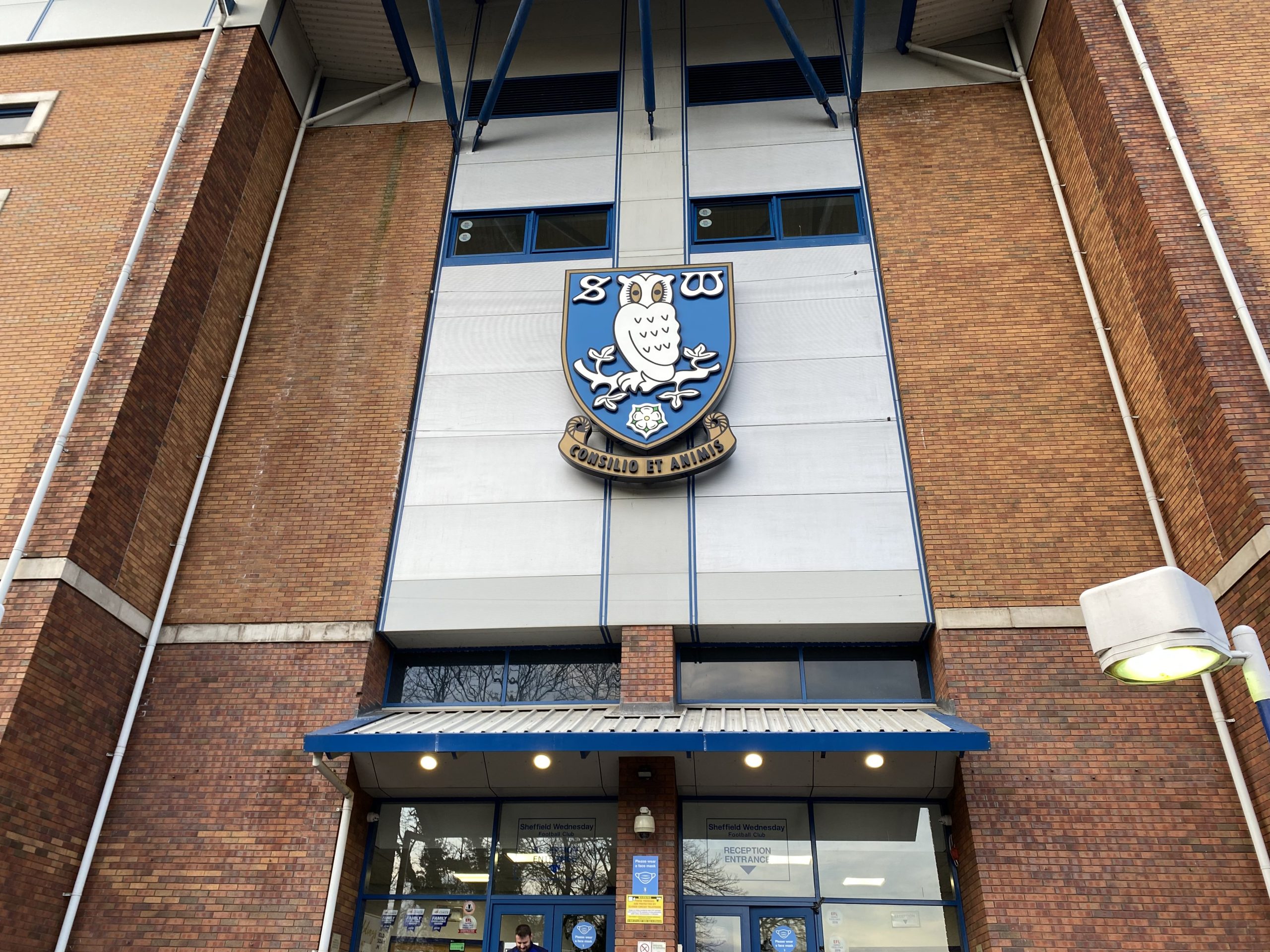
Sheffield Wednesday faced off against Exeter City in a thrilling match that secured the Owls three points at Hillsborough Stadium on Saturday.
Exeter City controlled possession early on and the first half saw referee Declan Bourne replaced by Andy Haines after an injury forced him off the pitch.
The first goal of the match came in the 49th minute by Exeter City’s Josh Key, assisted by Jake Caprice’s cross.
Lee Gregory then equalised for the home side when the striker put Barry Bannan’s free-kick in the bottom corner in the 58th minute.
The Owls moved into the lead after 74 minutes when Marvin Johnson's low drive was turned in from close range by striker Callum Paterson.
Exeter City tried to find an equaliser in the remaining minutes of the game, along with six minutes of extra time, with a free-kick that Sheffield Wednesday's keeper Cameron Dawson held onto.
The match ultimately ended with victory for Sheffield Wednesday, much to the delight of the home crowd.
The win secured the League One team three points from the game and 90 points overall - for only the second time in their history.
However, competitors Plymouth Argyle and Ipswich Town have performed well this season, throwing the promotion into suspense.
In an interview with BBC Radio Sheffield, Gregory said: “Expectations of Sheffield Wednesday fans is that you win games.
"We've got every chance [to get promoted]. This is football. It never goes easy, never goes the way you want it to. In the past there have been bigger gaps and they've gone up, so why not?"

Yorkshire MP Miriam Cates calls for review of RSHE after “inappropriate” lessons and secrecy
Penistone and Stocksbridge MP Miriam Cates called for an inquiry into RSHE programmes in the UK during Prime Minister's Questions in March.
What is RSHE?
Relationships, sex and health education (RSHE) has been a compulsory part of the curriculum for primary school pupils since September 2020.
Topics covered in primary school RSHE include teaching children how to communicate their own boundaries and recognise the boundaries of others, staying safe online, and the differences between appropriate and inappropriate or unsafe contact. Health education topics include puberty and menstruation.
At a secondary school level the curriculum covers content on a wider range of key topics including consent, sexual exploitation, online abuse, grooming, coercion, harassment, rape, domestic abuse, forced marriage, honour-based violence and FGM.
Government guidance states parents have the right to request that their child be withdrawn from some, or all, sex education delivered in schools as part of the curriculum.
An inquiry is requested
On 8 March, Miriam Cates MP stood before the Prime Minister and requested an independent inquiry into the country's “inappropriate” sex education curriculum.
The Penistone and Stocksbridge MP said: "Graphic lessons on oral sex, how to choke your partner safely and 72 genders—this is what passes for relationships and sex education in British schools.
“Across the country, children are being subjected to lessons that are age-inappropriate, extreme, sexualising and inaccurate, often using resources from unregulated organisations that are actively campaigning to undermine parents. This is not a victory for equality; it is a catastrophe for childhood.
“Will my right hon. Friend honour his commitment to end inappropriate sex education by commissioning an independent inquiry into the nature and extent of this safeguarding scandal?"
In response, Prime Minister Rishi Sunak, said: "I share my hon. Friend’s concerns and thank her for her work in this area. That is why I have asked the Department for Education to ensure that schools are not teaching inappropriate or contested content in relationships, sex and health education.
“Our priority should always be the safety and wellbeing of children. Schools should also make curriculum content and materials available to parents. As a result of all this, we are bringing forward a review of RSHE statutory guidance and will start our consultation as soon as possible."
The Department for Education has announced that it will put together an expert panel that will inform the review and will advise on how to put in place protection from pupils being introduced to things that they are too young to understand properly. The panel will also consider how age ratings can be introduced for different parts of the curriculum.
Problems with the sex education curriculum
According to the dossier of evidence commissioned by Miriam Cates, calls for change are largely related to discussions of gender and sexual identity, masturbation and other sexual acts.
One issue that has seemingly resulted in inappropriate topics being discussed is the use of third party educators for RSHE resources.
Tanya Carter, Spokesperson for Safe Schools Alliance UK, said: “Quite a lot of public money had been allocated to various groups to produce material to be used in schools but there doesn’t seem to have been any quality control at all over what’s been produced. A lot of the materials simply aren’t suitable and some of them are actually going to harm them.
“We’d like to see some of the people who have been involved in writing these materials and what their motivations are. Our view would ultimately be that this all needs to be done for the benefit of the children. We do question the motivations of the people writing the material because it’s not helping children navigate porn and other things they may accidently encounter, and it sometimes promotes extreme sexual practices.”
In the evidence dossier, examples of these resources include: children from ages twelve to sixteen drawing sexually explicit images and asking students to work in pairs to list ways adults can show intimacy.
Similarly, Miriam Cates’ evidence document refers to the reluctance of resource providers to share the lessons with parents.
The Telegraph reported: “In correspondence seen by The Telegraph, Jigsaw Education, one sex education materials provider, warned a school that it may take legal action if the school discloses any of its materials or otherwise puts them in the public domain “by means of allowing formal inspection”
The RSHE resource provider issued a statement on their website about the review.
The statement reads: “Jigsaw welcomes the RSHE review as an opportunity to further support schools to provide the highest quality age-appropriate learning to children and young people.”

Struggling Rovers extend bad run of form
Things went from bad to worse for Doncaster Rovers as off-field pressures led to on-field problems.
Newport County came back from a goal behind to win a comfortable 3-1 over Doncaster at Keepmoat Stadium.
Kyle Hurst opened the scoring in the first half with a deflected 25-yard shot in the 12th minute.
After the break the visitors dominated with three goals in 15 minutes, starting with Priestley Farquharson’s 64th minute header from a Mickey Demetriou long throw.
Seven minutes later, a quick break sent Omar Bogle racing down the left flank, cutting back to Aaron Wildig who converted from just outside the box.
Another Demetriou long throw was headed in by Cameron Norman in the 79th minute, putting the game out of Doncaster’s reach.
Speaking after the game, Hurst said: “It was a tough one to take for the team. I felt like we were on top and then two long throw-ins, set plays, and it changed the game.
“I don’t think we went under - we kept trying hard to do what we do but it’s very disappointing for us.”
The loss is Doncaster’s seventh in nine games. Recent form and fan frustration led to owner Terry Bramall announcing a “significant financial injection” into first team resources for next season earlier this month.
Hurst said there needs to be a reset over the summer, but the results in the next two games will help their momentum next season.
“We’re not where we want to be,” he said. “We won’t go down but obviously we won’t go up. If we can get wins in these next two games then that’ll take us into next season with good momentum.”
“I’m not convinced that bird flu has gone, or will ever go” – Sheffield farm conflicted over lifting of bird flu restrictions
Staff at a Sheffield farm have voiced their concerns about the risk of rising infections following the recent lift on bird flu restrictions.
Heeley City Farm has put their ducks and turkeys back outside after mandatory housing restrictions requiring poultry and captive birds to be be kept enclosed were lifted on 18 April.
The restrictions were put into place to stop the spread of bird flu.
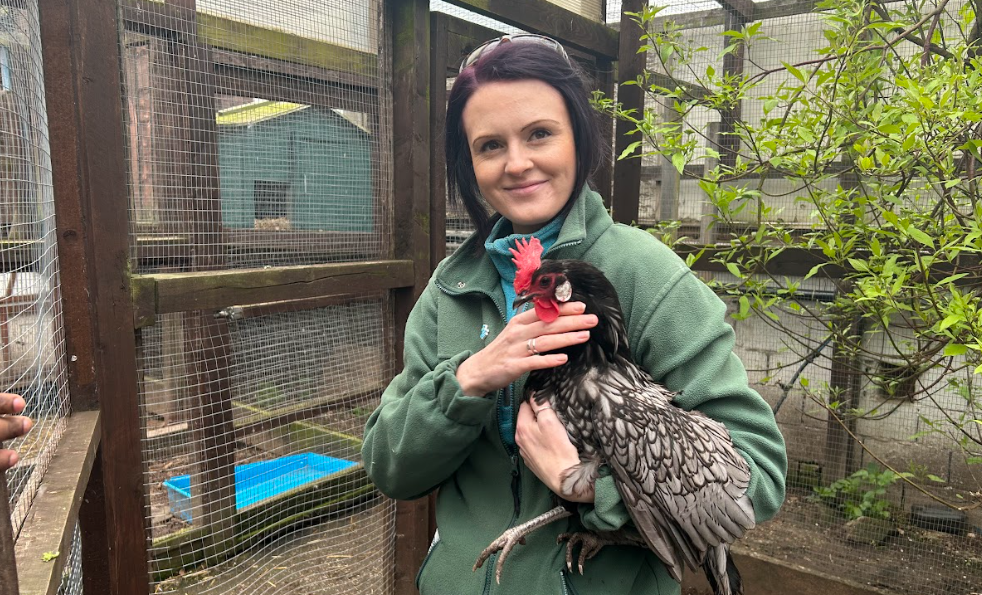
Rachel Gilbert, Weekend Youth Manager and Tutor at the farm said the birds look "very happy" to be back outside but, she is "not convinced that bird flu has gone, or will ever go."
Birds and chickens had to be kept undercover and anyone going in to the bird area had to go through a footbath to make sure they were bio-secure, according to strict guidance set out by the Department for Environment, Food & Rural Affairs (DEFR).
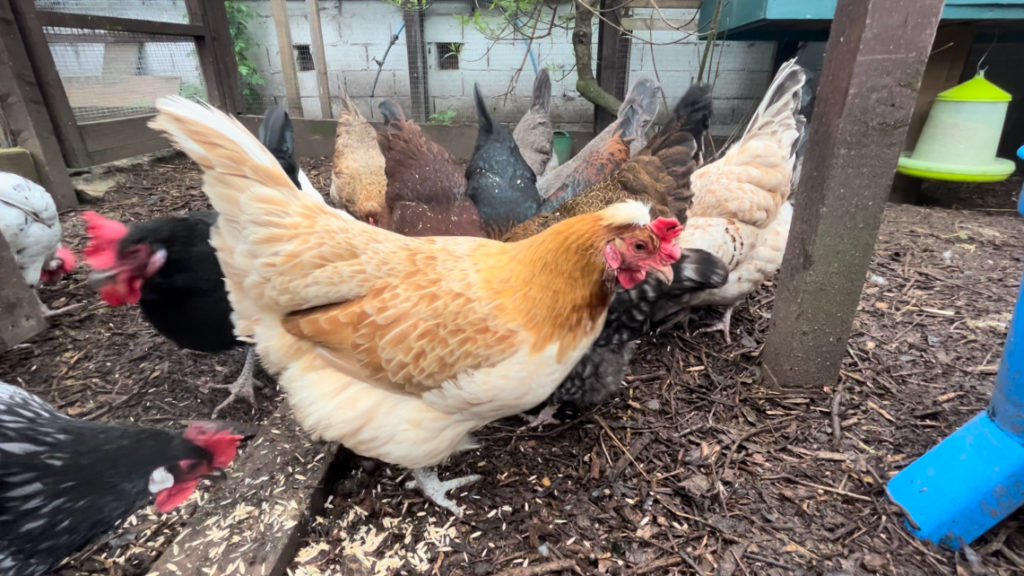
Ms Gilbert said the bird flu restrictions have reduced the farms capacity to breed, which has resulted in an overall loss of business.
She said: "Our chickens aren't as healthy as they could be. We try to keep them as enriched as possible but it's just not the same really.
"It's sad for visitors when they're (the birds) in the Avery as they can't get that interaction which is so valuable."
Heeley City Farm anticipates bird flu to become a yearly problem and hopes to re-develop their Avery so it is no longer a temporary measure.
The proposal comes as the farm faced many difficulties in keeping their birds and poultry undercover during the winter, feeling there was a significant drop in welfare standards.

Harsh weather conditions such as snow and heavy rain meant tarps and netting often collapsed.
The farm also had to find a way to "out-smart" pigeons, who can easily access the farm due to their city-centre location, and pose a significant risk of infection from aviation flu.
However, the charity is struggling with financing the re-development, meaning they may continue to struggle during future outbreaks.
Ms Gilbert explains the farm has a new board of directors, who are looking at new ways to raise money.
She said: "I know it's a really hard time for people but we do have an online wish list which saves us having to expend. The more people can donate the better".
To help out Heeley City Farm click here.

Manchester City knock Sheffield United out of the FA Cup in stunning hat-trick
Manchester City beat the Blades 3-0 on Saturday as Riyad Mahrez scored the first hat-trick in an FA Cup Semi-final since 1958.
Although a tough defeat, The Blades fought bravely with a missed shot early in the game by Iliman Ndiaye off a corner which was saved by Stefan Ortega.
However, once Mahrez scored his first goal from the spot two minutes before half-time, the difference of quality in the two teams quickly became clear.
Paul Heckingbottom, manager of Sheffield United after the match said: “We started the game very well and had the two best moments early on.
“We knew those moments would be few and far between and we know we would have to play with a lot of discipline with suffering moments without the ball but the frustration is we gave City the first few goals and then it’s a mountain to climb.”
The second goal came after Daniel Jebbison fouled Bernardo Silva with the Algerian taking full use of a wide-open Sheffield United defence to score just after the hour.
Mahrez achieved the third and final goal just after 66 minutes, securing the first FA Cup hat-trick since Alex Dawsdon did for Manchester United in 1958 when Jack Grealish crossed past United’s Wes Foderingham allowing Mahrez to strike it past The Blades’ defence and goalkeeper, Adam Davies.
In the post-match conference, Pep Guardiola, manager of Manchester City, said: “It’s really good to be in the final, and I’m so satisfied for Riyad because he loves to play football and he has given many things in these years and hopefully there will be more in the future.”
City will now play rivals Manchester United in the FA Cup Final after the The Red Devils beat Brighton and Hove FC on penalties 6-7 in a tense game.
The winning penalty was scored by Victor Lindelof who put it past Brighton goalkeeper Robert Sanchez putting in the top of the net.
Erik ten Hag, manager of Manchester United, said: “We will do everything to give them the second trophy, everything what I have, everything the team have, everything the staff have, we will give everything to get that done.”

Sheffield Sharks loss against Bristol Flyers in Delpeche Derby
South Yorkshire’s premiere basketball team centre Marcus Delpeche played against his twin brother Malcom Delpeche in the twin's derby.
Sheffield Sharks took an unfortunate defeat last Sunday at Ponds Forge, with a 65-73 loss against the Bristol Flyers.
The Sharks finished 7th in the regular British Basketball League season, with Bristol Flyers taking the win and securing their place in 3rd.
Marcus said: “I didn’t get to play much in the fourth quarter. I was trying to support the team, but overall I was happy.
“I missed a couple of free throws that I was annoyed about, but overall it was ok."
When asked about the upcoming playoffs, he said he felt good about future games, but the loss against the Flyers was a reality check:
“It shows we have a lot of holes that we need to work on to bounce back.”
Bennett Koch scored early in the third for Sheffield, but Bristol held their opponents scoreless for four minutes, creating a 14-point advantage.
Bristol's Malcolm Delpeche was able to create push back opportunities and create a 10-point gap at the end of the first.
He said: “We wanted to finish the season strong and have momentum going into the playoffs.
“It’s nice to end the season with three wins in a row, and we have finally found our stride holding the Sharks down to a low margin in the first quarter."
When asked about the win against his brother, he said it was tough but someone had to win:
“Best of luck to the Sharks in the playoffs. We may end up playing them again, but for now it is what it is.”
The home leg will take place on Friday 28 April, with the Sharks’ away game at Leicester’s Morningside Arena on Sunday 30 April.
Sheffield school introduces road closures to tackle dangerous speeding
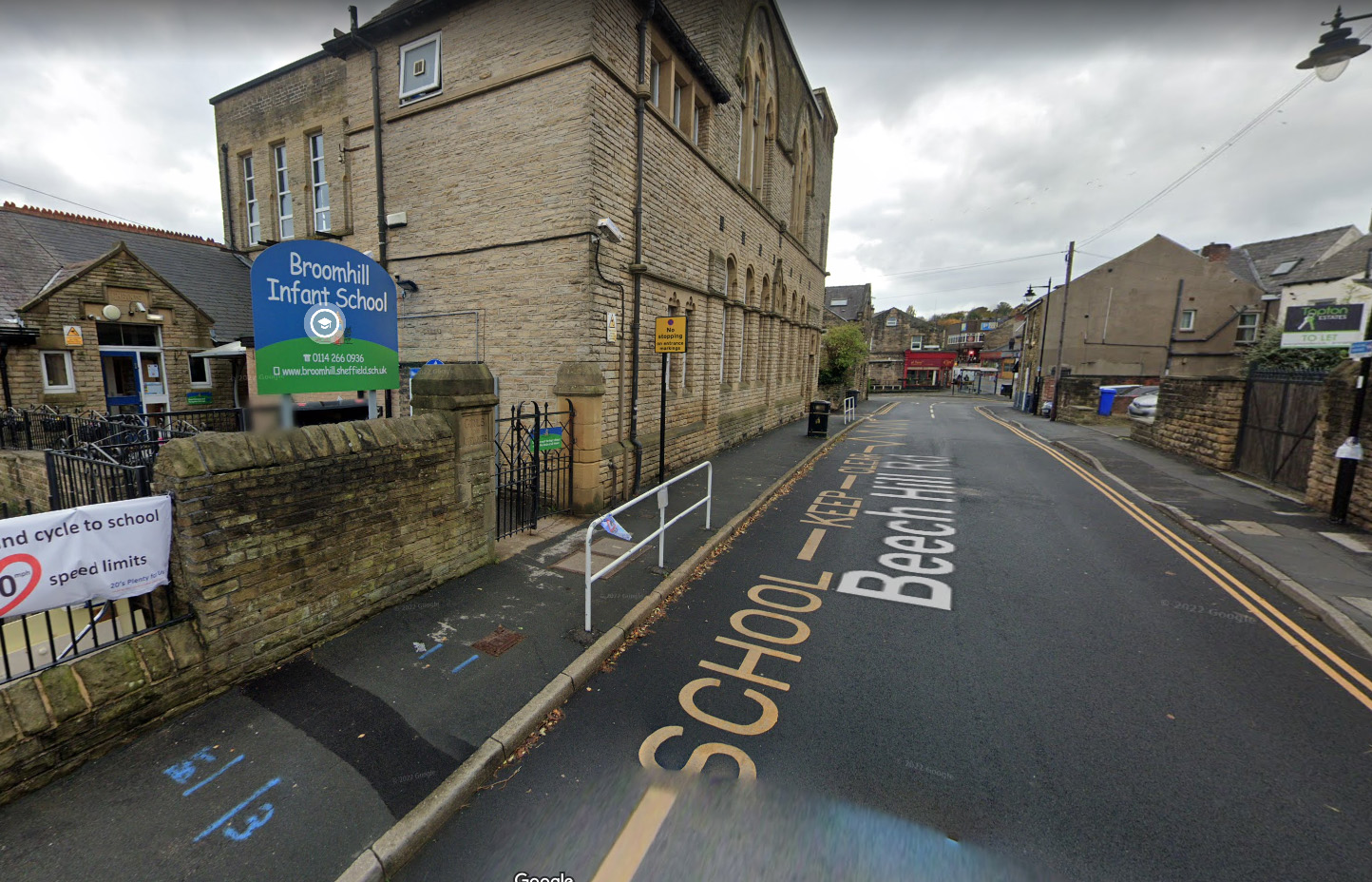
A Sheffield infant school is fighting back against speeding cars putting children at risk of being run over.
Broomhill Infant School is now trialling a scheme of closing the road outside the school during pick up and drop off times.
Headteacher Jane Barnes said the scheme is designed to tackle high levels of pollution and traffic that are putting children at risk.
She added: "We have had incidents where parents have said they were almost run over crossing the road to come into school.
“More often than not it is cars passing through driving faster than the speed limit.”
The scheme, which is run by Sheffield City Council, has already been trialled at a number of schools across the city. The roads will be closed for one hour in the morning and one hour in the afternoon from Monday to Friday during term time only. A permit granting access to these streets will be granted to residents.
Ms Barnes said prohibited parking spots outside the school, which existed before the scheme was introduced, did not provide enough protection for pupils.
“I can’t tell you the amount of times I have asked cars to move from the prohibited spot outside the school.
“It means our children can’t see when they cross the road to come into school and it is still happening. It is putting our children at risk every single day," she added.
Ms Barnes said pollution is also a concern, with parents and children coming into school wearing face masks for protection..
Claire McDonald from the charity Mums for Lungs said it is children who are most affected by air pollution.
“At the moment we know that air pollution affects children more than anyone else," she said. “Children breathe in more deeply and frequently than grown ups, and when they take polluted air deep into their lungs it stunts their lung growth.”
Poor air quality is the largest environmental risk to public health in the UK, according to Public Health England.
It is estimated that long-term man-made air pollution in the UK has an effect equivalent to 28,000 to 36,000 deaths a year.

Hundreds of Sheffield parents protest against King Edward VII School being forced to become academy
Parents, teachers and students turned out in numbers to Saturday’s City Hall protests against the proposed academisation of King Edward VII School (KES).
The secondary school, located in the Broomhall and Crosspool area of the city was handed a compulsory academisation order by the Department of Education following a January Ofsted inspection which downgraded the school from Good to Inadequate.
Protesters claimed the decision to change the school was forced through too quickly and presents an unnecessary upheaval to what many described as a successful school.
Emma Wilkinson, who’s daughter attends the school, said: “I don’t think the school is failing. I think that inadequate judgement is wrong, it doesn’t reflect the school that we know.”
The Ofsted report from a two day visit to the school in September 2022 judged the school Good in three of its categories, but requiring improvement for its quality of education and Inadequate in terms of safeguarding.
The report means KES will now go into the process of being overtaken by a Multi Academy Trust.
Brigantia Learning Trust has been included in the agenda for the April 25 Department for Education’s Yorkshire and the Humber advisory board meeting.
Many of the protesters strongly disagreed with Brigantia’s proposed takeover, with signs on display reading “No to Brigantia” and “Hands Off KES”.
Toby Mallinson, joint divisional secretary for the Sheffield National Union of Teachers, claimed Brigantia is not a suitable candidate for KES.
He said: “They’ve got two secondary school’s but they’re a very different demographic, and neither of them got sixth forms and they’ve got five schools altogether, which is very small.
“Two of those are in requires improvements themselves, so they’ve got their own problems to sort out. They have not got the capacity and should not be put in charge of one of the most iconic schools in the city.”
Kes has over 1800 students, and would increase Brigantia Learning Trust’s current student count by over a third.
In a survey issued to parents asking which Trust they would like to see takeover the school, 86 percent of the 400 parents said they would rather see the process stopped outright.
A spokesperson for Brigantia trust said: “The Department for Education has informed Brigantia Learning Trust that a discussion is due to take place with the Advisory Board and Regional Director at their forthcoming meeting in April regarding King Edward VII School. Brigantia Learning Trust will await further communication from the Yorkshire & Humber Regions’ Group regarding their decision.”
Many parents were calling for a new Ofsted report to be issued and for the current plans to be put on hold.
Ms Wilkinson said: “I think we could just be throwing the baby out with the bathwater. It’s a big overreaction to a school that doesn’t need to be faced with that.”
Protesters will present a petition with over 2500 signatures to the Department of Education today (Monday 24) asking for the proposed academisation to be scrapped.

Cabinet Office investigate after ‘life-saving’ government alert not received by many across the UK
The Cabinet Office has said it will launch a review into the government emergency alert test after it didn't go to plan yesterday afternoon.
The alarm was set to go off at 3pm as the biggest public communication exercise ever completed in the UK. The alert aims to warn the public if there is a danger to life nearby and appears as a notification on mobiles and tablets with advice on how to stay safe.
Despite the alarm being described as potentially 'life-saving' by Deputy Prime Minister Oliver Dowden, many phone users across the country reported that their alert came earlier than the predicted 3pm, whilst others got the alert more than 10 minutes after the time slot.
Those on the Three mobile network reportedly didn't receive any alert at all.
A spokesperson for Three said: "We're aware that a number of customers have not received the test alert. We're working with the government to understand why and ensure it doesn't happen when the system is in use."
Since the alert was tested yesterday afternoon, some people have reported that they are now experiencing issues with making and receiving phone calls.
The Cabinet Office has said that engineers had not spotted a trend of mobile phones failing to work after the test, but were in the early stages of reviewing the results.
A UK Government spokesperson said: "We have effectively completed the test of the UK-wide Emergency Alerts system, the biggest public communications exercise of its kind ever done.
"We're working with mobile network operators to review the outcome and any lessons learned."
The problems come after the alert system had previously come under fire for the potential risks it could pose to those facing domestic abuse.
Many charities, including Women's Aid, had warned the government that the alarm could alert abusers to secret second phones that women might be hiding. They advised women to switch off the notification in their phone settings to avoid the risk of it being found.
Women's Aid shared video guidance on social media and said: "The emergency alerts sound will take place this Sunday at 3pm, even if your phone is on silent. If your phone is switched off it will sound when switched back on."
To find out more about the government alerts visit the Gov website here.
To find advice or seek support on domestic abuse visit the Women's Aid website here.
South Yorkshire Mayor “very sorry” to see Labour MP Diane Abbott’s comments suggesting Jewish people do not face racism
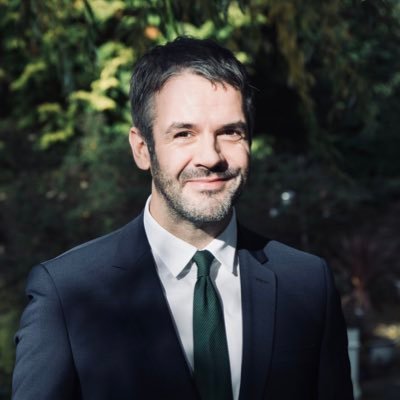
South Yorkshire Mayor Oliver Coppard has responded to the now suspended Labour MP Diane Abbott after she suggested Jewish, Irish and Traveller people were not subject to racism “all their lives”.
Mr Coppard, a Jewish man and member of the Labour and Co-Operative party, said that he was very sorry to see the comments as the majority of his grandparents’ immediate family were murdered as a result of their faith.
“Different groups may experience racism differently. That does not diminish its effect, or our responsibility to name and fight it,” he said in a tweet on Sunday 23 April.
Abbott’s remarks were published in a letter to the Observer on Sunday and she has since apologised.
“I wish to wholly and unreservedly withdraw my written remarks and disassociate myself from them,” she said in a statement. “The errors arose in an initial draft being sent. But there is no excuse and I wish to apologise for any anguish caused.
“Racism takes many forms and it is completely undeniable that Jewish people have suffered its monstrous effects, as have Irish people, Travellers and many others.
“Once again, I would like to apologise publicly for the remarks and any distress caused as a result of them.”
In a previous interview to the Huffington Post in 2018, Mr Coppard discussed the state of the Labour Party in the year the Board of Deputies of British Jews and the Jewish Leadership Council issued an open letter stating that the then leader of the Labour party Jeremy Corbyn was “repeatedly found alongside people with blatantly anti-Semitic views.”
The South Yorkshire Mayor said: “Until now I have always believed that the Labour Party is the best defence against the type of hatred that we saw in 1930s Nazi Germany, and the bigotry now growing again in other parts of the world.
“The Labour Party exists to represent the interests of the many, but that cannot mean silencing or disparaging the voices of the few, and the Jewish community are few.”
Labour officials will decide whether Diane Abbott can stand again at the next election after she lost the whip, pending investigation, for her comments.
Mr Coppard has previously warned of Jewish struggles being downplayed: “When the concerns of mainstream Jewish people and groups are dismissed as overblown smears, then our commitment to antisemitism will rightly remain in question.”