
Darfield ward results coming up
Darfield candidates are next to be called.
The incumbent councillor is Kevin Osborne who said earlier today that he was 'hopeful' to retain his seat.
Richmond goes to Labour
And another Labour hold in Richmond with David Charles Barker retaining his seat.
Reform got 502 votes in the ward and the Tories got 401 but it was a resounding Labour victory at 1728 votes.
Labour takes Burngreave
With 1078 votes it's a Labour hold in Sheffield's Burngreave with Safiya Saeed keeping her seat.
Monk Bretton announcement to come shortly
We have our first result coming up here shortly in Barnsley.
The Returning Officer has just called for the Monk Bretton candidates to come forward for the announcement.
More to come.

University attendance monitoring apps spark controversy amid surveillance and deportation fears
Concerns are growing across UK university campuses that mobile phone apps used to record attendance could be used in surveillance and to potentially even wrongfully deport international students.
Since Covid, universities have increasingly adopted mobile phone software that students must download, allow to track their location, and use to mark their own attendance by entering a one-time code when they arrive at class.
One of the main reasons that universities introduce these digital check-in apps is to prove to the Home Office that international students are at university, and to report people to immigration authorities if they are not.
Some students and staff at universities that have adopted these apps are worried that they could put international students at risk of wrongful deportation.
Dr Lucy Mayblin, a political sociologist at the University of Sheffield and expert on UK migration, said: “International students are in an Orwellian situation. The idea that these apps are impervious to human flaws is a complete myth. The apps are just a faceless computer. Students are getting trapped in the system which doesn’t care and is oriented to deporting them.”
Student deportations based on bad data have happened before. After a BBC Panorama documentary in 2014 which revealed cheating by some international students in English language tests, thousands of them were wrongfully accused and forced to leave the country. There are fears it could happen again.
“The stakes are really high for international students,” said Dr Mayblin.
The pressure is also intense on universities to provide data to the Home Office, because they risk losing their visa license to sponsor international students if they fail to keep up with Home Office requirements. The consequences of losing sponsorship status would be dire for universities, who are financially dependent on international tuition to balance the books.
The University of Sheffield is one of the many schools that have started using an attendance app to streamline their reporting to the Home Office.
Andy Winter, Director of Student Support Services at the University of Sheffield, said: “We launched a digital check-in tool to make recording student attendance faster, easier and more consistent across the University.”
Universities say that these apps also make it easier to identify students who may be struggling with their coursework and might need extra support.
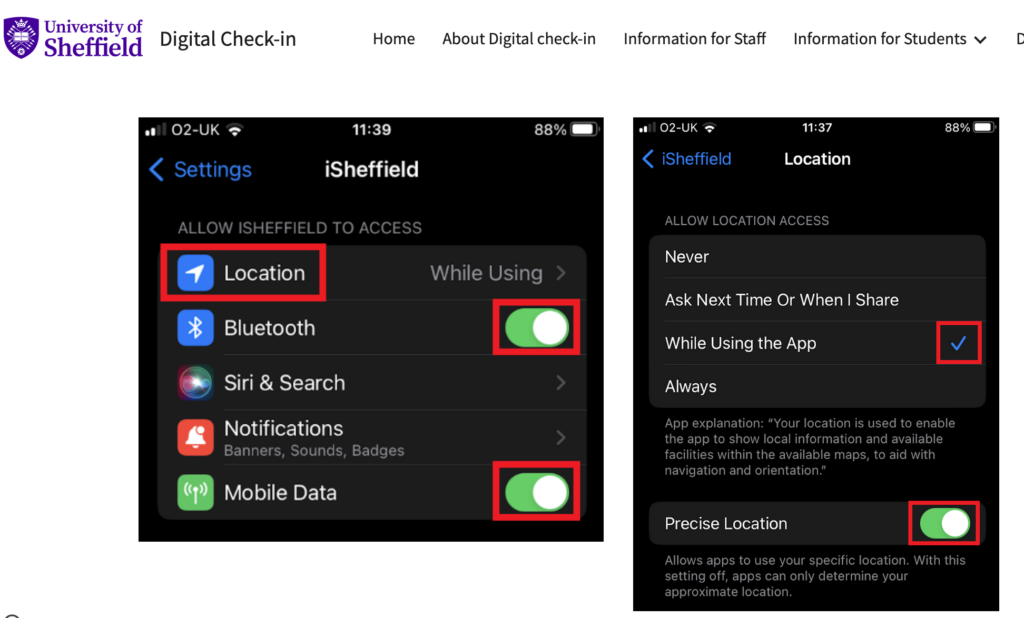
In January, the university started requiring both UK and international students to check-in to class on iSheffield, an app which uses software licensed from Israeli company Ex Libris.
If location tracking on students' phones is set to 'always', Ex Libris is able record and store data on the whereabouts of them everywhere they go. Ex Libris operates attendance apps for at least 11 UK universities, and is only one of several companies providing similar services across the country.
For some international students, the new app is making them feel even less welcome in the country than they already do.
“I don’t feel like a human being, I feel like a number. Why can I be tracked 24/7 by my university?” said Jonas, an international student at the University of Sheffield. Jonas, who is gay and from the Middle East, asked to use a pseudonym for protection from anti-LGBT discrimination in his home country.
He said: “The fact that my university, who is supposed to help students find their voices, is instead tracking us… That says a lot.”
Student activists at the University of Bristol and Goldsmiths, University of London, have recently staged boycotts against the check-in apps at their schools. “The controlling and monitoring of our locations is fundamentally an affront to our freedom of movement as well as a threat to our privacy,” said Student Action Bristol.
The University of Sheffield has told staff that it will not use the geolocation data for anything other than check-in verification. Rachel Scheer, a spokesperson for Clarivate, the parent company of Ex Libris, said: "All Clarivate products operate strict data security protocols and the data within our apps is only available to the university or institution who licensed the app.”
Some staff, however, continue to question if this is the case for international students. Dr Annapurna Menon, an associate lecturer in Politics and International Relations, said: “We don’t want to be complicit in deporting our own students. We haven’t gotten any assurance from the university that if the Home Office demands specific location data, will the university refuse? We are educators, we are not the police.”
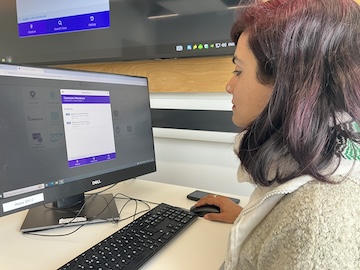
A wide variety of technical issues are also causing distress for international students struggling to get their attendance recorded accurately. Like many students at the university, Jonas regularly struggles with technical problems: “What if my phone is dead and I turned up to lecture? Multiple times I would be in a building with no service and I wouldn’t be able to check in.
“The reports that we’ve gotten from students is that the app is really fallible,” said Colombian international student Maria Jose Lourido, education officer at the University of Sheffield Students Union.
“A lot of students say that lecturers are not putting up the attendance codes, that the app is not properly tracking them when they’re in the room, that the codes are not working, that the app is slow. The university cannot come in and make sure the internet across campus is excellent, so where the internet is not strong, it will fail.”
Mr Winter said the university is attempting to resolve the issues: “The option to be checked-in by a lecturer also remains for anyone who experiences any difficulties or cannot access the app.”
Ms Jose Lourido says that isn’t a solution: “When the university tells international students that they have to register their attendance or they’ll have immigration problems, the students have to spend 15 minutes, when they have class, saying to the lecturer 'please, I’m trying to log on but it’s not working’.”
Despite the issues with the attendance taking app, teachers and students interviewed for this article all agreed that some form of attendance taking is a good thing.
Imad Tak, an international master’s student studying data analytics, sees benefits to the app: “People are forced to come to the classes, and it’s good to have students in lectures.”
Many suggested alternative ways to take attendance. Most of the people interviewed for this article prefer a system where students would scan their ID cards at card readers installed in classrooms, which would reduce technical issues and prevent universities from giving location data to outside companies. “We have university ID cards – why are we not using ID cards when we already have them?” said Ms Jose Lourido.
Dr Menon, who teaches classes in the politics department said: “We already were able to catch if students were falling through the cracks with our earlier attendance system when teachers recorded attendance manually. We could go back to that.”
The Home Office’s student visa sponsorship guidelines do not actually require universities to report attendance, only to prove that they have a “a single academic engagement policy that applies consistently” to all students. This could include data showing any combination of proof that students are submitting coursework, doing research or laboratory work, and attending classes.
Mr Tak suggested a big rethink for universities trying to maintain their visa sponsorship status: “Rather than focusing on student attendance, universities could focus on our grades.”
Labour to hold Mosborough, says source
Labour source says Tony Downing has kept his seat in Mosborough, a ward the party was very anxious about losing, which was very closely contested last time and they were worried the area would swing to the Liberal Democrats.
National snapshot
As we await first result from Sheffield and Barnsley, here's a quick look at the national picture.
38 out of 107 councils have been declared so far.
- Conservative: 125 seats, -142
- Labour: 351 seats, +65
- Liberal Democrats: 127 seats, +21
- Green: 28 seats, +15
- Independents: 67 seats, +41

Female footballers risking injury due to inadequate footwear
By James Harrop & Jack Roberts
A lack of female-specific football boots are forcing players to wear footwear designed for men and children, putting them at increased risk of serious injury.
Research has shown women on the pitch are between two to six times more likely to suffer ACL injures than male players and over 80 per cent of female footballers suffer discomfort on a regular basis, according to a study conducted for the European Club Association.
Ellie Doyle, who plays forward for Tranmere Rovers Women, in the North West Women's Regional League, injured her Anterior Cruciate Ligament (ACL) earlier this season.
She said: "I have to wear the kid's version of men's boots because they don't sell my size. They are probably not the best for my feet with the amount of times I wear them a week."

This week, 'Project ACL', a three-year research campaign, partly funded by the PFA and Nike, was launched. It aims to better understand the prominence of the injury in the women's game.
The study will focus on players in the Women's Super League, with the aim of reducing the number of ACL injures, which caused 37 players to miss the 2023 Women's World Cup, including England captain Leah Williamson.
Nim Fenton, who play for Hemsworth Miners Welfare Ladies FC, said: "It's quite expensive to buy women's boots.
"When it comes to women's kit there could be a better range, including football boots. You will only find certain boots from certain brands."
Some major football brands, such as Adidas and New Balance, currently do not sell boots specifically designed for women.
When contacted, Adidas said: "All our boots are tested to the highest standard with parity between men and women... and this ultimately means we are delivering boots that support all players on-pitch to play to the best of their ability."
Likewise, New Balance admitted to not currently producing football boots specifically for women.
Traditionally, all football boots are based on the dimensions of a generic white male foot, not accommodating for the subtle differences of women's feet, which have a higher arch and different heel shape.
IDA launched the first football boot designed exclusively for women in 2020, just before the COVID-19 pandemic temporarily halted sport across the world.
Evie Driscoll-King, defender for Peterborough United Women, said: "I have always just opted for men's boots because of the lack of choice in women's.

"I may wear them in the future, but they are very niche and very limited. Because of the nicheness of them they are very expensive."
IDA currently have five pairs of boots available, and these cost between £74.99 and £134.99.

“I had to translate for my parents at five-years-old”: the unique experience of children with deaf parents
Roanna Van Os can still remember the dread she felt as a little girl when she was asked to act as an interpreter for her deaf parents. It made her feel different from her friends and stand out, at a time when she was desperate to fit in. "School was dreadful," she says. "They always forgot to hire an interpreter for parents' evening. They would trust me to translate everything and all the kids in my year would stare at me. I'd feel embarrassed and then guilty for feeling embarrassed.”
The daughter of two deaf parents, Roanna, 23, from Bury, Manchester, was forced to start interpreting for her parents when she was five-years-old. “My parents made me feel loved and supported, it was my other peers that made my life more difficult. It was always conversations I didn’t understand and my dad would get upset that people wouldn’t give him enough respect by simply writing it down or making eye contact. In most situations, I had to translate because the person my parents were trying to speak to would just look at me and ask me to translate because they were uncomfortable. My dad would then get really upset and was often called aggressive,” she says.
“When I was younger, people would demand to speak on the phone and they didn’t like to hire interpreters a lot of the time. To this day, I still have phone anxiety."
It wasn't just interpreting that made Roanna stand out. As a child of deaf parents, she was not used to regulating her voice, so would often get told she was too loud. “At sleepovers my friends parents would say ‘tell Roanna we’re not deaf like her parents'.”
The graphic designer believes the lack of understanding of the deaf community contributes to the ignorance people with hearing loss face. British Sign Language (BSL), is a language in its own right, but differs in sentence structure compared to English, and has its own grammar, syntax and lexicons, explains Sign Health.
“English is not a first language for my parents, BSL is, so like many deaf people they struggle with reading and writing. My sister Megan, and I, have to look over texts, emails and letters for our parents,” says Roanna.
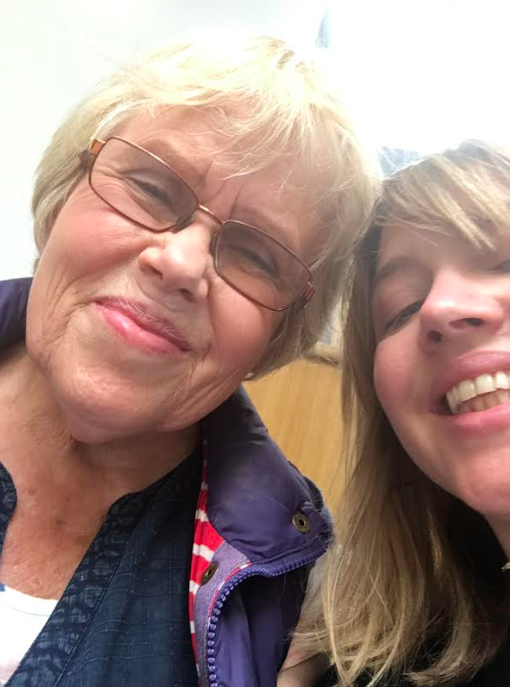
Josefa Mackinnon also has deaf parents and explained she too had far more responsibilities as a child which resulted in her feeling isolated from her peers and forced to grow up very quickly.
“From the age of seven, having to call the bank or call the doctors, has a huge impact on how you're brought up," she says. 'You're involved in adult worlds before you really should too. I remember feeling, at the age of 11, that I was kind of older than my parents; that I had to be responsible for them.”
Although Roanna, grew up feeling as if she was a carer for her parents, she says her unique childhood had many positive elements to it too. “I love being a child of a deaf adult (CODA) and I’m proud to have deaf parents. My dad is highly respected within the deaf community. He speaks publicly a lot, something I can’t even do and he does it so well. He knows two different kinds of sign language and has a lot of charisma.
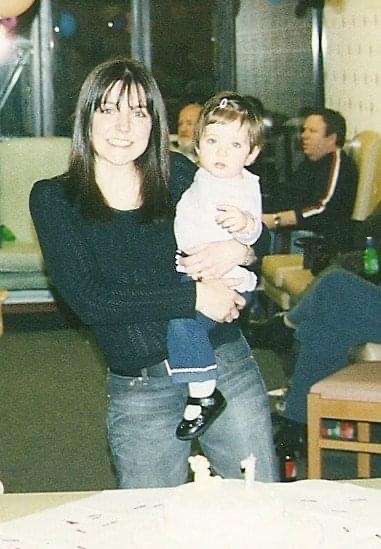
“My mum has a gentleness and taught me and my sister, Megan, to always be empathetic, something that I think does come with her disability. They both taught us to love everyone when growing up. I feel lucky to have grown up as a CODA because I don’t think I’d have the same emotional understanding otherwise.
“My communication skills are definitely better, especially when I go on holiday. Sign language teaches you body language and it makes it easier speaking to people,” she explains.
Both Roanna and Megan attended a CODA camp, run by an organisation, which was set up 13 years ago, offering support, refuge and a network for children with deaf parents. It hosts an annual camp for seven to 17-year-olds where children can participate in fun activities with other children with similar lived experiences.
“Coda camp really changed my life," says Roanna. "At the time, I think I was 14 and I remember thinking 'Oh my God why are they making me do this as a teenager', but I had the most amazing time. I felt normal.”

Matthew Shrine, 34, CODA camp director, said: “It is the only national organisation representing solely children of deaf parents, where people can meet others with a shared experience.
“As a coda, you often have to filter yourself and as a kid you can feel misunderstood. I was called loud and abrasive growing up. But events like CODA allow me to be exactly that, and I realised oh wait I’m not odd.”
Mr Shrine, a therapist, also runs a CODA-specific therapy service to help those who find it difficult to share personal experiences with someone who doesn’t understand.
To find out more information about CODA go to https://www.codaukireland.co.uk/coda-camps