
Opening doors to football: ‘Deaf people love sport just as much as anyone else’
The captain of an England women's sports team says deaf football has opened doors she would never have imaged.
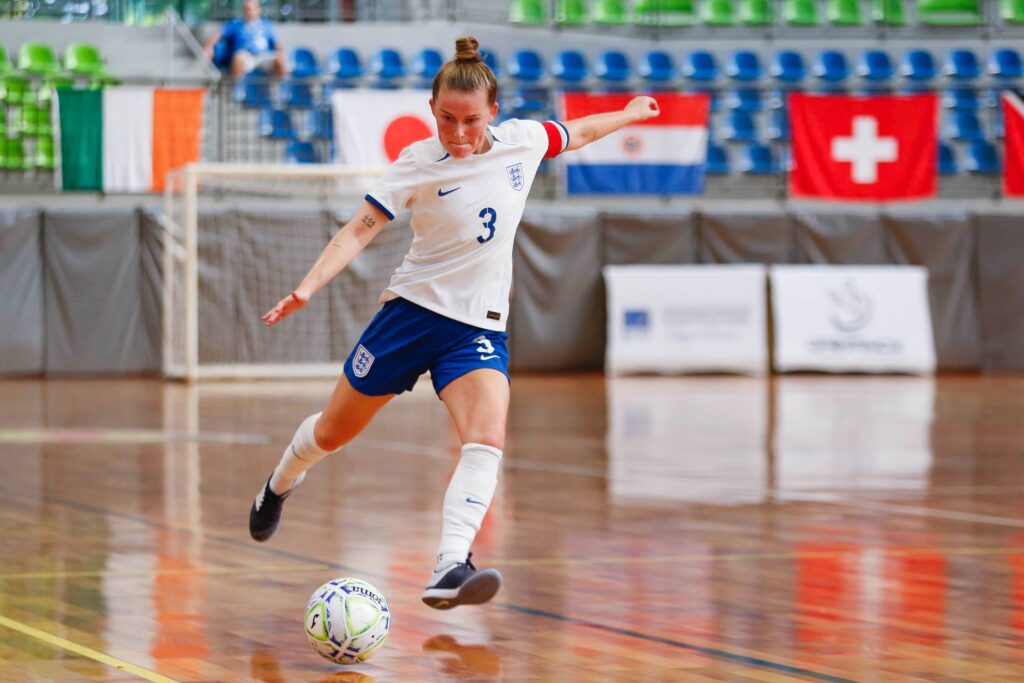
Zara Musker, 25, captains England's Deaf Futsal team - a indoor type of football, played on a hard court with only five players on each side.
She said although deaf football was once sidelined, with recent Deaf Futsal triumphs for the country and greater involvement from the FA there are signs of change.
Zara originally played mainstream football and was raised in a hearing family. The first time she ever met a deaf person was at England Deaf Futsal camp at 13 years old.
"The first deaf football game I called up my dad and asked me to come pick me up. I didn’t understand all the signing they were doing," she said.
Zara grew up with hearing aids, but during the Covid lockdown she lost all of her hearing and was left in complete silence for six months.
"I’d grown up with all of my hearing thanks to my hearing aids, I never struggled in school. But when Covid hit and I became deaf everything changed.
"I had got a place at Liverpool John Moore's University to study clinical exercise physiology but I had to contact them and say I couldn’t attend as I wouldn’t have been able to hear anything. This gave me time to reflect on what I want from my life, and which situations I need to put myself in, and how to be the role model I never had growing up."
From this, Zara decided to change her path, and trained to become an audiologist. She is currently in her final year of study and says that the work is the most rewarding thing she has ever experienced.
Zara says she never would have had the confidence to make this leap without her experiences as a deaf sports player.
She said: "Sport is an outlet, and without making that choice to try out deaf sports, from my mainstream background, I would never be where I am today."
Julie Callaghan is County Coach Developer for Sheffield & Hallamshire and she was also Zara’s coach for many years.
She initially spotted Musker playing at a local football academy and got in contact. At first, she was hesitant, and it took almost two years before Zara agreed as she didn’t identify as a deaf sportsperson.
Zara struggled to fit in at first as she says she was often told at camps that she wasn't deaf enough, and didn’t understand how her teammates communicated. She also said that when she was younger, the standard of football in these deaf teams was not on par with other mainstream teams.
But now she says this standard has massively improved, attributing this to players that grew up in mainstream hearing football and futsal teams.
"Unfortunately that is what you have to do, so that is why we need coaches that are accessible. The FA are putting in programmes and pathways for deaf boys and girls to feel welcome in the team," she said.
Julie is hoping to work on a new 'Comet' programme with the FA over the next few years. This will create a set of four deaf teams that will be able to play in their own league. These standalone teams could then be attached to a grassroots club and increase the information and accessibility for deaf players.
She explained that it is incredibly important to show deaf people that they have access to the game, and there are spaces open to them.
She also highlights that many players do not want to go down the route of deaf playing, but it is important to have this as an alternate option to make both young people and their parents comfortable.
"I recently went to the European World Competition and there was a six year old with a cochlear implant at the event and she was absolutely awesome, I thought to myself, she could potentially be on the England team one day so how do we make her the best, how do we give her the opportunity to succeed?"
She said that often clubs do not consider how to involve deaf players until one joins their team. She recommends that any coach who is looking to include a deaf player at least learn BSL Level 1.
"Just learning the deaf alphabet makes the world of difference - everyone can spell, and making the effort to spell things out can be very helpful," she added.
She also says that coaches should be mindful of their positioning towards players to make sure that players can lip read. Even learning how to stop the game poses its own challenges and players have to learn to work as a team to communicate this.
"Not everyone will play for England, but everyone should be given the chance to be the best they can be, in whichever form that is."
A major element of inclusion of deaf people in sport, is also making spectating accessible too.
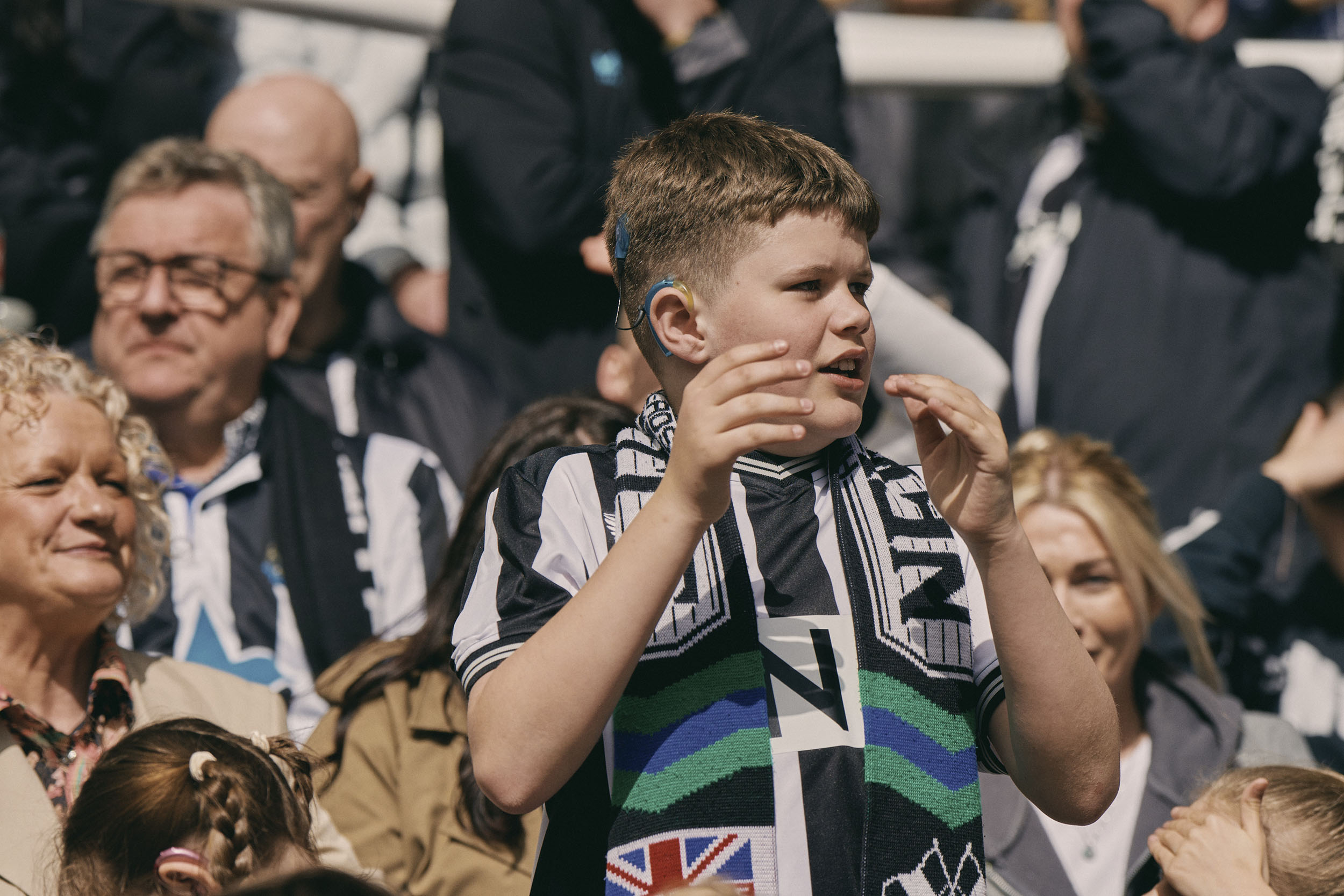
Teri Devine works for the Royal National Institute for Deaf People (RNID) and worked closely with Newcastle and Sela on their launch of their new sensory football shirt. The shirts transform the noise of the stadium into real-time touch sensation.
She was there when the two deaf Newcastle fans, David and Ryan first tried out the kit. She says they immediately started dancing, so overwhelmed by being able to experience the feeling of a crowd for the first time. David’s mum said she’d never seen him dance before and couldn't stop laughing at the pair.

Alongside getting feedback on the kit, RNID also met with the match day mascots, who are deaf or have hearing loss and taught players how to cheer in sign.
Despite these exciting developments, Teri says that there is still a way to go to make spectating fully accessible.
She says that efforts need to be made to educate ground staff to become more deaf aware, such as making sure they are facing fans while speaking so that they can lip read.
"One in five people have hearing loss, so in a big stadium there is potential for almost 10,000 fans to struggle to hear," she explains.
"When we surveyed, 29% of fans with hearing loss have previously decided not to attend a game as they thought it would not be accessible for them."
This means that stadiums must also consider how they deliver announcements as deaf fans cannot hear the traditional ones made over the PA. This can cause them to panic and follow the crowds, unaware of what is happening.
Hearing loops have also been created specifically for deaf spectators, but Teri says that these are often the worst seats in the house, meaning the view is often obscured by a pillars. This is counterintuitive when trying to provide for those most reliant on eyesight to be involved in the game.
"Deaf people love sport just as much as anyone else, they just want to be able to experience it the same way," she said.
In spite of this, she says that the increase in awareness for deaf spectators following the launch alone has suggested positive change for deaf awareness in sport. They are still working on the logistics of how to allocate the shirts day to day, but this will be decided shortly.
Though at one point Zara says that being deaf was a taboo in sport, she believes with the support of coaches like Julie, and the funding of associations like the FA and RNID, deaf sport can continue to grow and expand.
Where Barnsley stands at the end of the day
It was a huge day for Labour in the Metrodome, gaining 16 seats to take a council majority of 48 seats to 15. Its majority council was declared well before most of the election results had been announced in Barnsley.
A horrendous day for the Conservatives saw them lose one of its only seats on the council. Cllr Robert Barnard, Penistone East, remains as the only Tory councillor.
The Liberal Democrats increased its total number of councillors by one, with four seats total taken on the day.
Despite some traction nationally, Reform UK failed to gain a seat.
More reaction to follow.

“Why can I not stay?”: Middle Eastern student’s future at risk if visa scheme is scrapped
A student may be forced to return to his "dangerous" home country where he fears for his safety because of his sexuality.
Jonas, an undergraduate student at the University of Sheffield since 2021, wished to use a pseudonym because of worries that he would be unsafe in his home country in the Middle East.
He told Sheffield Wire he came to England in order to be able to express himself and explore his queer identity during his studies.
He explained: “Being a queer person in the Middle East is still a struggle, and can even become dangerous."
Jonas moved to England three years ago thinking he was going to be able to do his degree, then find a job and potentially build a life with a family.
But last month Home Secretary James Cleverly asked for a review of the Graduate Visa, a post-study work visa that allows graduates to work for up to three years after finishing a course, which may lead to its abolishment.
The death penalty is still in place for sodomy in his country, and same-sex marriages are not recognized. There, Jonas feels he would not be able to grow and plan his future.
He said: “I had a whole five-year plan, but it seems to be falling apart now. I don’t know what I’ll do if I am not staying here in the UK.”
After hearing about the “rapid review” of the Graduate Visa he said he feels helpless and expressed concerns about the support he will receive.
He said: “I don't want to experience the homophobia that I experienced in the past. I want to express myself more. I haven't explored myself enough. I want to be myself, be a free bird. Like I am right here, not back at home.”
Jonas now has to finish his degree without knowing what his future will be.
He said: “I don’t understand, I paid a lot of money to come here, between the visa fees, the tuition fees, my accommodation, and my regular expenses to live. I participate in the economy and do not get any money from the government. Why can I not stay?”
The Greens hold Sheffield’s Nether Edge and Sharrow
Maroof Raouf holds the Green Party seat for Nether Edge and Sharrow with 2662 votes.
Penistone East – Labour gain
John Roberts has taken the seat for Penistone East for Labour, which originally was a strong hold for the Conservative Party. The seat had been held by the Conservative Party since 2006.
Final ward to be announced in Barnsley
After a long day of counting and celebrating, Oldtown ward is the last announcement of the day.
More to follow.
North East – Labour gain
Dorothy Coates has been elected for Labour in the North East ward, Barnsley, a seat which was originally vacant.
Hunt remains Sheffield City Council leader
BREAKING: Tom Hunt has retained his seat and will remain leader of Sheffield City Council.
The leader of the council will remain the same until 15 May when a new leader will be announced pending negotiations.
The Mayoral race heats up
The excitement of Ben Houchen's mayoral success in Tees Valley is wearing off, as the Conservative Party has been losing councillor seats all day. Labour's David Skaith has managed to win the mayoral race for York and North Yorkshire.
Ecclesall goes Green
The Greens have taken Sheffield's Ecclesall from the Lib Dems with 3147 votes for candidate Peter Gilbert.
How work experience is helping autistic students overcome employment barriers
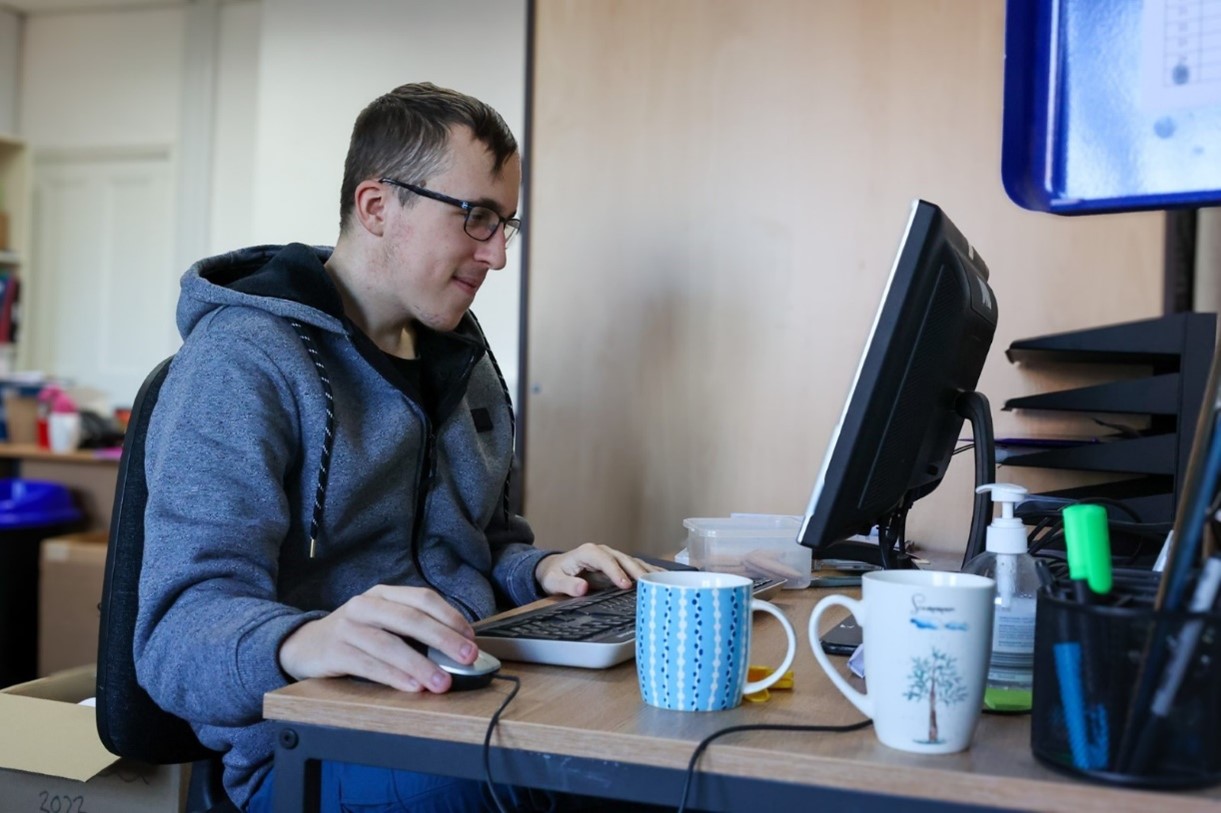
Autistic people are being helped into the world of work thanks to a North Yorkshire college's efforts to provide experience with employers.
According to a government report, autistic people are less likely to have easy access to work experience and this can have a knock-on effect on employment prospects.
The Buckland Review of Autism Employment found that from a young age, autistic people are less likely than their peers to have the time, connections or support to find work-related experiences and career advisors are often poorly equipped to support them.
Evolve College, an inclusive post-16 college in Ripon, is trying to change this. It is headed by Bev Skaife with the support of a team of progress coaches, teachers, and support staff.
Hannah Rushforth, Evolve industry placement officer, matches students interests and skills to different employers who offer them work experience.

She said: “The Evolve work experience is designed for students to gain industry-based skills & experiences and increase their chances of employment after college.
“During students’ first few weeks at college, we work with the students to identify potential career choices and future aspirations, after which we work on matching each individual student to a work placement provider.
“This is a truly bespoke offering, where we source new work placement providers based on students’ aspirations and skill building requirements rather than having a list of employers and slotting students in.”
Each student is supported with interview preparation, and they are taken to visit their placements before starting. They also offer some students walking support to their placements to help build independence skills, with a goal of eventually being able walk to placement themselves.
Ms Skaife said: “For some students, going into placement is a nerve-wracking experience for many different reasons, some that other simply take for granted. Simply getting a foot in the door for some students can be their target.
“By giving students the opportunity to experience work and skills in employability, they are hopefully in a better position to be able to overcome barriers faced with gaining employment in the future, and can show prospective employers how capable they are.”
One student, Glen Griffiths, is in his second year of work experience at Ripon Workhouse Museum. He goes there two days a week and his jobs include providing guided tours, gardening, and admin work.

His worth ethic has been commented on by members of the local community through positive TripAdvisor reviews.
One user said: ‘’We were greeted by a wonderful young man called Glen. He was welcoming and incredibly friendly and informative, he gave us a detailed explanation of the museum and what to expect with very interesting historical information, for this reason we will definitely be back. Thank you Glen, you made our day!’
Despite saying that he had great friends at his placement, Glen admitted sometimes feeling talked down to because of his neurodiversity.
He said: “There are some people who, maybe because they know I am autistic, they seem to treat me a lot more special-like. They speak to me in high tones instead of talking to me just casually, even though I just want to be treated like a normal human being.”
Another student who has benefitted from Evolve’s work placement programme is Niamh Shaw.
Alongside working a part time job on a weekend and during college holidays, she does two days of work placement on the activities team of a dementia unit of Lister House, a local care home.
She said: “The best thing about my work experience is the residents because I get to interact with them and make them happy.”
The National Autistic Society provides a range of resources and autism-friendly guides to help businesses understand the needs of autistic employees.
To sign the campaign for all businesses to have autism awareness training, click here.