Graduate Visa: What is it and why is it under threat?
The Graduate Visa allows international students to stay in the UK for two to three years and to stay in the UK to work or search for work after leaving university.
On a Graduate Visa, students can work in any job role or look for work in any sector.
When the government first introduced the current Graduate Visa route in 2019, Priti Patel, who was the Home Secretary at the time said: “The new Graduate Route will mean talented international students, whether in science and maths or technology and engineering, can study in the UK and then gain valuable work experience as they go on to build successful careers.
“It demonstrates our global outlook and will ensure that we continue to attract the best and brightest.”
The scheme, which welcomes international students to stay and work in the country after the successful completion of their studies, was celebrated by businesses, students and universities when it was first announced in 2019.
At that point the UK saw a spike in the number of international students coming to the country, with a whopping 605,130 students arriving to study in the UK in 2020-2021 - which surpassed the 600,000 target ten years earlier than the scheme had anticipated.
Since the Graduate Route was finally established in 2021, a total of 175,872 Graduate Visas have been granted.
In addition, research by the Association of Graduate Careers Advisory Services (AGCAS) in their 2023 report International Graduate Routes: Narratives from the UK job market, conducted among 345 international graduates found that 72% of Graduate Visa holders were in graduate-level employment.
Why is the Graduate Visa under threat?
In December of last year, the government announced that they intended to review the Graduate Visa scheme after Home Secretary James Cleverly called for a “rapid review”, alleging that the system was “undermining the integrity and quality” of the UK Higher Education system.
In his letter commissioning the Migration Advisory Committee (MAC) to review the Graduate Visa by 14 May, Mr Cleverly said: “We recognise that UK universities’ reputation for quality could easily be put at risk if evidence emerges of immigration abuse or visa exploitation which are not tackled.
“We want to ensure the Graduate Route is not being abused. In particular, that some of the demand for study visas is not being driven more by a desire for immigration rather than education.”
Mr Cleverly’s announcement has sent universities into turmoil over fears that uncertainty over the Graduate Visa will lead to a sharp decrease in international student numbers
A survey by Universities UK (UUK) found that international student applications dropped by 40% this year. With tightened visa policies, international students who pay nearly twice as much as home students could be dissuaded from choosing the UK as a study destination due to uncertainty.
At the same time, international students already studying in the UK, who chose UK universities with the promise of two years to work or look for jobs, have been sent into a panic.
Expressing their concern about the “accelerated timeline” of the review, UUK commented: “Having publicly recommitted to the Graduate Route on its current terms in May 2023, any further changes would be extremely damaging to our reputation as a welcoming destination for international students, and risks undermining a UK success story that generates more than £20 billion a year in export earnings for the economy.”
A report by student recruitment firm AECC found that the policies are already affecting demand towards the UK as a study destination, with 40% of respondents saying that they are concerned about policy changes.
Financial impact on universities
Universities are expected to be hit hard if the scheme is altered with admission numbers already falling.
Jake Foster, chief commercial officer of AECC, told Times Higher Education that further changes to visa policies could lead to the “total collapse” of the educational sector which is reliant on international student tuition.
He said: “Changes to the graduate visa policy affecting international students could cause irreversible harm to the UK’s higher education system.
“Modifications to graduate visa rules could result in thousands of job losses and force prominent UK institutions to drastically reduce their size or shut down.”
The review of the Graduate Visa scheme is part of a series of visa changes made to cut net immigration.
Starting this year, overseas care workers and senior care workers can no longer bring dependants to the UK. Last December, the Home Office also announced that the salary threshold for a Skilled Worker Visa would be raised by 48%, bringing the minimum salary requirement from £26,200 to £38,700.

Volunteer-led group campaigns to make spiking a stand-alone offence
Campaigners are calling on spiking to be made a stand-alone offence and change what they say is currently a victim-blaming system.
Community-led group The Egalitarian campaigns on spiking and offers training to venues to help them tackle the crime. The group also provides a space for people to report their spiking incidents online as 97.64% of victims do not report to police, say Stamp Out Spiking.
Leesh Daniells, 22, Campaigns and Outreach lead, said: “We’ll keep campaigning, and the day that it is made a stand-alone offence, our work will continue to hold people accountable for that.
“It’s so unempowering to report to the police in the way that our criminal justice system works at the moment.”
The group was invited to parliament in March by MP Judith Cummins, who is an advocate for taking action against spiking. They discussed making spiking a stand-alone offence and what this law would look like.

Miss Daniells said: “We’ve created the Safe Place Project where we certify places on how to be victim-led. We want to move the narrative from blaming victims to blaming perpetrators.
“We’d like to see training for venues being made mandatory in terms of their licencing. We recently trained Wakefield to become the first Safe Place City, so that means every venue you go to will have the same response in dealing with spiking.”
According to Government statistics, the average age for being spiked in the UK is 26 and for every one in six cases of spiking, the perpetrator's motivation is to make it easier to commit another crime against them. This is usually sexual assault, rape, physical violence or theft.

Chloe Butler, 24, has been supported by The Egalitarian since she was spiked in Leeds while on a night out with her friend.
She said: “My friend told me that we went outside, and I threw up and laid down and she thought it was funny at first but then really quickly she realised that I wasn’t just drunk. I wasn’t moving, I wasn’t responding, and I wouldn’t wake up.”
Miss Butler and her friend were taken home by the police, she remembers nothing between 1am and 4.30am when she awoke to find to paramedics in the flat.

She said: “The paramedics said they don’t see this very often and they thought there was something else at play. My sick was bright yellow and frothy which is a reaction which you can get from drugs used for spiking.”
Miss Butler said the police did not believe she had been spiked: “The immediate dismissal that I’d had too much to drink or that I’d taken something, was really disappointing, especially when we were in a location that is a known hotspot for spiking.
“It should have been taken more seriously. I was in such a dangerous situation. It was two female police officers, which was really disappointing.”
Assistant Chief Constable Samantha Millar, National Police Chiefs’ Council Violence Against Women and Girls Strategic Programme Director, said: “Forces work closely with bars, pubs and clubs to tackle spiking, and during the first national spiking police week of action in March, forces collectively visited over 1,900 licensed venues to ensure that staff understood how to support victims.
“I would encourage anyone who is a victim of spiking to report it to the police, you will be listened to, and you will be taken seriously.”

Autistic staff bring opportunities, not problems – say companies working to close the employment gap
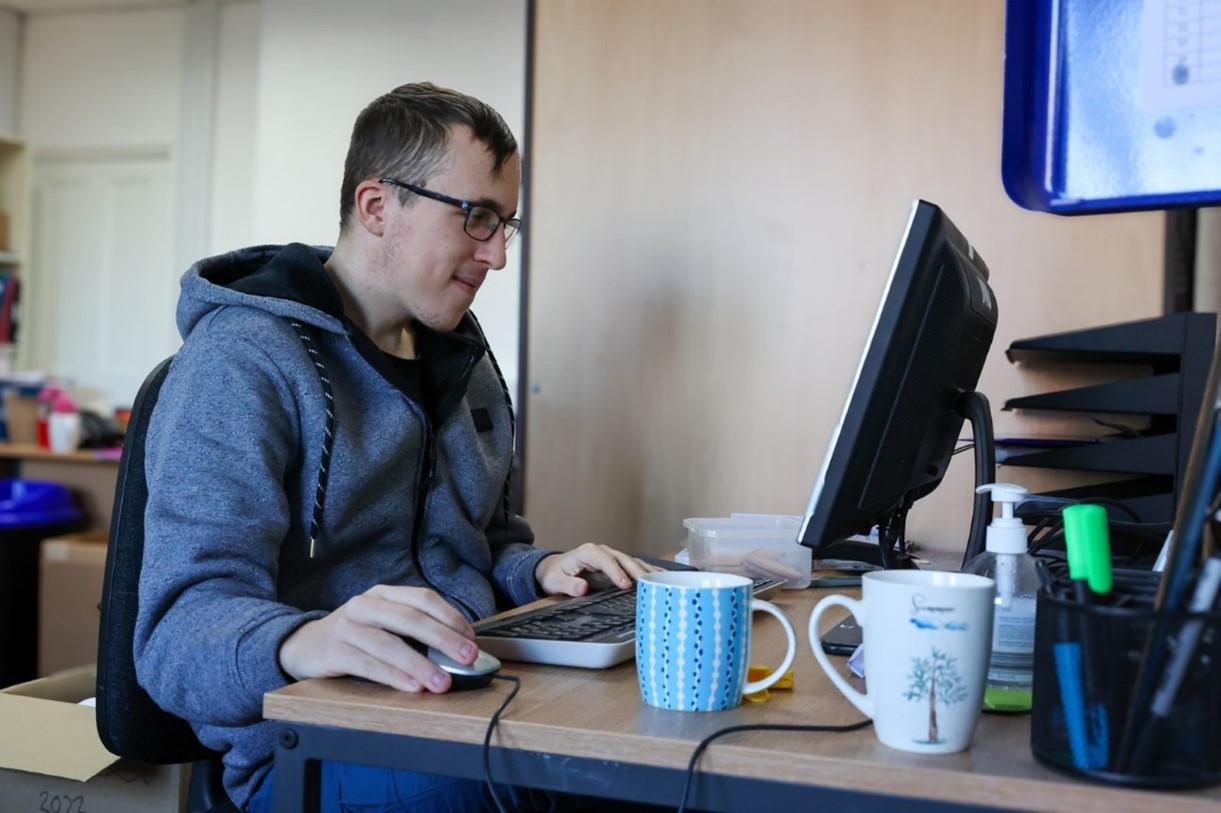
Many UK companies are showing their commitment to closing the autism employment gap - from providing specialist training for colleagues to innovatively changing their hiring process.
Just three in ten autistic adults are in work, according to statistics from the Department of Work and Pensions, compared with half of all disabled people and eight in 10 non-disabled people.
In 2019, Auto Trader became the first business to receive the National Autistic Society's Autism Friendly Employer award. This was in recognition of work they did to develop specialist standards across recruitment, staff awareness of autism and support for autistic employees.
Sarah Brookes-Pearce, Auto Trader’s head of early careers, said: "Neuro-inclusivity has been central to our Diversity and Inclusion strategy for years.
"In 2018, we started working closely with the National Autistic Society and we found that some of the smallest changes were the most effective – like numbering meeting rooms and adding clearer signage, providing quiet spaces, and being mindful of stimuli like food smells and lighting.
“We aim to keep learning, keep talking, and create a psychologically safe space to enable our colleagues to have a great career. And we’d love to see more businesses join us and share their learnings on this journey."
Chris Murray, 52, is the Skills Bridge lead of Harrogate Skills 4 Living, a charity which aims to reduce inequalities and support people with learning difficulties and autism. It offers a supported employment service, as well as offering work placements at its café and chocolate factory.

He said: “There is a huge need for a service for autistic people entering employment. Our workplaces are safe places for people with autism and learning difficulties to learn skills for work, build confidence, make friends, and not feel so isolated. It also gives employees a chance to earn their own money and gain independence.
“Everything we do at Skills Bridge is geared towards our learners leaving us and hopefully going into employment in the local area. We support the people who come to us to look for outside opportunities. We have great relationships with local employers where we introduce learners to different workplaces.
“We educate and inform local employers about the benefits of employing people with autism and the adjustments they can make to their recruitment policies and procedures.
"Innovative change is needed for employers to rethink the recruitment process. In person trial shifts can be a much better measure of an autistic person’s potential than a traditional CV and interview.
“Simple things like not hot desking for autistic employees and letting them know their tasks ahead of time can make a huge difference. It’s not enough just to say you have an EDI policy or that you are a disability confident employer. You need to act on it as well."

Another company leading the way for recognising autistic potential is Park House Barns, a chocolate studio and horticulture centre near York, offering employment opportunities for autistic adults.
The social enterprise offers a variety of roles for different levels of ability, working to individual strengths. Over half of their paid employees are on the autism spectrum and on average, they offer 160 placement sessions each month for young people to develop work skills on site.
Manager Michelle Lumb said: “It’s very rewarding when you’ve got a young person who has really struggled to get a job, or who has been out of work for a while, and they find something here that works for them.
“A lot of these kids are coming from school or college and have never been in a workplace. We provide a place where they feel safe, doing a job which is fulfilling and makes them happy.
“The biggest thing for me here is that I understand my staff. You have to work for people that understand your condition. We are a team, and we play to everybody’s strengths. In some ways, autism can be a bonus because a lot of my staff won’t stop until they have finished a specific job.
"There are a lot of hard workers here. If you can provide the right setting, they can work just as well, if not better in some cases, than anybody would.

“Companies need to learn about autism and how people with the condition can contribute to their business as opposed to seeing it as a problem.
"I think things are improving and there are a lot more businesses now doing specific courses to learn about autism and teaching their staff about the condition. Awareness is key.”
The National Autistic Society provides a range of resources and autism-friendly guides to help businesses understand the needs of autistic employees.
To sign the campaign for all businesses to have autism awareness training, click here.

Parents set up spiking charity after their son’s death
The parents of a student who was killed by drink spiking are campaigning to modernise old-fashioned laws.
Greg Mackie was 18 years old when he tragically died in November 2017 after his non-alcoholic drink was spiked with the equivalent of five ecstasy tablets.
His parents, Colin and Mandy Mackie, who launched the charity Spike Aware UK, after their son’s death, said: “There was no one there for us to turn to or talk to. There was nothing, we were just left with it.”
Greg was in his first year of a film and television production course at Edinburgh College when he was spiked in his student accommodation. His flatmates put him to bed assuming he was drunk, but later that night he died from the drugs that he had unknowingly taken.
“For Greg, going to university was an adventure,” said Colin, from Moffatt, Dumfriesshire. “It was about the new friends he was going to make, but unfortunately they weren’t as friendly as he thought they were going to be.”
The police initially thought Greg had taken the ecstasy tablets himself, but his parents knew their son would never knowingly take drugs.
Greg’s girlfriend at the time confirmed this was the case and explained he had been offered drugs at parties before and turned them down.

The university student competed nationally for the Castleford Castles junior speedway team as well as boxing and cross-country running, meaning he had regular drug testing.
Colin claims if his flatmates had called an ambulance or taken Greg to A&E, he could have got the treatment he needed. Despite the police believing that he was drunk at the time, a toxicology report after his death found no traces of alcohol in his blood at his time of death.
Over six years have passed since Greg died and still no one has been charged for his death. Colin believes the case was dropped due to a lack of evidence. Scotland’s criminal law requires at least “two sources of reliable and credible evidence to corroborate that an offence was committed”.
Greg had planned to make an anti-drugs film as part of his university course. He also appeared as an extra in the 2018 film Outlaw King, and was due to take a role as an extra in Outlander.
Colin, who believed his son was heading towards a career in acting, said: “We’ll never know now where he would have gone or what he would have ended up doing.”
Greg’s story is not what is largely believed to be a stereotypical victim. He was male and was not spiked in a club or bar, instead in his own student accommodation.
Colin said: “If he’d been in a nightclub or that kind of environment, he’d be a bit more alert.”
After his son’s death, Colin and his wife, Mandy, set up Spike Aware UK to help victims receive the support they need, as well as campaign for changes in the law.
The charity offers advice for victims who feel they cannot go to the police, or for those who have been and felt the police did not do a good enough job handling their case.
Victims of spiking can get support from their website or by calling 07368 191124.

Maddy Cusack Foundation celebrates six-month anniversary of launch
In the last six months, the foundation has raised £35,000 and has plans for a charity football tournament and a summer ball.
The Maddy Cusack Foundation celebrated its six-month anniversary last Sunday in memory of the late Sheffield United Women's football player, Maddy Cusack. The midfielder, aged 27, was found dead at her home in September last year. The FA announced a formal investigation into her death on 24 January.
Since announcing the launch of the foundation in November, aimed at supporting young girls during their football careers, the family have rallied nationwide support for the athlete, often hailed as Miss Sheffield United.

The first foundation events were two pub raffles held in Cusack's hometown of Derby in December last year. During the event, the foundation gifted two pairs of football boots to young supporters Neveah and Maddison.
Olivia Cusack, Maddy's sister, said: "The support has been amazing. It's gone from strength to strength, and we are on our way to achieve what we wanted to.
We've always wanted to make some moves and benefit not just young girls in general, but also girls and young women in Maddy's position that are at the stage in their career where they might need a helping hand".

In March a West Hallam Panthers v West Hallam Pumas memorial match took place to celebrate Miss Cusack, who played for West Hallam Juniors when she was six years old.
Richard Cusack, the footballer's brother, played with Cusack's friends, family and old teammates while wearing replica kits that were made specifically for the event.
On 7 April, Sam Turner, a friend and colleague of Miss Cusack who worked with her in the Sheffield United marketing department, ran the Sheffield half marathon in her honour. Courtney Sweetman-Kirk, a Sheffield United teammate, also completed the Monsal Trail Half Marathon on behalf of the foundation.
"Very proud to have done this run to raise money for [the foundation] and I was honoured they were at the finish line to cheer me on," wrote Courtney on her Instagram.
The foundation recently sponsored the Lionesses Supporters Group, who approached the family and asked if the foundation would sponsor their kit. Players of the team will be sporting the kit at the Maddy Cusack Summer Ball at Pride Park on 23 August.
Olivia Cusack said: "We chose to support this team because we recognise that middle teens to late teens is a really crucial time for extra support. We identified that as the age range that we want to work with.
"It's so fulfilling to be able to keep the foundation moving – we're super proud. We wanted to put everything into it and have the work ethic resemble Maddy as a person and a player.
"She didn't want to do anything without doing it 100% and making it a success. I didn't want to attach anything to her name without putting all our effort in.
"We get messages from young girls that say they are glad that there is an outlet for them to keep in touch with Maddy. She meant a lot to people – young girls in particular".
Maddy Cusack's teammates from Aston Villa, Georgia Hewitt and Hayley Crackle, will be hosting a tournament in Birmingham. For £20, girls can form teams and play against each other to raise money on 22 June.
On 23 June, female footballers ranging across different teams Cusack played for will play against each other in a match that has already gained attention from supporters.
Supporters can get involved with fundraising events through the foundation's social media @themaddycusackfoundation

Embrace love as a catalyst for change with Love & Social Justice
This week Utopia Theatre are hosting an event that pioneers embracing love as a catalyst for change.
Bell Hooks, a renowned feminist author, emphasised the transformative power of love in her seminal work, "All About Love." She argued that love, in its various forms, is not only crucial on personal and spiritual levels but also fundamental to driving social justice movements.
In response to this cultural shift, the Centre for Equity & Inclusion presents "Love & Social Justice," an evening of thought-provoking discussions and captivating performances, to reignite the conversation around the significance of love in advancing social justice agendas.
This event will take place on Wednesday, April 24th, from 6pm to 8:30pm at the Utopia Theatre in Sheffield.

Their distinguished line-up of speakers and performers includes Tasnim Hassan, a PhD Researcher at Durham University, who will delve into the intersection of love and activism. Joining her is Danae Wellington, Sheffield's Poet Laureate and Cultural Producer, who will share her insights on the transformative potential of love through artistic expression.
Ezimma Chigbo, Collective Care Facilitator at Act Build Change, will explore practical strategies for integrating love into our activism efforts. Additionally, the Sahba Daf Ensemble, accompanied by Yousef Sadat, will enchant the audience with mesmerising Persian music performances.
In addition to stimulating discussions and captivating performances, attendees are invited to partake in food and love bingo, fostering connections and community engagement. A detailed program will be shared closer to the event date.
"Love & Social Justice" is brought to you by the Centre for Equity & Inclusion, an organisation dedicated to providing support and opportunities for postgraduate researchers of colour at the University of Sheffield. Through collaborative efforts with local partners, the Centre aims to challenge systems of racial oppression within and beyond higher education.
Join the Centre for Equity & Inclusion on 24 April as they embrace love as a catalyst for positive change, fostering a more equitable and inclusive society for all. Together, let they hope ignite the flame of love and justice that burns within each of us, illuminating the path towards a brighter future.
Tickets for the event can be obtained here.
For accessibility-related inquiries or to share specific needs, please reach out to alex.mason@sheffield.ac.uk.

Europe set to see its biggest food hall ever open in Sheffield
The unveiling of the Cambridge Street Collective marks a significant milestone in Sheffield's efforts for rejuvenation spearheaded by the City Council's £470M Heart of the City regeneration initiative.
Scheduled to open its doors this May, this sprawling complex is poised to claim the title of Europe's largest purpose-built food hall, promising an unparalleled adventure within its expansive 29,000 square-foot premises.
Behind the minds of the Blend Family, who are renowned for their prowess in curating exceptional dining experiences, the Cambridge Street Collective will showcase the culinary talents of 20 independent food partners.
The Cambridge Street Collective embodies a commitment to social responsibility, forging partnerships with Sheffield Children's Hospital and local food charities to address food poverty within the city. Initiatives such as 'kids eat free' during school holidays and a range of value-driven dining options underscore the collective's dedication to accessibility and inclusivity.
Within this vibrant space, spanning multiple floors, patrons will traverse continents with each establishment offering a distinct journey into the heart of its cuisine.
With a seating capacity of 1,200, the venue beckons visitors to immerse themselves in its dynamic atmosphere, complete with four bars, inviting outdoor seating, and captivating rooftop terraces that offer panoramic views of the city skyline.

The ground floor is set to serve as a gateway to Asian cuisine, featuring an array of authentic dishes from the region's finest purveyors. Ascending to the first floor unveils a cookery school, a kids' area, and additional kitchens.
Venturing further, guests will discover a games room, a Japanese-inspired bar, and a bespoke dining experience celebrating sushi and Korean BBQ beckon discerning palates.
Matt Bigland, the founder and CEO of Blend Family, expresses his enthusiasm for the project, emphasising the team's dedication to crafting unforgettable dining encounters. He said: “We take great pride in curating exciting culinary experiences for people and this is one of the most exciting line-ups of world food we’ve ever put together. "
In a nod to cultural diversity and community engagement, the launch festivities will feature traditional performances and events, celebrating the rich heritage of each food partner. Moreover, the cookery school will serve as a hub for culinary education, fostering creativity and nurturing aspiring chefs while supporting local talent incubation initiatives.
As anticipation mounts for the grand opening, the Cambridge Street Collective stands poised to redefine Sheffield's dining landscape, promising a fusion of flavours, cultures, and community spirit within its vibrant walls.

Supertram: South Yorkshire mayor considering extension to Sheffield Hospital, Stocksbridge and Chesterfield
Sheffield's supertram could be extended to Sheffield's hospitals as it embarks on a new era under public control.
South Yorkshire mayor Oliver Coppard is exploring routes to Stocksbridge and even Chesterfield "with potential for more such as connecting to hospitals".
South Yorkshire Mayoral Combined Authority took over last month from private company Stagecoach after 27 years.
Coppard, at the time, said: "Today is a historic day for South Yorkshire; it’s one small step for the tram, but it’s the first step in our journey back to a public transport system that puts people first, connecting our communities and helping us to build a bigger and better economy."
Plans to build a new station at Magna in Rotherham, which will service the neighbourhoods of Blackburn Meadows, Templeborough, and Deepdale, are already in place.
Labour Cllr Alan Rhodes took to X and voiced his opinion on the initiative.
He said: “An excellent idea. Anyone who has had to use any of the city’s hospitals, especially if they have travelled from outside Sheffield knows how difficult the parking situation is.
"This will make a huge difference to patients and staff.”
The authority is currently canvassing views on how the Supertram can be improved and where it should prioritise expansions.
While the larger investments are long-term, in the short term this has already provided benefits including a new Supertram app and a promise to deep clean all shelters and stops within its first 100 days in charge.
It has also started the ball rolling on refurbishing all trams by 2027 and introducing a new fleet by 2032.
Coppard is determined to give people more freedom and choice in the way they travel and move across the whole of South Yorkshire.