
JUS News afternoon bulletin (3 March 2025)
Here's our JUS News afternoon news rundown with Millie Park.
Stay tuned for our main news programme with Georgie Hood and Siddarth Thakur.
Read the full stories here on our website.

BAE Systems shares surge after Ukraine summit despite cries for ceasefire
BAE Systems, set to open a £25m artillery factory in Sheffield later this year, saw a 17% rise in share prices this morning after the London Ukraine summit on Sunday, despite students and anti-war groups rallying for a ceasefire.
The summit saw vows from various European and NATO leaders pledging support and emphasising the urgent need for Europe to rearm, especially in the case of Russia’s war against Ukraine.
Shares in the FTSE 100 weapons manufacturing companies, BAE Systems and Rolls-Royce, hit all-time highs the morning after the summit.
This comes at a time when university students and anti-war groups like Stop The War have incessantly rallied for the UK to stop arming countries and investing in war.
Lindsey German, national convenor of the Stop The War coalition, said in an article: “Starmer’s increases [of spending on defence] – to effectively 2.6% in two years and then to 3% in five – are at the expense of overseas aid, which will have horrendous consequences for some of the poorest and most desperate people in the world.”
BAE Systems' factory opening in Sheffield this year is capable of manufacturing the company’s M777 lightweight towed howitzer, a weapon used by US, Canadian, Australian, and Indian forces.
A group of University of Sheffield (UoS) students occupied the Arts Tower in 2023 protesting the involvement of defence companies like Rolls Royce and BAE Systems in the University of Sheffield’s Careers Fair.
A 2023 transparency request from The Star revealed that the UoS was receiving £72 million in research funding over the past ten years from companies that manufacture weapons and military hardware alongside civilian products, a number higher than any other university in the UK at the time.
The current Labour government has pledged an increase in spending on defence, investing an additional £1.6bn to send thousands of air defence missiles to Ukraine, despite receiving criticism for taking away state pensions from WASPI women, saying that they "cannot justify paying for a £10.5bn compensation scheme at the expense of the taxpayer."
Sir Keir Starmer said during the summit that Europe “must do the heavy lifting” in ensuring a peace deal between Russia and Ukraine – but that it must also have strong US backing.
Last month, the Prime Minister also pledged a 100-year partnership with Ukraine – which includes first and foremost military spending.
The two countries promised “military collaboration on maritime security through a new framework to strengthen Baltic Sea, Black Sea, and Azov Sea security and deter ongoing Russian aggression.”
Image source: BAE Systems

University of Sheffield SU hosts Women’s History events
Additional reporting by Georgina Hood.
Poetry workshops, panels and fancy-dress sports days are just some of the events taking place at the University of Sheffield's Student Union this March to mark Women's History Month.
The union is also fundraising for several charities, including, Together Women, The YWCA, Mums In Need (MIN) and The Snowdrop Project.
The SU's Women's Officer, Eloise Taylor, said: “Women’s History Month serves as a crucial reminder in how our society is indebted to the women who helped create and uplift it.
"It's a really good time to come together and show solidarity on common issues, like gendered violence. It's also just a nice space to get to know other women."
The Student's union is focussing on two themes this year, one of which is women in the workplace.
The UK gender pay-gap still stood at 7% in April 2024, despite declining year on year, according to the Office for National Statistics.
To combat this and other gender-based discrimination in professional settings, the Student's Union is hosting a discussion with female and non-binary alumni about their experience transitioning from university to the workplace on 24 March.
They are also hosting a Bystander Training course to help people intervene in dangerous situations and support other marginalised people.
This year's other theme for Women's History Month is women in sport.
Sheffield student, Emily Lamb, said that in the past she had preferred using women-only areas in gyms.
She said: "When I was an undergraduate going to the gym, there would be times when men came up to me showing me how to do an exercise or something, and that can be intimidating."
To encourage more female students to feel confident participating in exercise, the union is hosting a Women's Sports Day on 8 March and a panel discussion about the benefits of sports in recovering from domestic abuse.
Later in the month, the SU is running a Liberation Festival Creative Workshop in the Information Commons library, on 19 March, where students will make blackout poetry, collages and Reclaim the Night tote bags.
Ms Taylor said: "Women’s contributions are often left out of history, therefore, at our SU I hope we follow a trend of recognition and appreciation rather than dismissal for the women from the past, the present and our future.”

“Quite frankly, I think it’s outrageous”: residents react to Sunday morning explosion in Middlewood
With additional reporting by Emily Lamb
In wake of a building demolition at Beeley Wood Industrial Estate yesterday morning, some residents are shaken - and raising questions about a lack of adequate warning.
A letter was circulated by the company responsible, Metropolitan Demolitions Ltd., to households on Clay Wheels Lane, but many people in the surrounding neighbourhoods first heard of the plans when they heard a sudden explosion at 8am on Sunday 2 March.
"They all got the shock of their lives," said Khalid Hadrami, an Uber driver who frequently picks up passengers from the Middlewood area.
Mr Hadrami did not hear the explosion himself, but mentioned that several of his passengers had received no warning by letter or email from any local authority.
Kirsty Buckley, director at a nearby Co-Op Funeracare, said: "It scared the life out of me, I'm not going to lie." She heard three to four quick explosions in quick succession, and at first thought a road accident had happened outside her house.
Neither South Yorkshire Police or South Yorkshire Fire were informed of the demolition plans beforehand, but several eyewitnesses reported seeing police vehicles in the area on Sunday morning, and several Neighbourhood Policing Teams were dispatched to Middlewood following the explosion.
Clive Pashley, a local funeral celebrant, said: “Quite frankly, I think it's outrageous we weren't told."
He expressed concern for elderly residents of Middlewood and Birley Carr - including his mother, who is equipped with a pacemaker, as well as residents of a nearby nursing home.
On Clay Wheels Lane itself, residents were more relaxed - many had received the letter, which warned people: "We recommend that windows are kept closed on the Sunday 2 March and refrain from putting washing out."
Maurice Alexander, owner of Limestone Self-Storage, witnessed the explosion, describing a crowd of "about 30 people" milling about the exclusion zone, and a brief vibration in the ground following the last of the explosions.
Sheffield City Council reportedly received planning permission for works at Beeley Wood two years ago, but was not informed of the date or any further details.
Cllr Penny Baker, of Stannington ward, said: "We understand that some residents knew and that others didn't. Councillors and officers are really not happy about what happened yesterday, and are looking at ways to make sure it doesn’t happen again.
"The lack of information was appalling at so many different levels."

Church claims a “financial crossroads” means it will pull support for nursery school
A Sheffield nursery school is due to be evicted from a church on Friday because the organisation which owns the building claims it needs to save money to fund its own activities.
St Leonard's Day Nursery in Longley has operated out of St Leonard's Church since 1995 with no formal contract.
But since 2016, the Parochial Church Council (PCC), which manages the church, said it had tried to negotiate "fair and sustainable arrangements" in line with rising costs. However, the efforts to formalise this was unsuccessful.
It now claims it is at a "financial crossroads" and a notice was issued in September 2024 for the nursery to vacate a part of the church space to allow for the church's mission to expand its services to the wider community.

A spokesperson for the Diocese of Sheffield said: "Over the years, the PCC has made significant efforts to accommodate the nursery, absorbing substantial costs for utilities, services and repairs that would typically covered under a formal rental agreement."
According to parents, without the church facilities the nursery will not be compliant with the safeguarding standards set out in the Early Years Foundation Stage (EYFS) statutory framework and will have to close.
Destany Shaw, whose daughter attends the school, said: "We as parents do not want to portray the church in a bad light but we want to get across how much this will hurt us as parents and as a community."
The school has been known in the community for the quality of care it provides as well as its expertise with supporting children with special educational needs (SEN).
Chany Kilby, whose daughter has social anxiety, said: "The nursery has had such a big impact on her development and brought out her personality. She now speaks fluent sentences and can sing nursery rhymes and even count to five."
An Ofsted inspection in January awarded the nursery with a 'Good' rating which is the second highest available. This standard of care has been maintained since 2016.
The Diocese statement added: "The PCC remains open to further facilitated negotiation with the nursery owner during this period. We remain committed to serving our community and ensuring that our church buildings are used in a way that benefits as many people as possible."
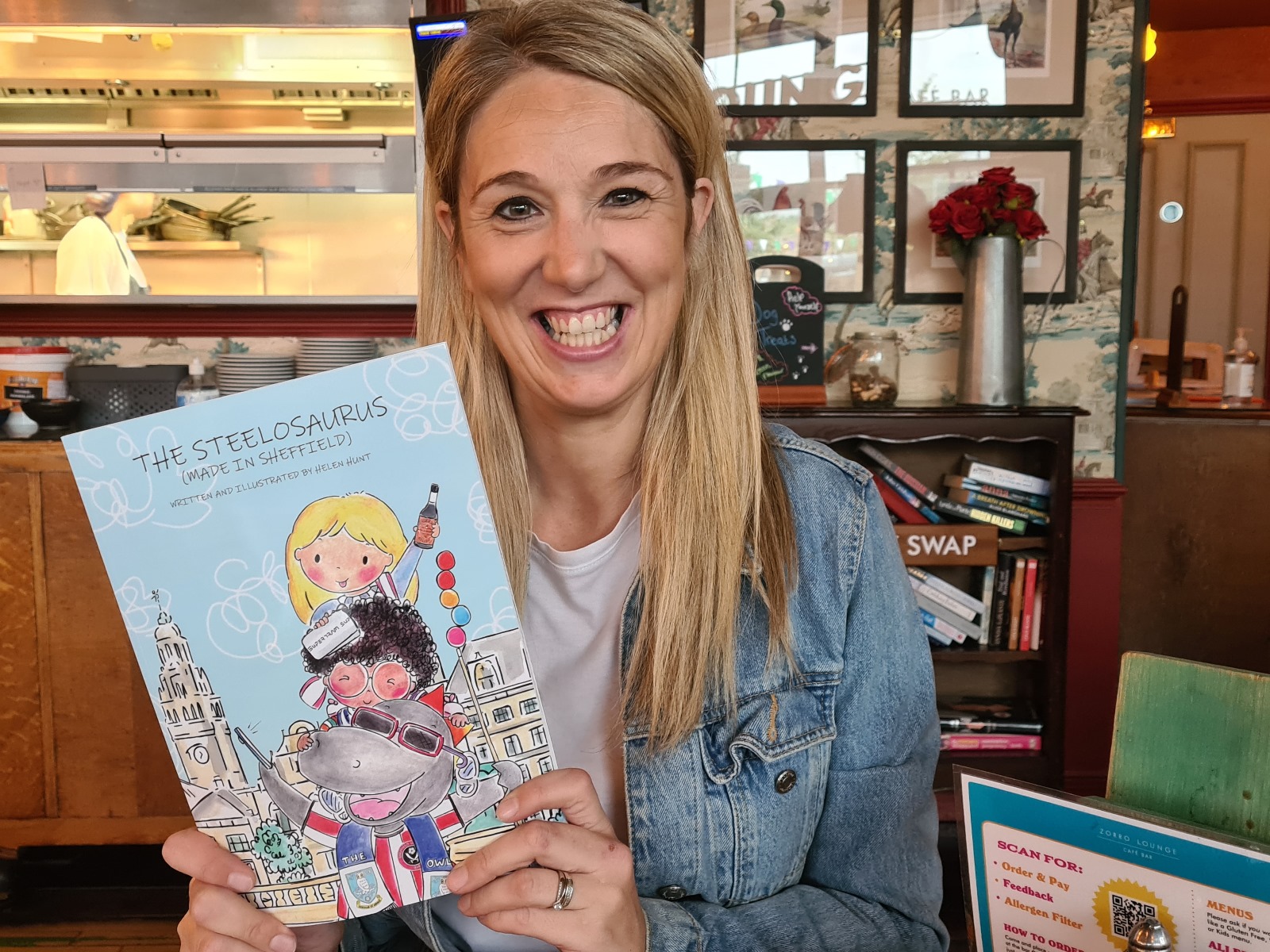
Sheffield author explains why World Book Day helps children
This week, children across the country will be encouraged to dress up as their favourite characters from a book, join in a read-along and talk about fictional characters who have inspired them for World Book Day.
Sheffield children's author, Helen Hunt, explains why the annual event is important and how Sheffield inspired her to write an adventure book.
"It is a day to focus on the importance of reading," she says. "It helps children to feel encouraged to pick up a book and feel excited about reading and sharing their favourite books with their friends.
“It is vital for children and young adults to keep enjoying books to maintain improving their knowledge, memory, vocabulary and focus. Reading also helps with anxiety while at the same time enhancing their imagination and creativity skills. Reading also helps communication and stimulates the brain.”
Helen, who has lived in Sheffield all her life, explained the city inspired to write her debut book. “Steelosaurus” is a heart-warming tale about a curious dinosaur that is new to the city and who wants to know more about where he lives. He meets two children who gladly show him around Sheffield in an adventure about heritage and friendship.
The book is currently being sold in over 30 book stores around the city and has sold over 1,500 copies.
“Sheffield has so many famous landmarks that the people of Sheffield are so proud of, so writing a book comes naturally," she says. "It was great to see a little boy from last year’s World Book Day dressed up as Steelosaurus.”
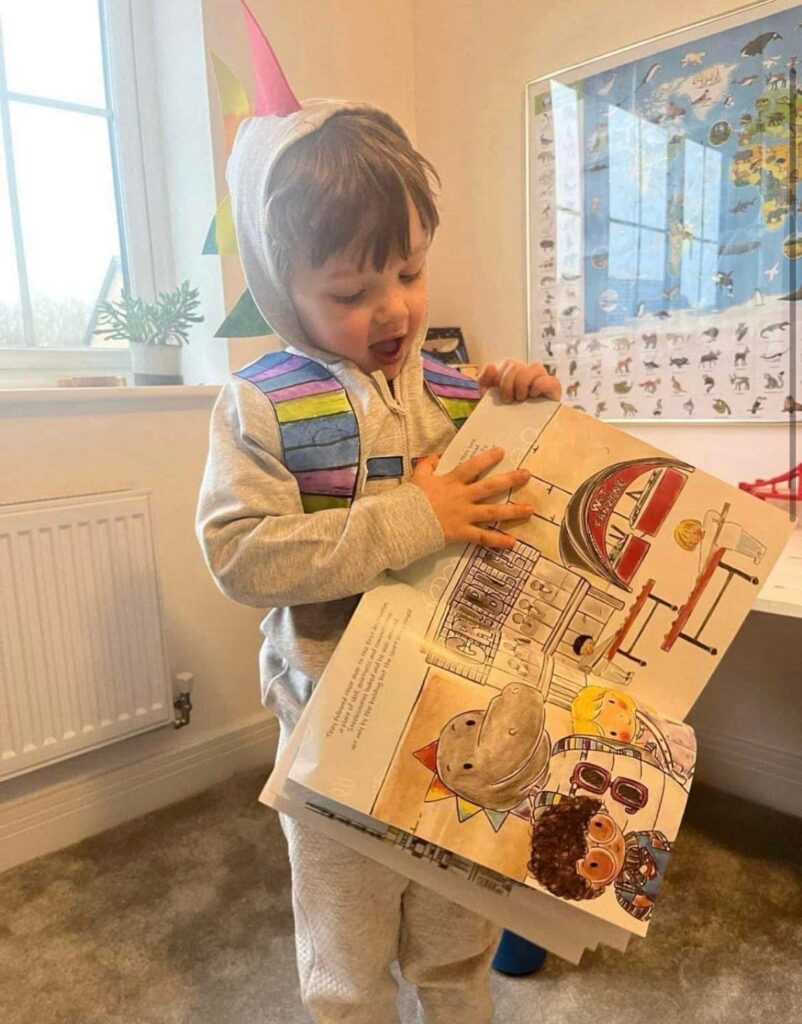
This Thursday (March 6) the organisation behind World Book Day are encouraging schools to find different ways of helping students engage with books.
World Book Day was first celebrated on April 23 1995, in the UK, and was introduced to help children from disadvantaged backgrounds to form a lifelong love of reading. The day is now celebrated in over 100 countries and is meant for children to associate reading with fun and positivity.
According to the National Literary Trust only one in five (18.6%) children age five to eight do not have a book of their own at home.
A survey in 2021 revealed 54.7% of children between the ages of 8 and 11 said that they read more books as a result of taking part in World Book Day.
According to the “National Library of Health” in the US, research shows reading regularly has health benefits and can improve sleep, lowering stress levels, improve cognitive function, mental well-being and longevity in life.
Helen, from Oughtibridge, explained her own love affair with books after she became captivated by Roald Dahl, and illustrator, Quentin Blake, who's stories enhanced her imagination.
Last year, on World Book Day, Helen was invited to read her book to a class at the Oughtibridge Primary School.
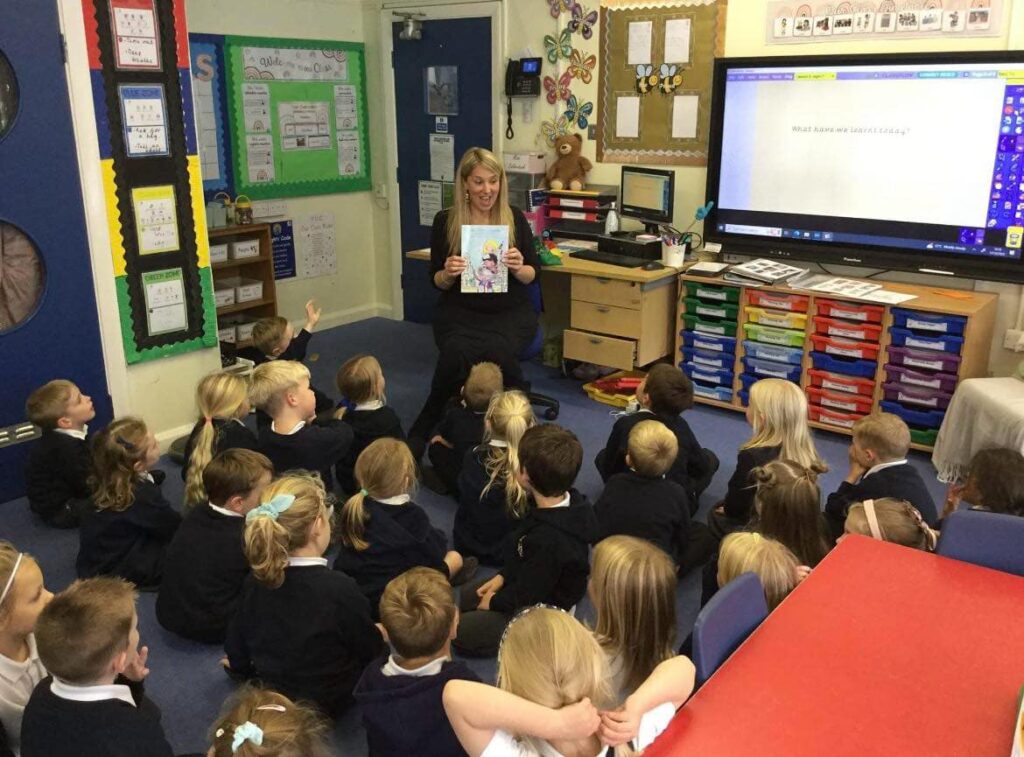
"Although this was out of my comfort zone, it was nice to see so many children engaging and enjoying the book."

17th century barricade uncovered at Castlegate
Wooden stakes used to defend Sheffield Castle have been found in Castlegate, marking the first preserved example of a 17th century defence system, known as an abatis.
The stakes would have likely formed part of an abatis, a barrier made out of sharpened wood strategically placed to slow down attacking forces and create a ‘killing zone’, used here in front of the castle gates.
Wessex Archaeology have been leading the dig on behalf of Sheffield City Council as part of the city’s regeneration project.
Lead archaeologist, Ashley Tuck, said these will “add to our understanding of this turbulent period in Sheffield’s past".
He said: “So often we are told about Civil War defences like abatises being used at historic properties across the country, but usually there is little to see of these important features.
“To be able to hold the very wood to which the defenders of Sheffield Castle trusted their lives is extraordinary.”
The stakes were used to defend the royalist-held castle during its 10-day siege in August 1644, before eventually falling to parliamentary forces.
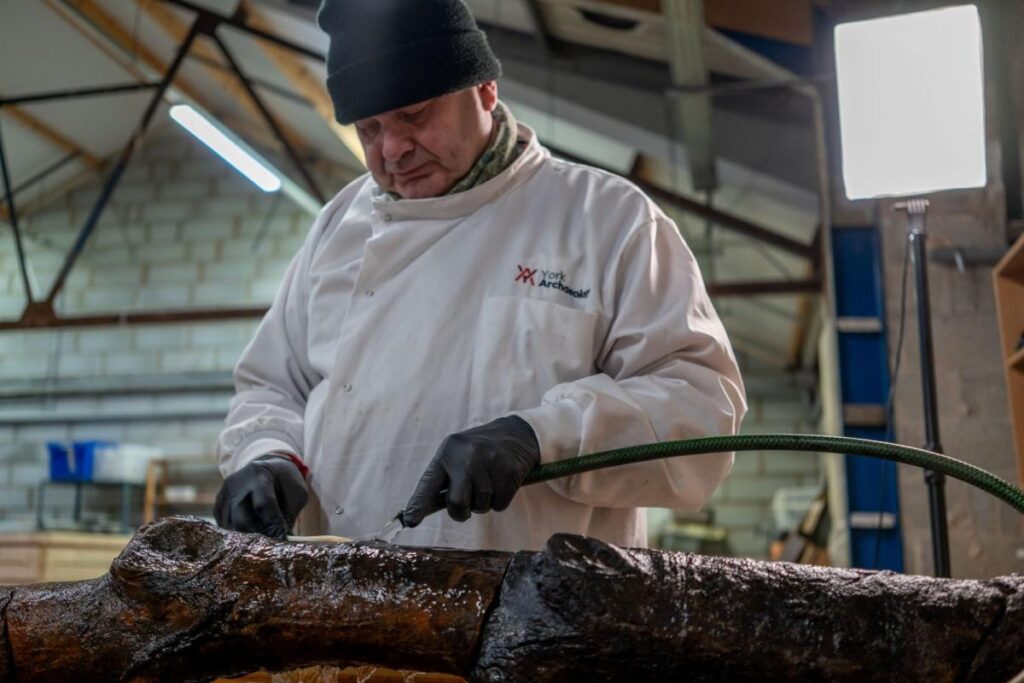
The wood used to make an abatis usually decays quickly, however the specific conditions of the site meant the wood was buried quickly in the waterlogged remains of the moat. Their recovery therefore represents a unique find in British archaeology.
Despite Sheffield's image as an industrial revolution city, the castle shows the city's rich history. The first reference to a castle on the site dates back to the 12th century.
The stakes will be given to Sheffield Museums Trust after preservation work is completed, which may still take years to complete.

Judge sentences Sheffield animal abuse couple after “worst case of its kind” in 45 years
A man who filmed his partner having sex with their pet dog has been jailed for five-and-a-half-years.
Graham Marshall, 39, had “perverted” sexual fantasies that drove the abuse of his dog with partner Paige Reaney, 33, Sheffield Crown Court heard today.
Marshall called Reaney “mummy” when talking to the dog and described the videos the couples shared with each other as “so, so, f****** hot, it’s amazing”, a court heard.
Judge Jeremy Richardson KC said: “In a professional life in the law covering 45 years, I thought I had encountered most acts of depravity.
“This case is perhaps the worst example of a case of its kind that I have ever come across.”
Judge Richardson said he accepted there was a “level of coercion” when Marshall made Reaney engage in sexual activity with their pet pug, Charlie.
He added that Reaney “went along with what was happening on a number of occasions” and “played [her] role to the full.”
Reaney admitted bestiality and animal cruelty at a previous hearing.
She received a nine-month prison sentence, suspended for two years.
Marshall admitted the same charges, as well as possessing child abuse images, possession of extreme pornography and voyeurism.
A vet said that Charlie would have been in distress when forced to indulge in the acts, a court heard.
Judge Richardson said: “The dog has suffered due to the abuse of it by two human beings to a state of learned helplessness."
Marshall was subjected to sexual abuse as a child, including bestiality and has been living in a tent in the woods, a court heard.
Judge Richardson told Marshall: “You have indulged in a vast array of different acts of sexual deviancy of a very serious kind.”
He added: “You have deeply ingrained harmful sexual perversions within your character which embrace serious criminal conduct.”

Rugby player donates part of her liver to save baby’s life
A women’s rugby player from Royston, South Yorkshire donated part of her liver to save the life of a baby she has never met.
Courtney Evans, 25, underwent the 10-hour operation at St. James’s Hospital in Leeds, becoming their youngest-ever liver donor.
The procedure took place two days after she played in the semi-final of the Women’s Rugby League (League 2) with her former club, the Halifax Panthers.
She told the BBC: "I play rugby, so having scars on my legs from studs and knocks here and there, having one on my sternum doesn't phase me."
She is hoping to return to rugby and play in the first match of the season with Wakefield Trinity on 23 March.
Miss Evans was inspired to volunteer for the surgery because of her day job working in CT Radiology at the Mid Yorkshire Teaching Hospitals NHS Trust, and by caring for her father who is diabetic.
According to the NHS, the average wait time for children needing liver transplants from deceased donors is 74 days, but some wait up to a year and a half.
The liver is the only internal organ that can regenerate, so healthy people can donate part of their liver either to a known friend or family member or to someone on the transplant list.
Patient confidentiality means Miss Evans does not know the details of the baby her liver was donated to, but she has received updates on their progress.
Miss Evans has been nominated for the Yorkshire Choice Awards Inspirational Individual of the Year 2025.
She told the Wakefield Trinity Community Foundation: “Having since heard about the progress of the baby, it's so overwhelming to think, ‘I’ve saved a life!' It’s really hard to put into words, but it is something that I’ll never forget.”
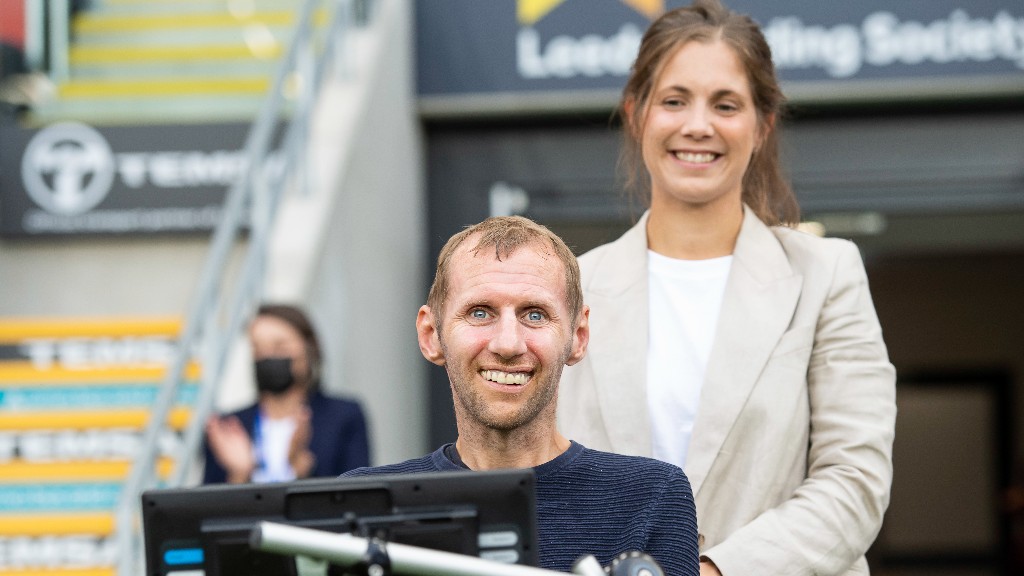
Late rugby league star Rob Burrow’s wife to compete in London Marathon as tribute ‘to his enduring legacy’
Lindsey Burrow, widow of rugby league star Rob Burrow, will be running the London Marathon this year as a tribute to her husband.
Mrs Burrow will be running in the 26.2 mile course. She said, “Each mile I run is a testament to his enduring legacy.”
Rob Burrow passed away in June 2024 due to motor neurone disease (MND), which was diagnosed five years before his death.
Mrs Burrow said that running in this marathon is “not just a physical challenge; it’s a deeply personal journey of love, loss, and resilience."
Her participation in the marathon will contribute towards donations to the Leeds Hospitals Charity and Leeds Rhinos Foundation. Last year, the marathon raised £73.5 million.
The TCS London Marathon will take place on April 27 where Mrs Burrow will participate alongside her brother Mark.
Rob Burrow, born in Wakefield, was a Scrum-half for 17 years at Leeds Rhinos, winning a total of 13 trophies during that stint including eight Super League titles. With over 500 appearances in his career, he retired in 2017. He chose to come out of retirement for just one match in 2019, a month after he was diagnosed with MND.
He was also made a CBE by the Prince of Wales in 2024 for his efforts to raise awareness for MND, having raised over £15 million for MND charities.
The Rob Burrow Leeds Marathon, dedicated to the former Rhinos player, has also added two new events for this year. There will be a new marathon relay and one-mile run during the event in May.
Mrs Burrow was present for the launch at Headingley Stadium in Leeds.

Speaking out, fighting back: the importance of women reclaiming their voices
Desperate for help, Jessica Lynam was 19 the first time she reached out for domestic abuse support. She was told she would need to relocate to be offered refuge. Wanting to stay in her home city, she ended up staying in the abusive relationship.
"This is why women feel they have no option but to stay with their perpetrator," she says. "I didn't feel supported at all. This is why I ended up in another abusive relationship."
Throughout her 20s, Jessica was abused by two separate partners, and during a particularly dark time, it caused her “try to end" it all.
She reported the abuse both times, and eventually faced one of her perpetrators in court, but to her horror, he received only eight weeks for assault by beating and “blew a kiss” at her from the dock.
Jessica, 30, is now taking control and reclaiming her voice, speaking out against domestic abuse and raising awareness for the subject on social media and at vigils.
She plans to take the stage this International Women’s Day, speaking at Sheffield Women’s Collective’s (SWC) vigil in the Peace Gardens on 8 March to share her story.

As a part of SWC’s three-month campaign to help victims and survivors of domestic abuse by raising money for Sheffield Women’s Aid. Jessica is speaking out about the abuse she suffered and how she feels “the blame is always on the woman”.
She hopes by being using her voice and being open about her own experience Jessica will raise awareness and help other women.
Her testimony comes at a crucial time. Last year, the new Labour government pledged to halve violence against women and girls (VAWG) within a decade, promising specialist courts and policing and tougher laws to support the 2 million women affected yearly by male violence and abuse.
However, a year on and following the Autumn Budget and the Chancellor’s speech, Labour seems to have stepped back from their initial promises, with no set funding planned, despite VAWG being declared a national emergency.
“The Labour party does have that desire and motivation to tackle violence against women and girls," says Hollie Venn, the CEO of Women’s Aid Sheffield. "[But] what we’re not seeing is those words translated into funding and projects”.
She explains funding is essential for tackling domestic abuse as a national emergency, and Women’s Aid have had to “beg and plead for funding for [their] services”. Specialist work has been put into place in some areas, such as in Northumbria where police control rooms have stationed domestic abuse specialists to take calls, but Venn feels it is “disappointing specialist organisations like [Women’s Aid] haven’t been asked to deliver the work,” when they have 50 years of dealing with domestic abuse cases.
It’s not only charities such as Women’s Aid who feel let down by the lack of communication from the government, survivors, including Jessica, have said the fact that the government are not showing any signs of delivering on their promises is “further insult to injury”.
On a local level, grassroots organisations such as SWC are stepping in to amplify victims’ and survivors' voices as the government fails to show any sign of delivering on their promises. Venn believes groups like these are “essential” to battling violence against women and girls, since Women’s Aid themselves started as a grassroots feminist organisation in the 1970s.
Amber Millar, one of the founders of SWC, also highlights why grassroots organisations are important. “With volunteer led and not for profit groups, you know that those involved have a personal commitment to the cause," she says. "With local groups, we can focus on local issues, and help local charities, such as our fundraising efforts for Sheffield Women’s Aid.
"We want to focus on calling it what it is - men’s violence against women and girls. There is no mystery entity committing this abuse. We need to educate young people on what abuse is and how to identify it. We need to have conversations with boys and young men about what is and isn’t healthy behaviour in a relationship, especially when we’re seeing the rise of ‘influencer’s’ like Andrew Tate, and we have a sexual predator as US president.”

Giving women like Jessica a platform to tell her story empowers women’s voices, it removes the perpetrator from her story, and spotlights her own experiences and feelings.
Venn says this is an integral way to support women, and often it “helps other women recognise what has happened to them”. She explained when women do speak out, “their confidence grows and they feel empowered to own their experience out of pride of being a survivor rather than the shame of being a ‘victim’”.
Jessica plans to continue using her voice to help other women and girls. As well as speaking at SWC’s International Women’s Day vigil next week, she has also recently started her own podcast ‘Conversations That Matter’, which she hosts live on TikTok. She currently has over 1,000 followers and hopes that it will only grow as she continues to speak both on her own lived experiences, and on other crimes against women and girls.
When asked what she would explain to a woman in the same position she was in at 19, she says: “Be open and honest with your friends and family. If there’s something that’s being held against you, speak on it yourself. Take that power away from your abuser, don’t let them hold that over you. It may be scary to leave and it may be intimidating, you may have to start all over again, but at least you are alive.”

Pair narrowly avoid prison after admitting hair salon drug distribution
A judge told two people they had "escaped going to prison by the skin of your teeth" at their sentencing at Sheffield Crown Court.
Dean Richard Hassan, 46, a self-employed plasterer, and Jenna McGarry, 39, a beauty salon employee, narrowly avoided jail time this morning.
The court heard that The Hair and Beauty Lounge, on Harborough Avenue, in Deepcar, was a “low level distribution centre” for a variety of Class B and C drugs.
More than £7,000 worth were found between the salon and Hassan’s residence.
The pair pleaded guilty to possession with intent to supply. Hassan was sentenced to 18 months imprisonment, suspended for two years, and McGarry was sentenced to nine months imprisonment, suspended for 18 months.
In mitigation, the court heard that the ordeal, which had been going on for more than two years, had driven Hassan “to the edge of despair”, and McGarry “bitterly regrets it”, and “feels like the biggest fool in the world”.
Hassan had struggled with debt the court was told, with Judge Jeremy Richardson KC saying: “You had illegitimate debts to those supplying you with drugs, and you felt obliged to peddle drugs yourself."
The court heard both had struggled with mental health problems. Hassan also suffered from underlying heart conditions and McGarry from the death of her partner four years ago, and is the sole carer of her three children, two of whom are under 18.
Both were given court-ordered rehabilitation sentences to aid their recovery.
Judge Richardson said that if the case had been heard by a jury, it was likely the pair would have been jailed, but as neither defendant had any prior offences, it became a “balancing exercise”, and any outcome must be “just and proportionate”.
“It is a tragedy that each of you find yourself in the dock of a Crown Court," Judge Richardson added.