A musical performance that explored the rich storytelling heritage of an “energetic and spiritial” dance took place last weekend.
Prior to the performance, the audience was given a deeper cultural insight into the origins of Capoeira Angola, which is traditionally referred to as a “game”.
In his debut talk to celebrate Black Consciousness Day in Brazil, organiser Professor Jamie Gladstone shared the benefits of storytelling and the importance of musicality, rhythm and movement. He also highlighted that the art form has an African-centred approach.
Prof Gladstone, 42, from Sheffield, is a lecturer in race and education at Leeds Beckett University and a PhD student at the University of Glasgow, researching the impact that Capoeira Angola could have on developing anti-racist pedagogies in education.
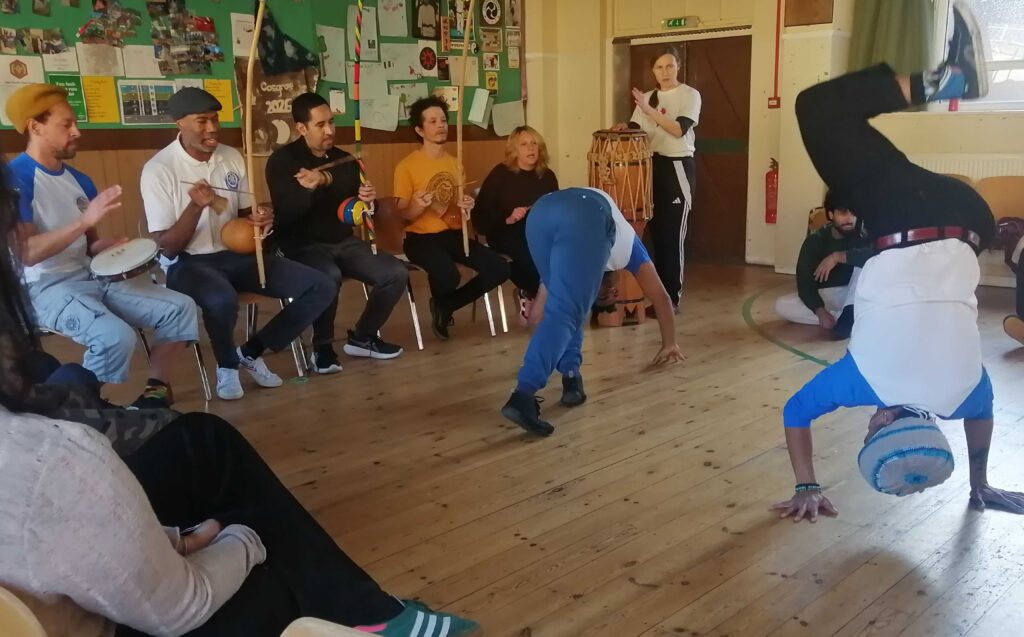
Spectators saw a playful sense of one-upmanship among performers as each player attempted to trick and outshine the other.
For newcomers watching the art form for the first time, the low, acrobatic movements and floor work bear a striking resemblance to 1980s and 90s breakdance battles.
Despite the competitive edge, a strong sense of camaraderie and connection links the two people playing in the centre with the musicians and performers encircling them.
The performance carries a deep history, having been developed in northeastern Brazil by enslaved African and indigenous people as a way of preserving and celebrating traditions largely suppressed under colonisation.
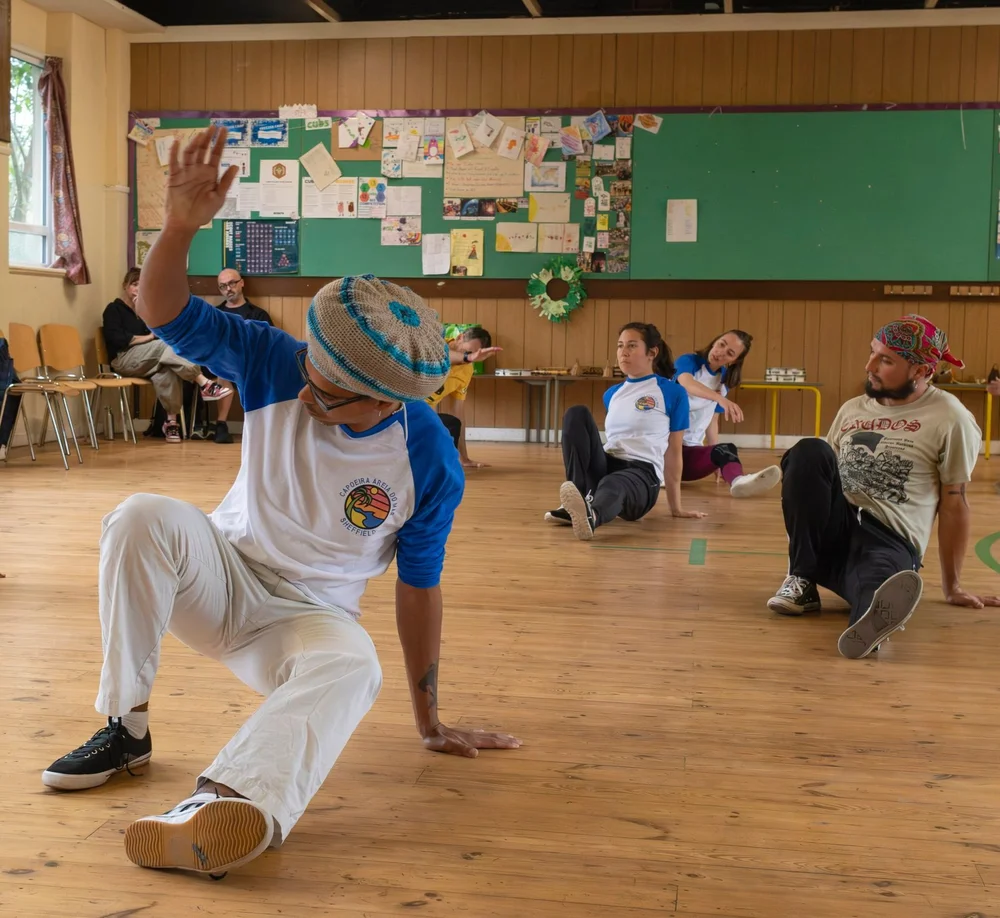
Prof Gladstone, who is pictured in the front, is passionate about keeping those traditions alive within the Sheffield community.
Asked to sum up what Capoeira Angola means to him in five words, he said: “Energetic, spiritual, ancestral, powerful, and connection.”
Weekly Capoeira Angola classes give beginners and experienced practitioners alike the space to learn the fundamentals.
Sessions take place at Park Community Action Centre in Sheffield at 7pm on Tuesday. All are welcome.