“I wanted to die and I said this to the doctor, and they said I can give you a leaflet.”
These are the words of Leah Beardsall who has spoken out after a battle to be treated for painful and debilitating symptoms.
The 20-year-old student had to endure being unheard and continually dismissed before being diagnosed with Premenstrual Dysphoric Disorder (PMDD) and Polycystic Ovary Syndrome (PCOS). Both conditions impact the menstrual cycle and cause severe mental and physical symptoms.
Another women who waited 13 years to receive a diagnosis for PMDD also struggled with feeling “embarrassed” and “let down” when she left the GP.
They have both chosen to share their experience following the Health Secretary’s announcement to reinstate the women’s health strategy.
Leah’s battle began in 2024, and although she switched GPs when she started university, she continuously felt ignored.
“I felt like a ghost of myself,” Leah says. “My identity and who I was had been sucked out of me. I was a void of a person.
“I was frustrated because all this [doctor] wanted to talk to me about was my chance of having children, like that was all I was born to be able to do.”
Health Secretary Wes Streeting has announced a 10-year plan to reform the NHS system, which he says “too often gaslights women, treating their pain as an inconvenience and their symptoms as an overreaction”.
With gynaecology waiting lists which currently affect more than 565,000 women and nearly decade-long intervals between endometriosis diagnoses, Leah is sceptical about how effective Mr Streeting’s plan will be.
Leah, who is also on the waitlist to be diagnosed with suspected endometriosis, believes the issue is too deep rooted in British society and requires educational reform as well.
“Medical misogyny is just rooted in everybody,” she says. “That belief was instilled into my own family members and they were saying the same thing to me. I felt like I was going insane.
“It’s down to the way people think and view women, which has long been rooted in history. Education is really important and not enough goes into it.”
During her struggle to be diagnosed with PMDD and PCOS, Leah felt unsupported by the women in her family, who also mimicked the doctor’s dismissiveness.
Female members of Leah’s family have been to the doctor’s in the past with similar symptoms, but were gaslit and ignored so were forced to suffer with their medical problems unsupported.
The women’s health strategy sets out 117 action points, including focusing on gynaecological outpatient procedures over the next five years, and improving access to contraception and perinatal mental health support. Additionally, £900 million has been invested into the Best Start Family Hubs and Health Babies programme.
Secondary objectives focus on launching a new programme to improve education for girls and their menstrual health, as well as creating safer and better experiences for women who access maternity services.
The government also hope to eliminate cervical cancer by 2040, using home testing kits for human papilloma virus (HPV), and introduce more breast pain and postmenopausal bleeding clinics by the end of 2026.
Another aim is to half violence against women and girls within a decade, through a £50 million investment which will also be used to support victims of child sexual abuse.
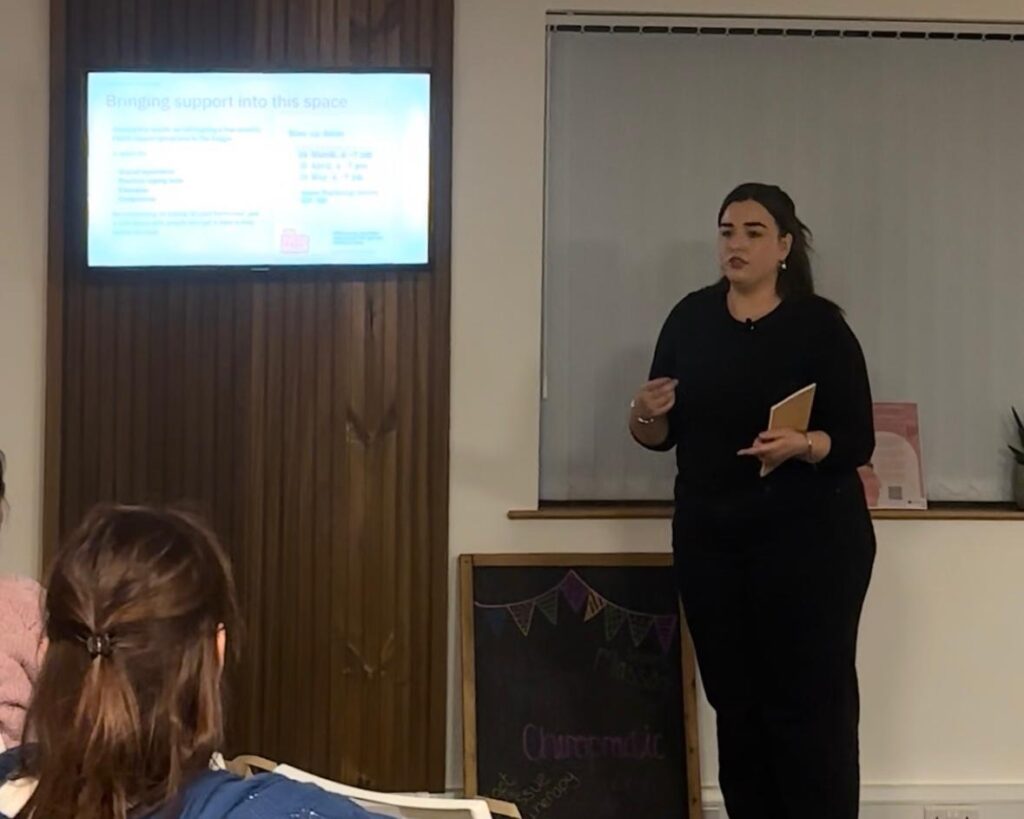
However, Emma MacNay, who suffers from PMDD and set up a support group in Sheffield for women with the same condition, questions how successful the strategy will be.
The 31-year-old was diagnosed with the disorder this year, yet she had been speaking to doctors about her symptoms since she was 18-years-old.
Emma’s journey to diagnosis included being misdiagnosed with anxiety and depression and she was encouraged to take antidepressants early on, despite wanting to learn more about her unknown illness and alternative treatments.
Unable to share her experience and receive appropriate support, Emma’s symptoms manifested into rib pain. She was taken to A&E as doctors wanted to rule out a punctured lung, although Emma was sure it was due to her mental health.
She said: “There was no understanding or feeling that you were being listened to – that you were taking up too much time or space, feeling dismissed.”
As someone new to Sheffield with a recent diagnosis, Emma looked for a support group in the area, yet found none. She was then inspired to set up a meeting place for women with PMDD.
They had their first session March this year, with plans to meet monthly.
The group also welcomes women who do not have a diagnosis, as they understand how difficult, long and mentally tolling it can be to receive one.
Emma says she has heard stories from more than one woman, revealing doctors had Googled ‘PMDD’ while they were in the room.
Ultimately, Emma had to conduct her own research to learn more about her disorder and where to find support from external organisations.
She believes the government should address broader societal and misogynistic attitudes, as well as improve doctors’ understanding of women’s health.
“I would like to see improved education across the board on women’s health and hormonal health, due to it currently being a footnote,” she says.
“We’re seeing health professionals graduate and treating the public, while they are completely unaware of conditions that more than half the country could be suffering with.”