Volunteers at a Penistone church have uncovered the hidden gravestone of a local young woman who died over 300 years ago.
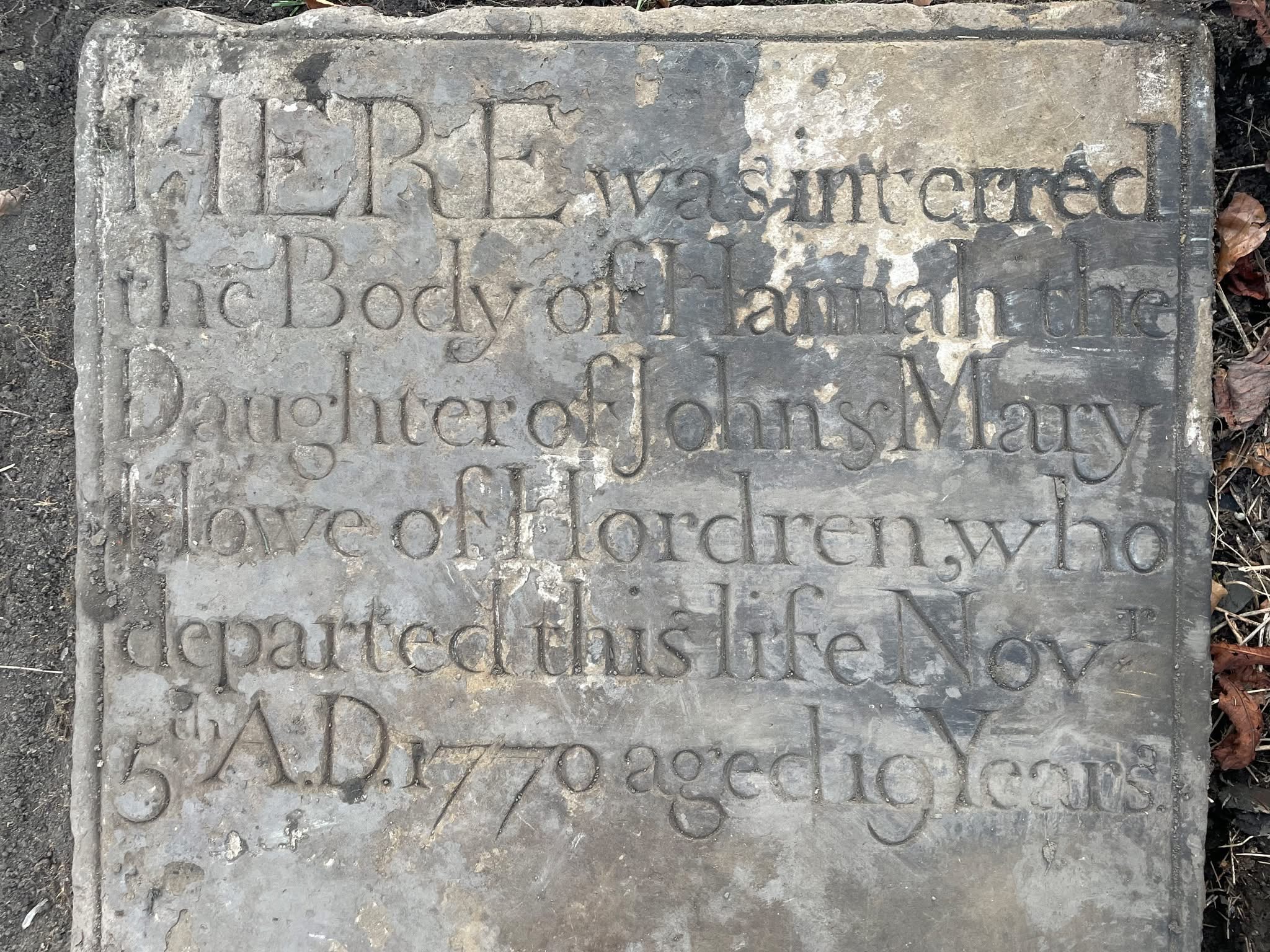
The headstone was found at St John the Baptist Church in Penistone, buried underneath another stone and completely obscured from view.
It belongs to 19-year-old Hannah Howe, who died in 1770.
Richard Galliford, 74, who is the chairman of Friends of Penistone Church, said he was happy to have played a part in returning Hannah’s gravestone to its rightful position.
“Every gravestone has got a story, it’s got a life to tell,” he said.
Mr Galliford started volunteering with the group and maintaining the churchyard to stave off the boredom of retirement.
Members of the volunteer group were cutting the grass around the stones when they noticed another large stone underneath one of the graves.
Mr Galliford realised this was not just a supporting stone, as the team had initially thought, due to a decorative border around the edge.
After identifying an engraving, he realised this must be someone’s headstone, and asked a friend at the local fire station if they could visit the church and lift it as a training exercise.
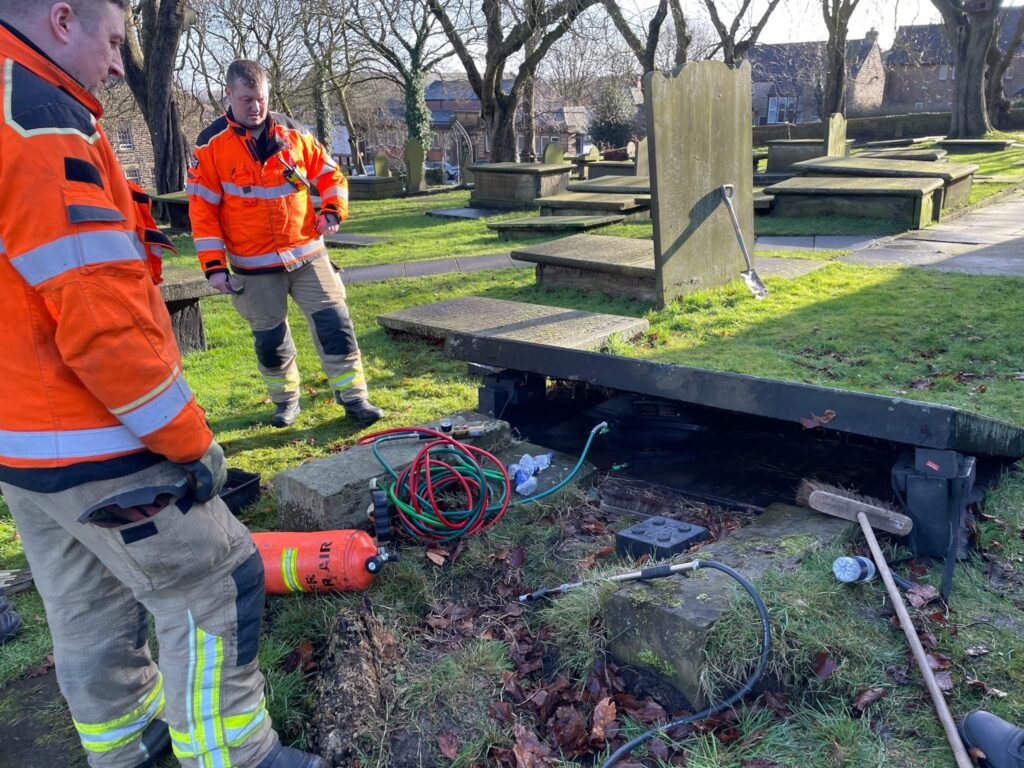
Firefighters lifting the stone. Image credits: Friends of Penistone Church.
Mr Galliford explained that Hannah’s stone is likely to have been covered up for at least 150 years, as many gravestones were moved when the vestry was built in the early 1800s.
Engravings on the headstone revealed that Hannah had lived at Hordron Farm, a short walk from the church itself.
The volunteers walked over to what they believe is Hannah’s old home, now a remote and derelict farmstead.
Mr Galliford believes the Howe family were sheep farmers, raising livestock for the Penistone “beast market”, which opened in the early 1700s.
He said: “I was trying to visualise the life of a 19-year-old in this very remote and bleak area.
“I was trying to imagine what a lonely life Hannah must have had. There are other farms in the area, but they’re so far apart, she couldn’t have had many friends.”
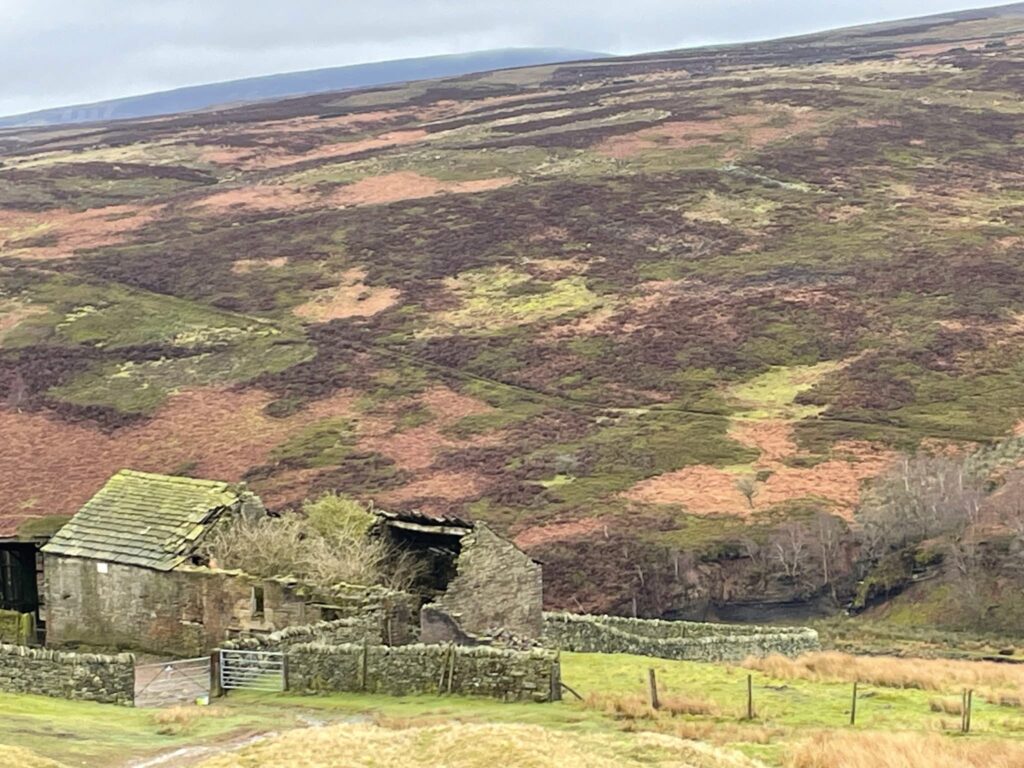
Hordron Farm today. Image credits: Friends of Penistone Church.
Hannah’s isn’t the only headstone that has been discovered at St John’s recently.
The volunteer group has also uncovered the grave of Joanna Swift, daughter of the local historical figure Reverend Henry Swift.
Rev. Swift was a popular non-conformist vicar, who preached in the area in the 1600s and was repeatedly imprisoned for his refusal to convert to the Book of Common Prayer.
His legacy lives on, with locals at the time building Bullhouse Chapel, the oldest continuous non-conformist chapel in the country, near Millhouse Green in Penistone.
What happened to Rev. Swift’s headstone remains a local mystery; however, Mr Galliford believes it may have been damaged and disposed of by workers laying drains around the vestry in the 1980s.
“There are some amazing people buried in the churchyard, which you don’t really think about,” he said.
The current Reverend, David Hopkins, also spoke about the wealth of historical figures buried at St John’s, including ancestors of William Wordsworth and the founders of Sheffield Wednesday.
He said: “You don’t know who you’re going to discover next.”
You can find out more about the church’s historical significance and local history in the area on the Penistone Pictorial’s website.