

Controversial changes to visas for graduates ‘could threaten thousands of futures’
A scheme giving graduates the chance to work in the UK has been a beacon of hope for 100,000s of people wanting to move to this country to study and build a better life for themselves, but campaigners say planned changes would end this.
The proposals by Home Secretary James Cleverly to the UK Graduate Visa route have sparked concerns among students and professionals alike, signalling potential repercussions on both personal and national levels.
Ahmed Abdelraouf, an Egyptian national currently residing in the UK on the Graduate Visa, embodies the hopes and challenges faced by many.
Reflecting on his journey, he acknowledges the pivotal role of the Graduate route in shaping his decisions regarding further education and career prospects.
For him, pursuing a postgraduate course became a clear choice with the assurance of extended stay and professional growth opportunities in the UK.
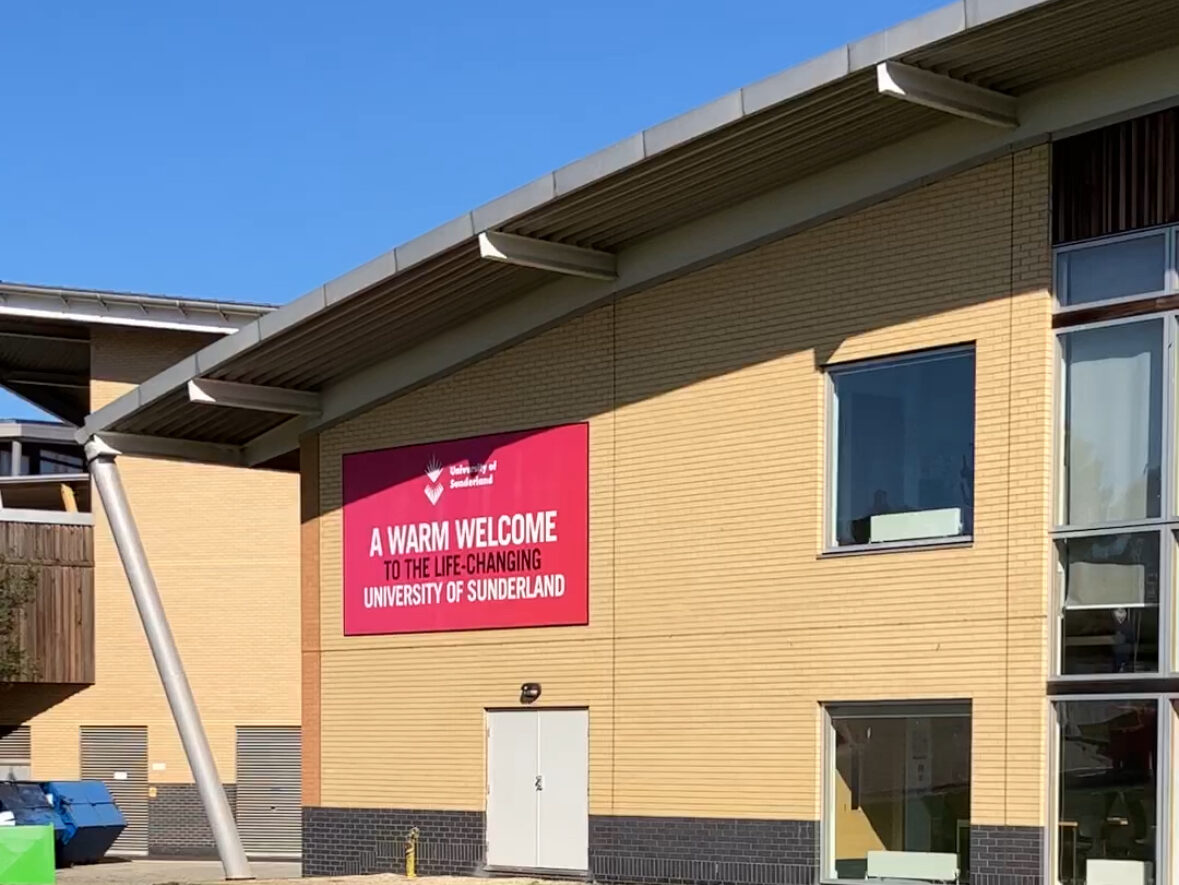
Since completing his studies he has continued to work at the University of Sunderland as an International Development Officer. His story underscores the personal stakes involved, as aspirations of building a life and career in a foreign land hang in the balance.
He said: “I was always hesitant if I should do a postgraduate course but after they introduced the graduate route visa, doing a masters course was a no-brainer.
“It meant that I could stay for a couple more years for work and gain experience that’ll help find a job in the UK for the future. I always wanted to work and live in the UK for as long as possible.”
When the route was launched in July 2021, the Government said that it wanted to attract and retain bright international students to contribute to society and the economy after their studies in an effort to help businesses recruit highly qualified talent from across the globe to drive the economy forwards.
However, recent developments suggest a shift in this narrative, raising questions about the prospects of those who have built their dreams around this pathway.
The Migration Advisory Committee (MAC) has since been commissioned to conduct a rapid review of the Graduate Route. The review aims to ensure that the Graduate Route operates in the best interests of the UK and takes steps to prevent abuse. The Home Secretary published a commissioning letter to the MAC on 12 March 2024.
The Prime Minister, Education Secretary, Secretary of State for Science, Innovation and Technology and Home Secretary have all claimed they remain committed to attracting talented students from around the world to study in the UK, and to championing the UK’s world leading higher education sector, but also want to ensure the Graduate route is not being abused.
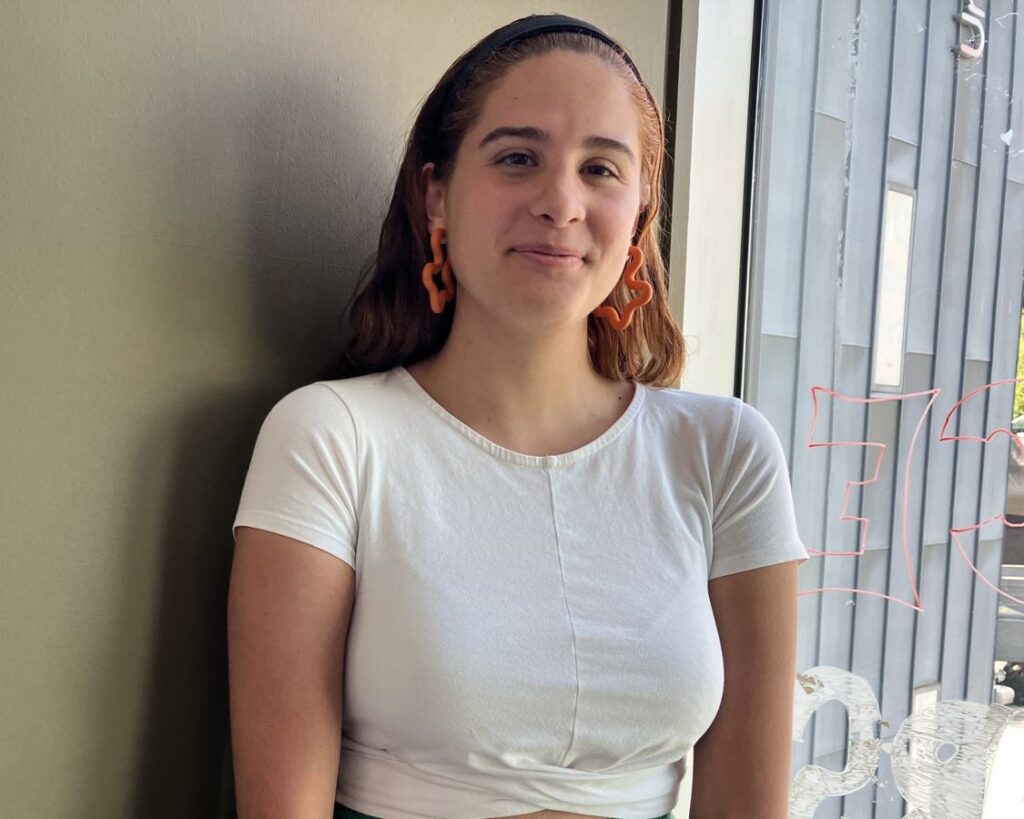
Maria Jose Lourido, an Education Officer at Students Union Sheffield, echoed similar sentiments, emphasising the emotional attachments and personal sacrifices connected with the pursuit of higher education and subsequent plans to remain in the UK. Her testimony highlights the complex web of relationships and connections forged during her time in the country, underscoring the profound impact of potential policy changes on individuals' lives and futures.
She said: “I really want to stay in the UK. I love the UK, I have friends and I have a partner that I’ve been in a relationship with for two and a half years, so if I must leave, I’ll be leaving an entire life behind.”
However, the proposed alterations to the Graduate Visa route threaten to disrupt these narratives of hope and continuity. As Mr Abdelraouf observes, the attraction of alternative destinations with more favourable visa policies, such as Australia, presents a substantial dilemma for international students weighing their options.
He said: “The trend that we're seeing is a lot of students are not coming to the UK and instead choosing to go to a country that offers a better graduate route.
“For instance, Australia offers five years on their graduate visa. I understand Australia is more expensive than the UK, but people are more tempted to go there because they know that after studying, they can stay in the country for longer to work and make lives for themselves.”
The number of international students taking up postgraduate places at UK universities has already fallen sharply, according to commercial data that sparked further warnings about the financial health of the higher education sector.
Universities are already claiming to see a 30-40% drop in the number of international postgraduate and undergraduate applications in January 2024 compared with January last year.
Moreover, the proposed increase in the minimum salary requirement for Graduate Visa holders adds another layer of complexity to the equation. Ms Lourido points out the practical challenges faced by graduates in securing employment that meets the new criteria, particularly in sectors outside the corporate world.
She said of the proposed new minimum salary for graduate visas: “As a person going into the workplace, unless you’re working in corporate jobs, it’s impossible.
“So, it’s not as simple as international students are not allowed to stay in the country two years after graduation. It means that people must leave the country, leave everything, the lives that they’ve built in the country behind, but now they’re also having to go into exploitative jobs in order to be able to stay in the country.
“So, it’s a lose-lose for everyone involved.”
The repercussions of these policy changes extend beyond individual experiences to include broader societal and economic implications. The potential departure of international students and skilled professionals could deal a significant blow to the UK's higher education sector and labour market, depriving it of diverse perspectives and expertise essential for innovation and growth.
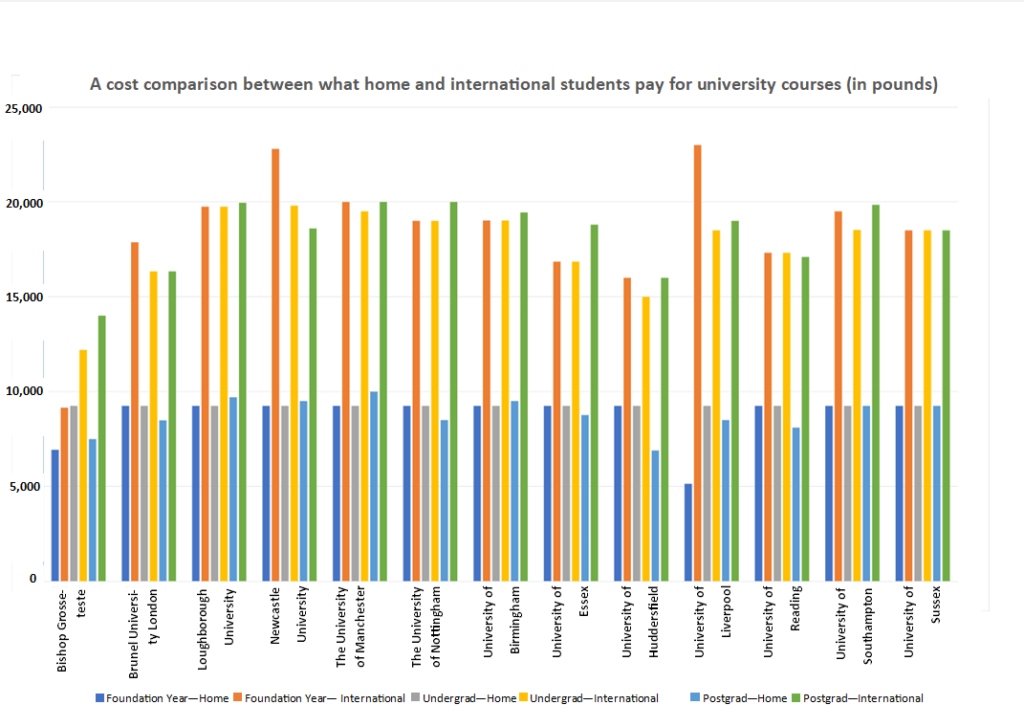
Furthermore, as international students bring in significantly more funds per capita – with students on a visa often paying double that of their counterparts - the financial ramifications stemming from reduced international student enrolment could reverberate across universities and local communities, aggravating existing challenges in the wake of the pandemic.
Professor Andrea Nolan, International Convener of Universities Scotland and Principal and Vice-Chancellor of Edinburgh Napier University, said: "Any change to the Graduate Route must also ensure it remains an attractive and competitive offer to those who wish to study here.
“Universities are committed to the elimination of any visa abuse but with very little evidence of this happening, we need to reframe the narrative and reassure prospective international students that Scotland and the UK remains open, and a warm welcome awaits.”
“Bring on the General Election” says Hunt
Sheffield City Council leader Tom Hunt has told Sheffield Wire that he intends to put himself forward to be council leader again on 15 May.
Negotiations over who will take on the role are pending following the news that no party retains overall control of Sheffield City Council for the fourth year running.
He said: "I will be putting myself forward to be the leader of Sheffield City Council and continuing with our work to deliver better public transport for this city, making sure that our city centre continues to improve, delivering on new affordable homes and helping people who are struggling with this Tory cost of living crisis.
"These are my priorities and I hope that my colleagues from across parties will back me on that."
The Walkley cllr added: "It´s clearly been a good day for the Labour Party across the country and a terrible day for the Conservatives. Bring on the General Election."
Financial impact of international students on the UK economy
International students bring the UK government £40 billion every year, the equivalent of every resident being £560 better off - but campaigners say proposed visa changes will drastically cut this figure.
The economic implications of international student enrolment are varied according to economists.
Analysis by London Economics shows that first-year international students enrolled in the 2021/22 academic year are projected to contribute a total net economic benefit of £37.4 billion to the UK.
This substantial economic impact is distributed across various sectors and regions, with international students making a net economic contribution of £58 million per parliamentary constituency over the duration of their studies. Resulting in every level of the community benefiting.
As of 2021/22, the number of overseas students studying in UK universities reached a record high of 679,970, constituting a quarter of the total student population.
This surge in enrolment reflects a trend of steady growth, with the number of new overseas entrants rising from 254,000 in 2017/18 to 381,700 in 2020/21.
Despite these gains, the UK has faced stiff competition from other global destinations, notably Australia, which overtook the UK as the second most popular destination for international students in 2019.
This intensified competition underscores the importance of strategic initiatives to maintain the UK's appeal as a top study destination.
In 2021/22, annual tuition fees for international undergraduate students in the UK started at £11,400. This rose to as much as £32,081 in some cases. For home students this is capped at £9,250.
Annual tuition fees for international postgraduate students ranged between £8,500 and £51,360.
This means that over £4bn is brought into the UK economy every year from international course fees alone. This doesn’t include the visa fees or what is spent in by students in their day-to-day lives.
Campaigners say that as well as bigger businesses these changes will also impact local establishments, such as shops, pubs and restaurants.
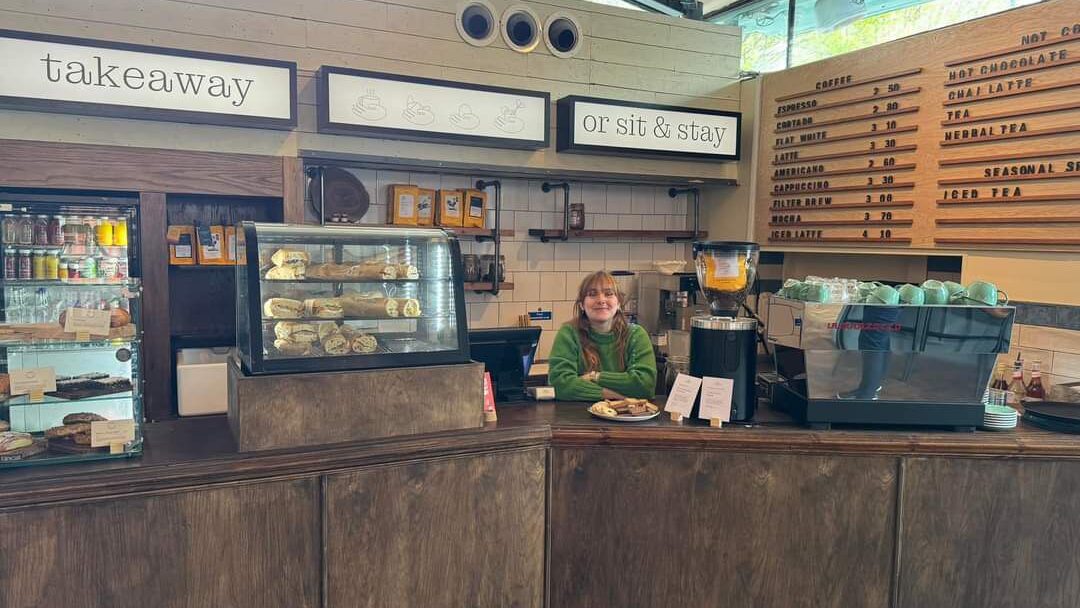
Anne Gaillot, the assistant manager of Forum Kitchen & Bar in Sheffield believes a sudden drop in international students would cause severe repercussions throughout the industry.
She said: “I think there would be a massive financial impact. I can't quantify it, of course. But, I serve people from everywhere, all the time, this would cause a very drastic change to business.”
Beyond direct economic benefits, international students also are also seen to enrich the UK higher education experience in terms of culture and preparing students for a globalised workforce.
And politicians also point to the the UK's reputation as a leading educational hub which has far-reaching diplomatic and soft power implications, with over a quarter of the world's countries being led by people educated in the UK.
Sheffield Hallam University Students’ Union President Abiola Fasipe and International Students’ Officer Emmanuel Owusu Takyi said: “As international students ourselves we would like to show solidarity with our fellow international students. We cannot speak highly enough about the broad benefits international students bring both locally and nationally.
However, the Home Secretary, James Cleverly, has proposed significant policy changes to the Graduate Visa route, and numbers of international students applying to study in UK universities have already fallen.
Data from Enroly indicates a 37% drop in international offers for UK postgraduate courses in January 2024 compared to the previous year.
This trend is coupled with currency crises in key markets like Nigeria and increased competition from rival destinations.
“There’s no way of proving it”: victims of drink spiking frustrated with lack of resources
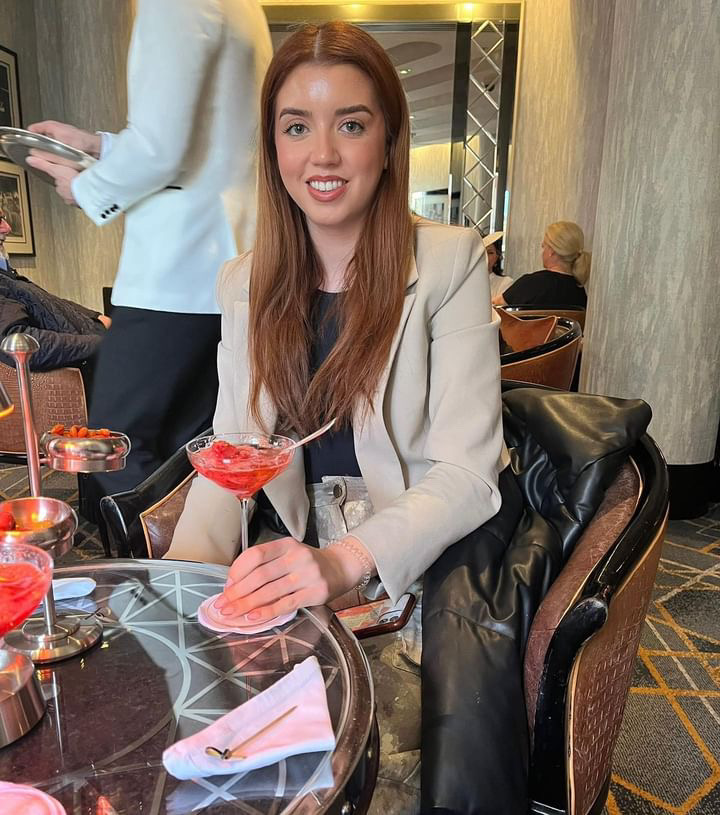
Lara Berridge had just finished her A Levels when she was spiked on a night out in Sheffield. It was 6pm on a Monday night in June, not a time particularly associated with risk, but as soon Lara finished her second drink, she felt drowsy. "I could tell that something wasn’t right – I felt so strange," she says. "It felt like I couldn't hold myself up. I kept falling asleep but I'd only had two Pornstar Martinis and nothing alcoholic before I went out."
"I couldn’t get outside when it was time for us to leave for another bar. My friend tried to help get me out, but I was deadweight. A boy tried to help carry me out but noticed that my nose was bleeding and that I’d been vomiting. He could tell that something wasn’t right – it wasn’t standard drunkenness. My friends called an ambulance but when it arrived, the paramedics accused me of being ‘on something’."
That was the last thing Lara remembered before being taken to hospital. She had to spend the entire night alone due to COVID restrictions. Staff took her phone and refused to give it back until she was discharged.
“I woke up with stickers covering my entire body – I was so confused," says Lara, 2I. "I immediately started asking questions. The doctors told me that ‘I’d been a bit silly, and that I’d had a silly night’. I asked to be drug tested, but they said because I was unresponsive when I came in, I couldn’t consent, meaning they couldn’t test me. They were really rude to me. They wouldn’t let my dad in to see me, so he sat in the car park all night until I came out.
“Afterwards, my mum found it hard when I eventually started going out again. She had to get over that fear. It must be hard to get a call as a parent, saying your child is in hospital.”

At the time Lara claims she was spiked, in 2021, police released data revealing 1,466 reports of spiking incidents that year. By 2023, that figure shot up to 6,732, with 957 incidents relating to needle injections.
Specialists believe spiking can cause residual trauma as victims may develop anxiety about going out again, which potentially leads to developing trust issues. Those who sexually assaulted after being spiked can develop depression, post-traumatic stress, and suicidal thoughts.
Several campaigns have been launched across the country to raise awareness, educate on preventative measures, and pressure the government into refining spiking laws.
In 2021, students at the University of Sheffield created the campaign ‘Claim back West Street’ which sought funding and support from the local council to improve safety conditions on a popular street for student nightlife.
The campaign was backed by Sheffield Heely MP, Louise Haigh, who told the students: “Repetition is really important in making sure we are amplifying these messages to make a change in the city.”
Spiking has always been difficult to monitor and prosecute due to old-fashioned laws, and the unreliable nature of testing, as tests carried out in hospitals are not admissible as evidence in court.
Callum* was spiked in Sheffield, in March this year, during a night out with his girlfriend, Natasha*. Like Lara, Callum, and Natasha, both 20, hadn’t drunk anything before visiting the first bar.
“We went to the bar and Callum bought us a drink each," says Natasha. "I put my drink on the side while I was talking to my friends, but ended up giving my drink to Callum because I didn’t want to drink it anymore.
“I noticed that a strange man in the corner of the room was staring at me. It made me feel extremely uncomfortable. We left that bar to go to another, but by the time we entered, I noticed that Callum wasn’t there at all."

Callum only has vague recollections of the evening. “I remember stumbling around – I think I lost my phone,” he says.
Natasha says: “He was slurring his words and repeating everything he was saying. I thought it was time to take him home.”
The couple bought some food from a local takeaway and then got in a taxi and went home.
“When I was getting ready for bed, Callum went downstairs. An hour went by and I went downstairs and found him asleep on the sofa, chips in hand. I tried to pick him up but he was a deadweight. When I did manage to lift him, I dropped Callum and he fell on the floor, where he started to vomit on himself. It was reddish brown, but we had been drinking vodka and lemonade.
“I was so scared for him. I started panicking and rang another friend to help me. He carried Callum to the bathroom, where he vomited until 6 am. He was there for five hours."
Callum hasn't been on a big night out to a club since. “It’s completely put me off," he says. "When I do go to the pub, I keep my drink in my hand.”
In a 2022 report by the Home Affairs Committee, a survey of 1,895 victims and 1,413 witnesses, reported the highest number of spiking incidents in the East Midlands, North West, and South West. The report highlighted needle-spiking hotspots in Nottinghamshire, Merseyside, Northumbria, Avon and Somerset, and Sussex.
Survey respondents reported more mental health than physical health impacts, with 835 victims reporting both, and a low proportion saying the incident had no impact.
Last spring, 21-year-old Eve*, who studied at Nottingham Trent University, went to a rave. “We were rushing to go out, so I only made one drink before I left the house, and wasn’t able to finish it,” she says.
“When we got there, I got one double vodka lime soda. In the dance space, I realised a boy was weirdly close to me. I felt his erection pressed up against me and tried to move out of the way as much as possible, but it was busy. Twenty minutes later, me and my friends went into a toilet cubicle together and I started to feel weird.
“I knew I hadn’t drunk a lot. I’d taken recreational drugs before and knew how they felt. I hadn’t taken any that day, but it felt as though I had. I remember feeling so confused and I knew something wasn’t right.”
Eve decided to go home and went outside for a taxi to take her home to her university accommodation.
“I was out of it, but I knew what was going on – it was so weird," she says. "My brain was there but my body wasn’t quite matching up: it wasn’t correlating. My eyes were rolling back in the cab. I couldn’t control my body properly. I called my flatmate telling her how scared I was.
“When I got home, I couldn’t open the door – it’s like I’d lost my motor skills. My flatmate had to let me in, she took me to my room and I began balling my eyes out in relief to be home. I couldn’t see properly and was unsure of what was going on. Eventually, my boyfriend came to look after me.
“I was crying and moaning because I was so scared. It was a full-blown panic attack. In the morning, I felt awful – like I had a massive hangover. I was so embarrassed about why I had acted the way I had. I didn’t go to the hospital because I was scared.
“Because you have no proof or evidence of it being 100 per cent true, you don’t really want to tell people about it. They would just question it and assume you were drunk. With hindsight, I do wish I’d just gone to hospital. I’ll always question what happened and have that doubt.
“Venues need to have more preventative measures, such as covers. It would make people feel a lot safer. A lot of girls put their hands over their cups because of the lack of protection. In Nottingham, I was never offered anything.”
Preventative measures are offered in some bars. Paper and material covers can be placed onto open cups for free, companies such as NightCap offer practical products such as a scrunchie that turns into a cover. Some bars also offer drink spiking test kits free for anyone to use.
In 2021, there was an unprecedented increase in Nottinghamshire of reports of women being spiked with needles.
Freedom of information data revealed between 2018-2023, Greater Manchester police received 1124 reports of drink spiking, with only three charges. Nottinghamshire police received 439 reports but made no charges.

A 2021 e-petition that urged for tighter venue security and to make it a ‘legal requirement for nightclubs to thoroughly search guests on entry’, gained 175,000 signatures and was debated in Parliament.
The government response said: “The law already allows licensing authorities to impose conditions such as searches. Decisions on this should be made locally, taking account of circumstances, and there are no plans to change the law.”
Eve says: "It's terrifying. You can't get away from spiking - it's happening everywhere. It's almost impossible to feel safe anymore on a night out."
*Callum is a false name
*Natasha is a false name
*Eve is a false name

GB Deaf swimmer left to raise £20,000: “Due to a failing policy I am isolated and hidden”
Despite strides being made in some aspects of deaf sport, Great Britain's funding for the Deaflympics continues to lag behind according to one campaigning competitor.
While other countries fund their athletes to attend key events, as they would for any elite level sports team, the United Kingdom does not.
Nathan Young is a 25-year-old swimmer and coach from the Wirral, Merseyside, who has represented Great Britain in the Deaflympics for a number of years.
He is running a campaign on X/Twitter (@NYDeafSwimmer) in which he has posted for the last 1,069 days to get the attention of the UK government and get policy changed.
He has gained the attention of some MPs with Nigel Huddleston, MP for Mid Worcestershire, congratulating him on his sporting achievements.
Over the years, Nathan has had to raise around £20,000 just to enable himself to represent his country. He says: “I’ve never had support, everything I’ve had I have had to fight, beg and spend many hours campaigning for.”
Due to the lack of acknowledgement from government bodies, Nathan says: “I do not see myself as an athlete and I think that is very sad but this is my reality.”
He describes an intense frustration, seeing swimmers from other countries with a team of support behind them.
“If I take a coach I have to find one and pay for them, not to mention paying for everything else like travel and food.”
According to the swimmer, the ultimate goal for his campaign is to achieve funding, acknowledgement and respect.
“Right now I am isolated and hidden so I am continuing my campaign every day until policy is changed and accountability is taken.”
Nathan says that being profoundly deaf he struggled to play team sports. Though he enjoyed football, he couldn't hear instructions or his team mates which caused animosity from other members.
"I desperately wanted to fit in and have friends, I could swim and my mum asked if I could join the local swimming club and that’s how it all started," he recalls.
But deaf swimming is very different from mainstream swimming. Nathan says that in training he is reliant on the coach facing him, otherwise he is oblivious to the instructions being given. If a coach is not aware of this they can quickly become frustrated, thinking that he is purposely ignoring direction.
As his career expanded, he had to move to new clubs to get the training he needed. This was a difficult process, as he had to find patient coaches that made an effort to facilitate his lip reading. He describes one coach he had who used to throw floats at his head to get his attention, which humiliated him greatly.
“My most recent coach is the best I’ve had, but he still struggles to give me the attention and time I need sometimes.”
Nathan also struggles in competitions, relying on other competitors to know when to get on the block, and take his marks. He says: “Having to do this, it’s embarrassing, just mentally very difficult for me to do.”


Theatres tackle ‘neglect’ of language deprivation for next generation of Deaf actors
A daughter of Deaf parents who works for the RSC has told how attending a play with them which integrated sign language transformed their understanding of Shakespeare.
Mesmerised by the Deaf actor signing the opening, her parents could not believe that it was Shakespeare at all, but by the end of the play were acting out the parts of the play.
This inspired a lot of the work to access within the Royal Shakespeare Company for Josefa Hunter MacKinnon, the Creative Programme Developer, who said: “It was amazing, that transformation of their understanding and empathy for the characters and the plot of what was going on.”
“I feel that people get a real enhancement when they see integrated BSL because Shakespeare writes so visually and BSL is visual, when you see the signs whilst they're interpreting Shakespeare it makes what he's saying so much clearer because you're picturing it.
“We had one sign in Hamlet where they were talking about being drowned and you had this beautiful image of Ophelia floating to the bottom through the interpreter's gesture. So that's something that you don't normally see when you do Hamlet but you get a really strong image of it through sign language.”
Ms MacKinnon, who is also Access and Inclusions co-ordinator at the RSC, explained that for the generation of people without the cochlear implant there was a level of language deprivation that made British Sign Language essential.
Ms MacKinnon said: “It’s a form of neglect as there's no way for them to access language if they don't grow up in a sign language environment. Those knock-ons mean that it's really difficult for Deaf actors to access Shakespeare. This is the point that I'm getting to because you can't directly sign ‘to be or not to be’. There's no sign for that.
“To do that, you have to know the script to the level of PhD students or directors that work on the scripts. So it's not as accessible as Shakespeare is to anyone hearing in a mainstream school who's grown up knowing Shakespearean expressions.”
When it comes to auditioning for a Shakespeare role one Deaf person would need four rehearsal interpreters in the room, the access and inclusion co-ordinator explains, meaning that at the moment there is still no way that you could do a read-through with a Deaf person with the same equity as the rest of the cast.
Ms MacKinnon explains that the RSC is looking for funding for a 20-year project which she has named the BSL Translation Project to provide more support translating BSL for d/Deaf Actors.
She said: “We have had Deaf actors before, but we announced that Charlotte Arrowsmith was our first BSL Deaf actor for Troilus and Cressida in 2018. Charlotte was cast to play a Deaf character who used sign language and we learnt so much from that experience.
“I don't think we got it all right but each year we have used Deaf actors in our shows although we try not to cast one Deaf actor now because it's very isolating.”
Deaf Actress Paula Garfield set up Deafinitely Theatre in 2010 to provide greater opportunities and support for d/Deaf actors as well as running its own youth workshops.

Dilara Earle, youth coordinator at Deafinitely Theatre in London, said: “These workshops are great to make it accessible for Deaf young people to realise that there's a vocation out there that they might be really good at but wouldn't have been otherwise uncovered by teachers at school because their communication is limited with their own families or at their own school.
“Conversely, you get children who are in mainstream schools but have not been confident or had the chance to join the d/Deaf community or use sign language and you see them come in and it's slowly eased in for them and you see them leave much more confident about their Deaf identity.”
Deafinitely Youth workshops are open to the spectrum of Deafness, Ms Earle explains, including children of Deaf parents and always provide two interpreters per session to allow people with BSL skills to fully access what is happening.
She said: “We find a few young people who I feel have guilt and shame about not knowing that much sign which is not their fault.
“I focus a lot of my time on getting them to work together so it doesn't become like a case of those with a similar deafness will stick together. People mix and they support each other in their communication or their Deaf identity journey.”
The director explains that more awareness is needed to bridge the gap between young people and Deaf young people to eradicate negative preconceptions.
She said: “In general it would be lovely to see more small grassroots opportunities that would feed back into bigger opportunities for young people to access the performing arts and learn about it throughout their secondary or primary education and then have more choices when they leave school.
“I work in TV as well so I know from experience when you don't have access to something it's going to be very difficult to win a spot.”
Deaf Actor, Richard Peralta, uses both of their hearing aids and has performed in productions of Much Ado About Nothing at Sheffield Theatres and Ramps on the Moon as well as in Wendy and Peter Pan at Leeds Playhouse.
The actor explains that even relatively simple aspects of theatre can be a challenge for d/Deaf Actors, they said: “Even just being in a rehearsal room, traditionally we have our script in hand and we're looking at the script as we're working out our scenes.
“Even just having a smart television in the room with the dialogue visible to everyone, especially if you are a BSL user when you have to use both of your hands to sign as you can’t hold a script, really helps the process.”

As Agent for Change for Sheffield Theatres, Mx Peralta provides feedback to support and improve access for d/Deaf actors to keep awareness growing within the company.
They said: “One of the main things I've noticed about young Deaf actors within the industry is they're more keen to stand up for themselves and fight for the opportunities. They'll work with agents and say: I understand this particular role is of a hearing person, but are you open to considering a Deaf person or BSL user or even just a hearing aid user for that role where they could partially sign or use their voice, speak and sign?
“That advocacy is very much there from younger actors, but at the same time, that's bringing older actors, in my opinion, into it as well, because some of the older Deaf actors I've met have been amazed by seeing other Deaf actors advocate for themselves and for these roles.
“More Deaf actors are fired up about finding work, getting work, and being keen on saying we deserve more roles.”
For more information on Access performances visit RSC, Deafinitely Theatre, or Sheffield Theatres.
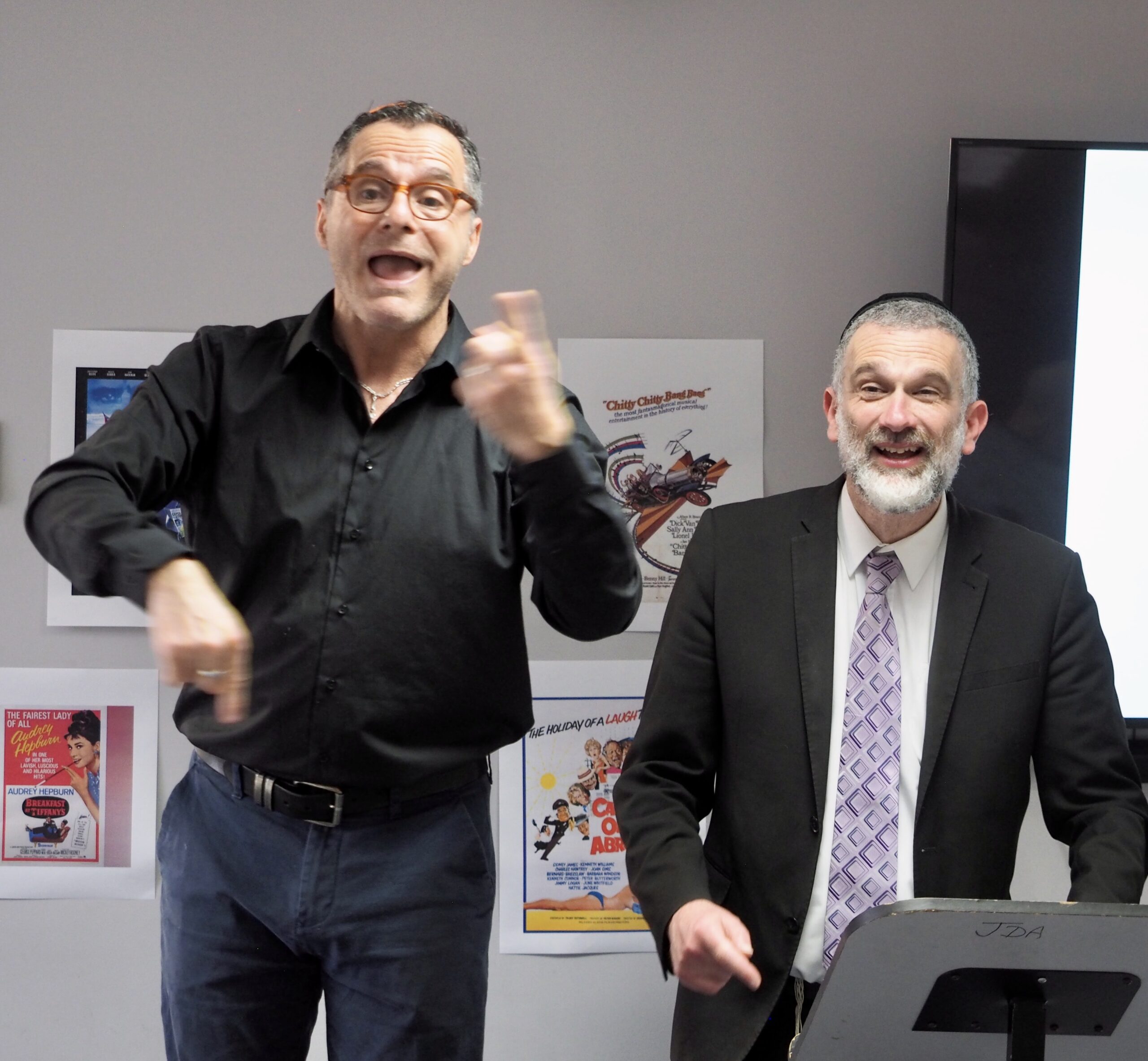
How faith leaders are enabling deaf communities connect with religion
A Christian minister who dreamt that Jesus was speaking to him in sign language is one of many religious leaders helping deaf people connect with their faith.
In the UK, there are 40,000 religious buildings, including churches, mosques and synagogues - many which have been adapted to help worshippers with disabilities - but there can still be a disconnect between d/Deaf people and their faith.
Rev Mark Smith, 67, a retired priest from Liverpool, spent over 20 years in the Christian ministry, working with deaf communities and those with hearing loss in Derby, Leeds and Sheffield.
He himself is not deaf but started to learn BSL after a dream in which he says Jesus communicated to him in sign language.
Mr Smith said: "I had what you might describe as a vision, and in it Jesus approached me and communicated in British Sign Language which I, surprisingly, understood. I took that as a sign to learn Sign Language which I picked up relatively quickly, albeit the further you progress the harder it becomes, but I now have a Level 6 certificate.
“In my experience, as a Christian person working in the field, we often find ourselves going across and assisting our friends in the other communities because they don’t have the same resources available to them.”
“For me, it’s the connection with them but for them it’s their life, it’s what they do. The deaf identity comes first, before religion or race, and in the past we have had d/Deaf Muslims sit in our services because they are able to be around their community.
“I think it hasn’t occurred to lots of people that there is this large native minority [of d/Deaf people] in the UK, who have, in the past, been badly excluded and really deserve to be included in everyday society and life.”
Zainam Bostan, 25, is a deaf Muslim from London and currently works for Al Isharah, which is a charity that translates the Qur’an into BSL, providing lectures and sermons in BSL, and also providing deaf Umrah and Hajj. However, she believes there is still much more work to be done.
In November 2023, she started an Instagram account [@deafhijabi] dedicated to "beneficial reminders and all the wonderful things about Islam" as well as spreading awareness of deafness.
Zainam was born deaf, and is child to one deaf parent - her father, who comes from a generation of deaf people - along with her siblings, except her mum and brother.
She said: "My experience as a deaf Muslim is really thanks to Al Isharah. Before I joined them when I was 20, I never went to a Madrasa [Islamic school] because of the lack of accommodation for deaf people while I was growing up. It was a struggle and led to me becoming spiritually lost and misguided - having no sense of Islam and the lack of understanding the purpose why we, for example, fasted during Ramadan or celebrated Eid.
"But since joining Al Isharah my understanding of Islam has greatly improved over the past five years."
“However, I’ve seen a lot of deaf people being put off going to mosque because some of them do not have not basic deaf awareness. By that, I mean when they livestream Friday sermons and prayers, there are no subtitles or live transcripts to follow. I would love to see more BSL interpreters in mosques."
She emphasised the importance of having these measures in place for d/Deaf Muslims so they can grow up having proper access to Islam, especially young people.

"I teach in Al Isharah's Islamic deaf school on weekends and it's really important for them to have the right environment for them to learn about Islam and grow spiritually.
"There are some deaf-born Muslims that have converted to Christianity due to accessibility being much better in churches, or just abandoning religion completely - and that simply comes down to the lack of accommodation for them.
"This is one of the reasons why Al Isharah strive to support the Muslim deaf community and provide, in the best way they can, for them."
According to Census 2021, in England and Wales, there are 287,360 people identified as Jewish which equates to 0.5% of the usual resident population. Based on national averages, this would equate to roughly 50,000 d/Deaf people within the Jewish community.
Sue Cipin OBE, CEO of the Jewish Deaf Association, highlighted the importance of providing for the d/Deaf Jewish community. While non-Orthodox synagogues have facilitated for deaf people - with the use of hearing loop systems and speech to text transcriptions - the current aim is to introduce more of these services in Orthodox synagogues.
"Services are run in English, but have speech to text captions available for people to follow as well as a ‘Loop system’ designed to enhance listening for d/Deaf people. We aim to provide Sign Language interpreters for the Jewish deaf community who use our facilities for Holy days, festivals, and for interactively involved services - where it is acceptable in Jewish law, which does not allow the use of technology during the Sabbath."
"We are currently building our relationship with Orthodox Synagogues - where the rules are stricter - to provide appropriate facilitation of d/Deaf people. We are communicating with them more, and have come up with suggestions for them such as keeping front benches reserved for d/Deaf people."

Open Ears, a registered Christian charity, underline a common misconception that, if you have severe hearing loss or have been deafened then you will use sign language.
A spokesperson said: "Many churches provide sign language interpretation for their services, which is great for BSL users, but virtually useless for those with hearing loss whose first language is oral. Another challenge is having good lighting on the speaker’s face, good PA systems (with working loop) and clear visibility of what is taking place. People with hearing loss use many more visual ‘clues’ than their hearing counterparts."
Some people’s hearing aids have a loop setting (sometimes called a T setting) which enables them to enjoy clear sound directly from a microphone to their hearing aids, via the use of a hearing loop.
This is a magnetic sound system with a microphone that streams sound directly and discreetly into the hearing aids, cutting out background noise. It works via a fixed cable around the room - ideal for a large group of people with one presenter. There is a portable version - ideal for a one-to-one situation such as at a reception area, or private meeting.
The fixed loop is also ideal for use in synagogues, as hearing aids can be adjusted to the loop setting before the start of the Sabbath or Holy Days.
Synagogues like Jackson's Row, Manchester's Reform Synagogue, offer online services once or twice a month which can be accessed by people all across the UK.
“Ecclesall has been crying out for change” says new Green councillor
New Green Party councillor for Sheffield's Ecclesall ward Peter Gilbert has told the Wire that residents are ready for "real action on the climate crisis" after his party took the seat from the Liberal Democrats in today's local elections.
Cllr Gilbert won the seat with 3147 votes to Lib Dem Roger Davison's 2751.
He said: "It's been a Lib Dem monopoly for so long. The people of Ecclesall have been desperate for change - you see that in the results of the last few elections with people voting for Labour to get rid of the Lib Dems. But now they´ve seen that they don´t have to settle for second best and that they can just get what they want with the Green Party.
"I think Ecclesall is crying out for better public transport and true, real action on the climate crisis," he added. "People trust the Greens to give them the facts and let them make up their own minds."
Tom Hunt on Labour’s “promising” results
Reporter Peter Spriggs spoke to Mr Hunt about Labour's successes and failures in Sheffield's local elections.
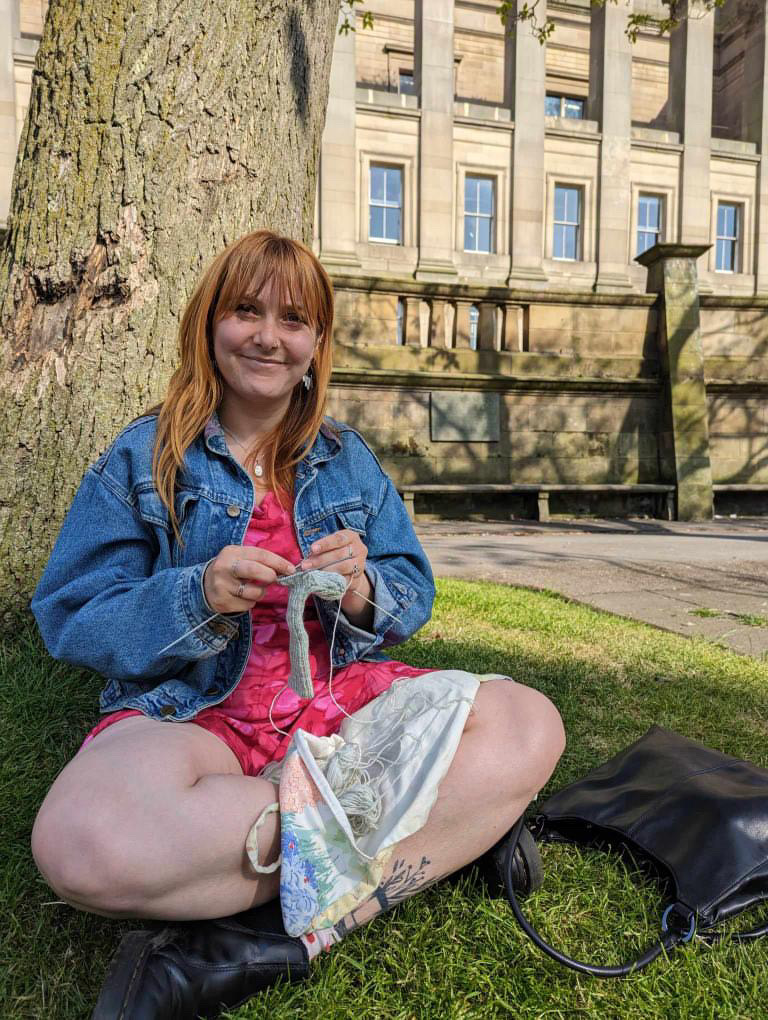
“Everything is designed to be more difficult if you’re not British”
Despite arriving in the UK seven years ago as a French Erasmus student, Anne Gaillot fears she will still “never be good enough for England”.
Anne moved to the UK with the plan to stay permanently in 2019 after graduating from a Master’s degree programme in France. But since Brexit, even though she now has Indefinite Leave to Remain, Anne has found it is becoming more and more challenging to continue living here.
“I’ve noticed and experienced xenophobia here in Sheffield. People don’t really know where I come from and it can sometimes trigger them and lead to hostility,” Anne said.
Even after five years of living in the UK, Anne feels she has to repeatedly prove that she can work and live here.
She explained: “At my first job, I felt like even if I worked double the shifts my English colleagues did, It would just not be enough. It made me feel like I will never be good enough for England.”
Anne worries for international students today, who must navigate tough new visa restrictions to work and live in the UK.
She said: “It seems like everything is becoming more complicated. The amount of money they ask the international graduates to earn in order to be able to obtain a work visa is really high.”
Anne said she felt very fortunate when she started as assistant manager at the Forum, a kitchen and bar, in Sheffield.
She said: "I finally felt recognised for my hard work. I was lucky and I don’t know if all internationals have that luck.”
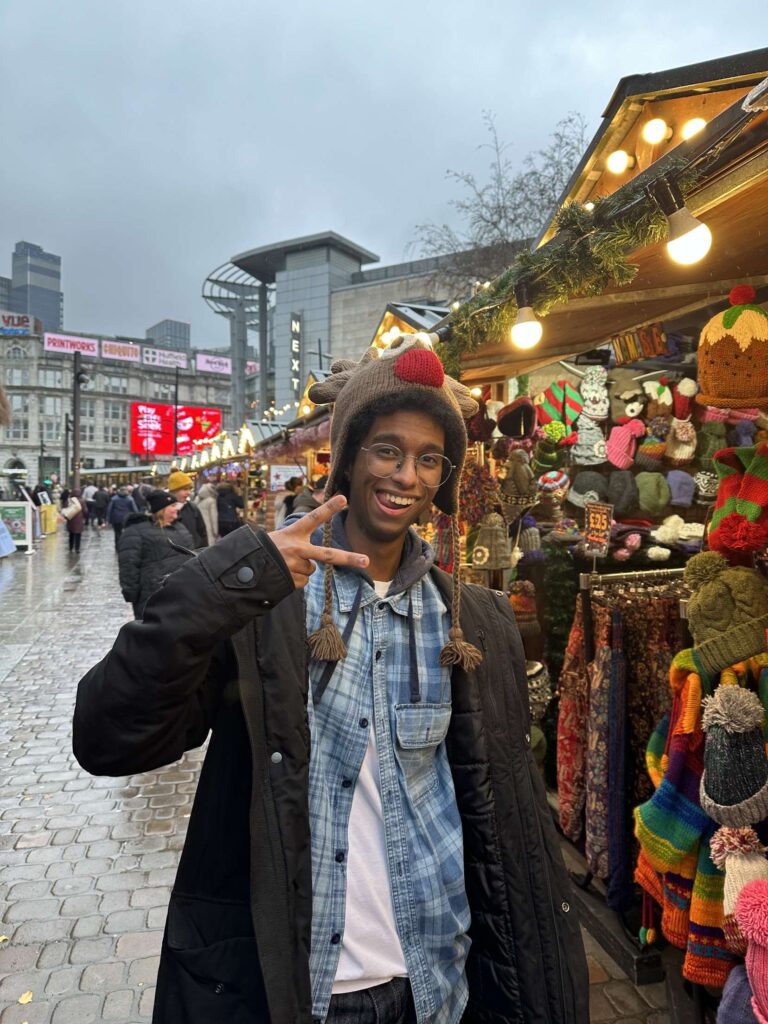
Various experiences
Ray Omer, from Qatar, and Lucca Leal, from Brazil, are both physics students at the University of Sheffield, but because of differences in their immigration status they have had totally different experiences. While Ray has had residential status since 2018, Lucca has been on a Student Visa from 2020.
Despite having resident status, Ray still struggles. He said: “Even if I have been living here for a quarter of my life, I still feel like I am not welcomed. I love the UK but the immigration laws make it hard. My parents moved from Qatar to England for their work thinking that it would be a great place to settle.”
For Lucca, who has hopes of becoming an academic in the UK, the announcement that the Skilled Worker Visa salary threshold would rise to £38,700 has thrown his future in the UK into doubt.
He’s now considering moving to another country. He explained: “The income that the government expects us to earn after graduation is just too high.”
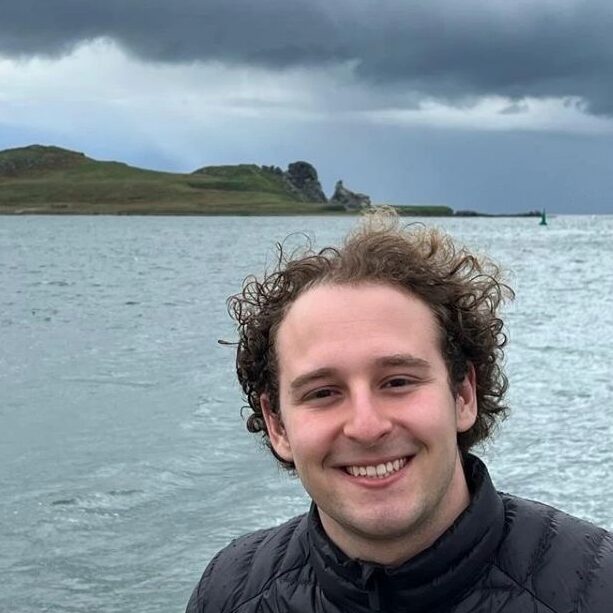
Lucca also has concerns for what this means for the country, saying: “I think a part of the reputation of UK universities is based on how well-known they are across the world. Having students coming from all around the globe surely helps. Why would the UK want to lose that?
"It’s not just international students that you could lose - in the physics department we have researchers and teachers from everywhere.”
Final report
By Richard McLaughlin and David Hall
The Labour Party held its majority in the Barnsley local elections today, winning a total of 17 wards out of 21.
While Labour did not built upon its existing 48 council seats, the party took control of Penistone East from the Conservative Party, a massive blow for the Tories.
Councillor John Roberts took control of the vacant seat after John Wilson, the former Leader of Barnsley Conservatives, retired after almost 20 years of service, winning by just 156 votes. It was a crucial seat for the Tories to hold and one they felt they could not afford to lose heading into the day.
Councillor Steve Bullock, the newly elected Kingstone candidate, said: “I’m chuffed. We have had some knockback but we are a team and it works. We need to be a bigger team and get more councillors in and I presume that’s what the plan will be.”
The Liberal Democrats gained one seat on the council to increase its total to four.
Newly elected Councillor Leyla Nayeri said: "It's an amazing feeling. I am so thankful for everybody in the ward that's gone out and voted, supported the Lib Dems and the team that we are. It's incredible."
The results in Barnsley today are indicative of the rest of the country, as the Conservatives lost over 230 council seats.
Leader of the Council, Sir Stephen Houghton CBE, said: “Labour can’t be complacent but I think it’s clear the public want change, the Conservatives' days are over.
"I’m grateful to the people of Barnsley and we will continue to drive Barnsley forward.”
Looking ahead, the mayoral election results will be counted tomorrow, with Labour's Oliver Coppard looking to continue his term.
Mayor Coppard said: "People want to see change happening, that we're taking the decisions that lead to them having better lives.
“That's what government should be about. That's what leadership should be about in politics. I hope that's what we've done. I'm hopeful that that will be an endorsement of what we've done over the last two years and what we want to do over the next four years as well.”