

World snooker championship kicks off in Sheffield after renewal news
This year's World Snooker Championship has officially begun in the city after government efforts to keep it in Sheffield.
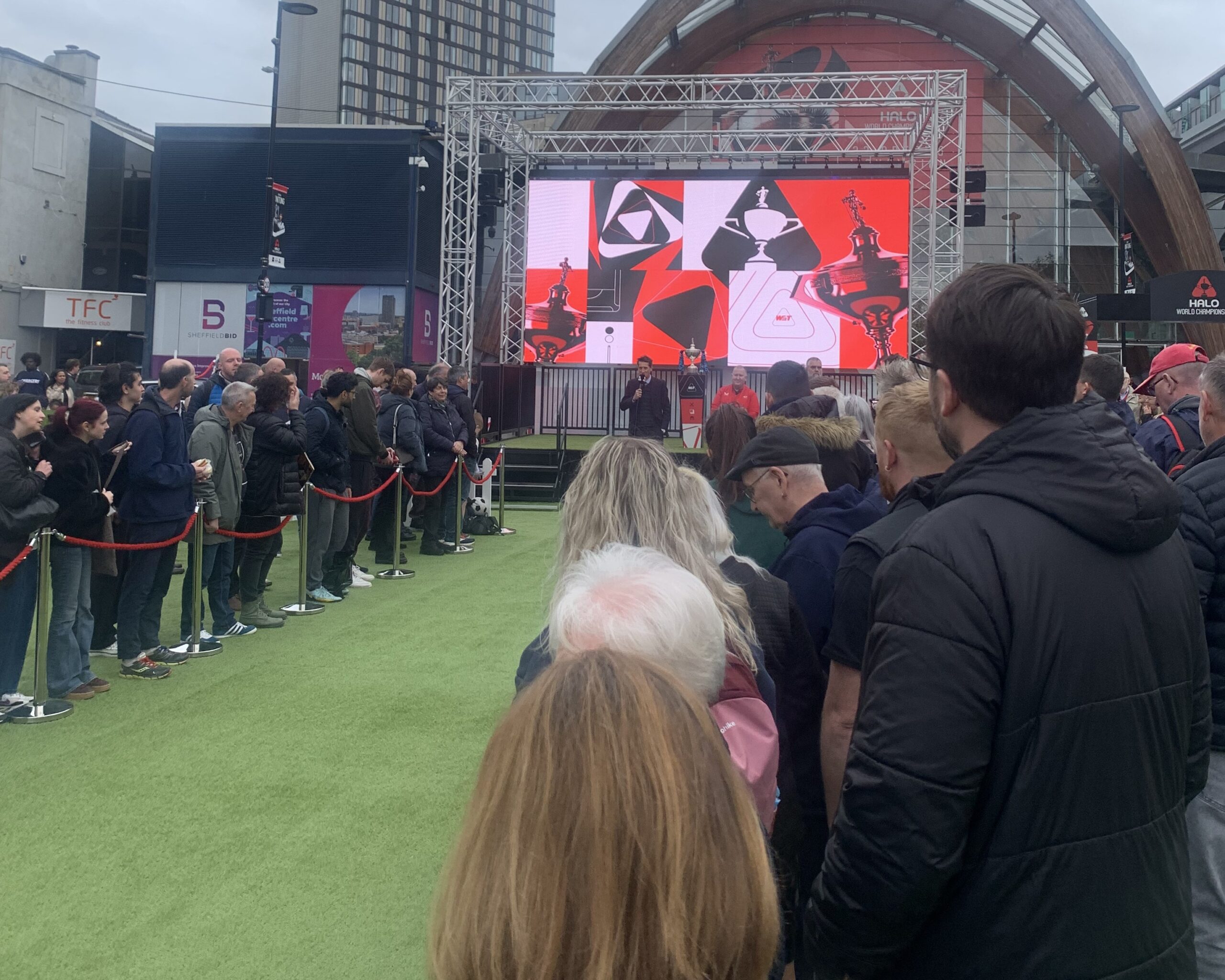
A green carpet officially kicked off the championship on Friday, April 17, hosting snooker stars and their fans, running across Tudor Square from the Crucible, to the Winter Gardens.
The Crucible Theatres has hosted the championship since 1977, and will now be hosting it until 2045 after UK and local government's plans to invest £35m in its refurbishment. Among their goals is an expansion of the theatre's capacity by 50%
Safiya Saeed, the Lord Mayor of Sheffield, regarding receiving the news, said: It was absolutely brilliant. It's bringing the city together in one space, a unified message of honouring snooker itself."
"When you think of snooker you think of Sheffield and the Crucible straight away," said Laura Davies, a snooker fan who attended the green carpet. Her and her family have been coming down to the Crucible to watch the championship for the last 20 years.

Saturday April 18 saw the current reigning champion Zhao Xintong defeat Liam Highfield with a score of 10:7. Zhao is the first Chinese player to win the championship and will be playing against Ding Junhui next, after his win on Sunday against David Gilbert.

But according to the Crucible curse, no player who wins their first championship at the Crucible is able to win again the following year, with many coming close but ultimately failing in the past.
Yet, Rob Walker, the sports announcer following the championship, says he's "got a chance of breaking the curse".
Ken Doherty, a past snooker player, fell victim to the curse in his final against John Higgins in the 1997 championship. He said: "He's got great form coming into this championship, he's just won the tour and he's won a grand prix. No other player has done that in the history of the game.
"But it remains to be seen. There are so many great players in the tournament that can stop him."
Saturday also saw wins from Mark Allen against Zhang Anda, Xiao Guodong against Zhou Yuelong, Mark Williams against Antoni Kowalski, and Barry Hawkins against Matthew Stevens.
Matches on Monday will see Ding Junhui playing against David Gilbert, as well as Kyren Wilson against Stan Moody.
Sheffield’s independent music scene celebrates annual record store day
Record shops around the UK came together over the weekend to celebrate music culture, with six stores in Sheffield taking part.
The first official event took place on 19 April 2008 in the US, and is now celebrated globally every year.
Stores celebrate the event by selling exclusive vinyl releases, and hosting performances by various artists.
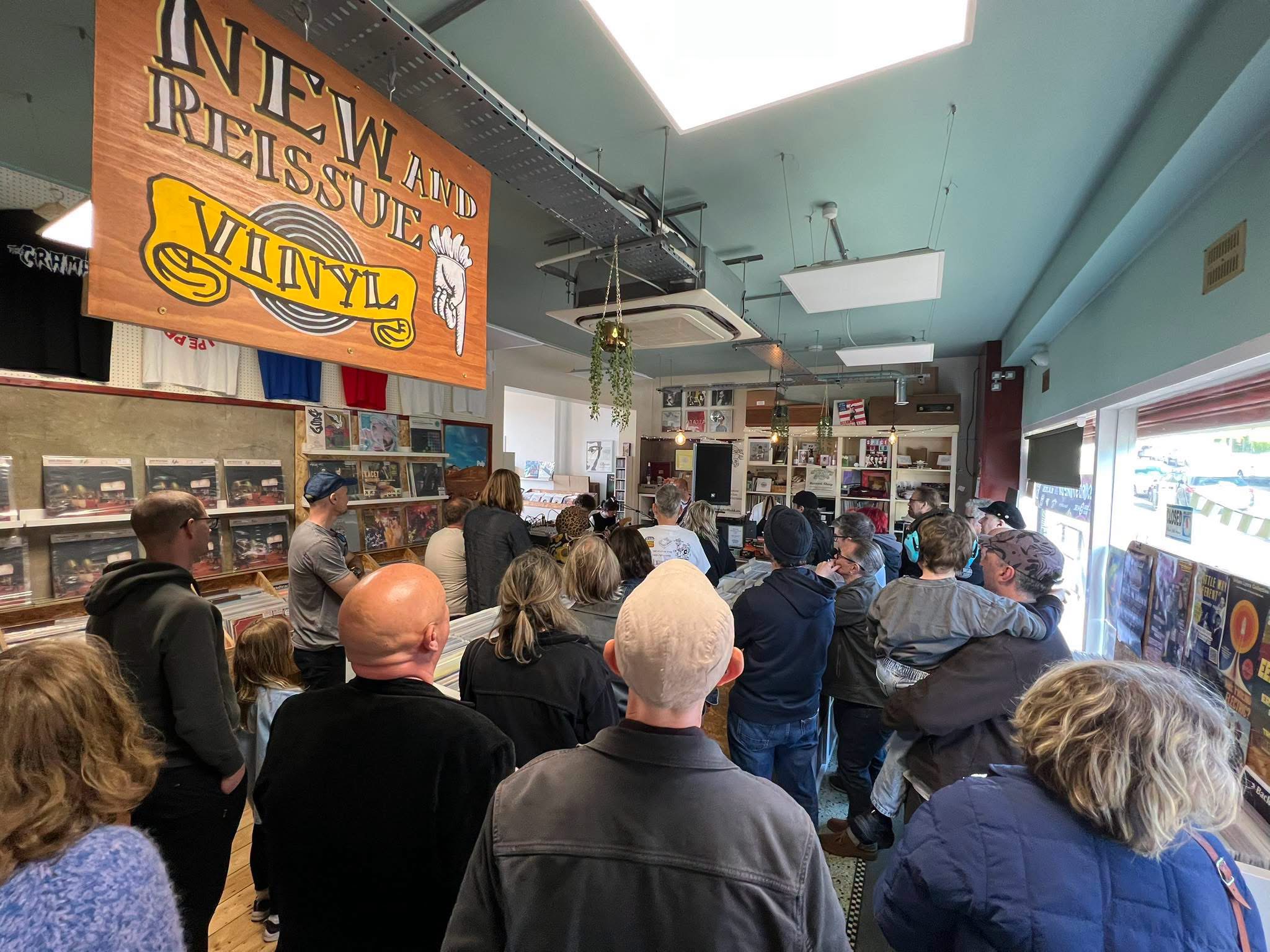
Waxhead Records in Sheffield City Centre hosted their first event for record store day (RSD) this year.
The store welcomed 400 to 500 customers who enjoyed a live DJ event, alongside refreshments.
Jack, an employee from the store, spoke about the importance of the event: "It is the only time where independent record stores get the opportunity to congregate together and it is a really good way to support your local independent record retailers.
"Sheffield is a very musical city and has fewer chain stores, bringing a new community together."
The most popular record that the shop sold was Ethel Cain's Inbred record, an exclusive release for RSD. The store had four copies available, and sold them all within five minutes of opening.
Exclusive RSD records are ordered from ten different distributors around the UK and take around four to five months to process. Each store is allocated a certain amount of records dependant on how long they have been trading.
Bear Tree Records, a store in Sheffield City Centre, was open from 8am on RSD. They allowed people to queue outside of the store to buy exclusive records.
Callum Hopkins, a customer, was queuing outside of the store from 3am, and this is his 15th time attending.
He said: "Music is everything to me. In day to day life, music is involved, whether that is at work, downtime or commuting to and from. To say music is less than everything is a lie."
Spinning Discs, a record store in Meersbrook, Sheffield also celebrated this year. Alongside RSD records, they hosted a live performance from local band Pale Blue Eyes.
Charlie Lucas, an employee, said: "The event was important to us as we were able to celebrate our local band.
"We only have a few record shops in the city, as it is quite a niche thing. Being able to conduct this event and remind everyone we are still going is important."
Both stores recognised that people are starting to consume more physical media in this day and age, as opposed to digital platforms such as Spotify.
Jack said: "It has undergone a total U-turn because streaming platforms are not paying their artists very much. So, in the last few years there has been a resurgence in people buying more physical media formats."

Charity match launched in effort to break down mental health stigmas
A charity walking football event will take place in Barnsley this summer, as players look to tackle more than just the ball and raise money for mental health support.
The game will take place at the Dorothy Hyman Sports Centre in July, and will raise money for Rotherham and Barnsley minds.
The charity who are organising the event, 'Osbourn and Moo Support Bubble', was set up by Robert Osbourn last year, alongside his brothers Rhys Osbourn and Connor Osbourn, as well as Robert's wife Ky Osbourn, Connor's partner Shelby Bray and close family friends Gina Patton and her daughter Macey (moo).
Rhys Osbourn helped to set up the charity as he has suffered with post-traumatic stress disorder (PTSD), anxiety and depression from a young age.

Rhys wants as many people to come down for the charity's first walking football event, and has received support from The Victoria Pub in Cudworth who are helping to raise money for the event that is close to their hearts.
He said: "We can break down the stigma and show that it’s okay not to be okay.
"Whether you are an experienced player or haven't kicked a ball in years, you are more than welcome to come along, have some fun, and help us make a positive change.
"Let's stand together for mental health."
The link is widely recognised between playing sports and changes in mental health, as Sport England's website explains: "There’s plenty of evidence that taking part in physical activity can have a profound and positive impact on mental wellbeing.
"Being physically active can improve mood, decrease the chance of depression and anxiety and lead to a better and more balanced lifestyle."
This is something that Rhys emphasises in his work, and supporting people through tough times is something he wants to be doing for a long time.
He said: "Events like walking football days really help people.
"They bring physical health, social connection and fun together, all things that are proven to help mental health.
"I love being the person to help someone and genuinely make people's lives better."
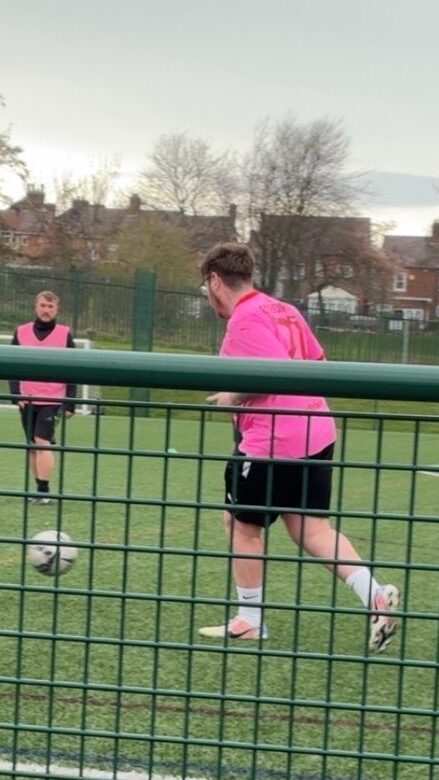
Rhys also feels the teamwork that comes with playing football will "help build a community where everyone feels heard, valued, and supported".
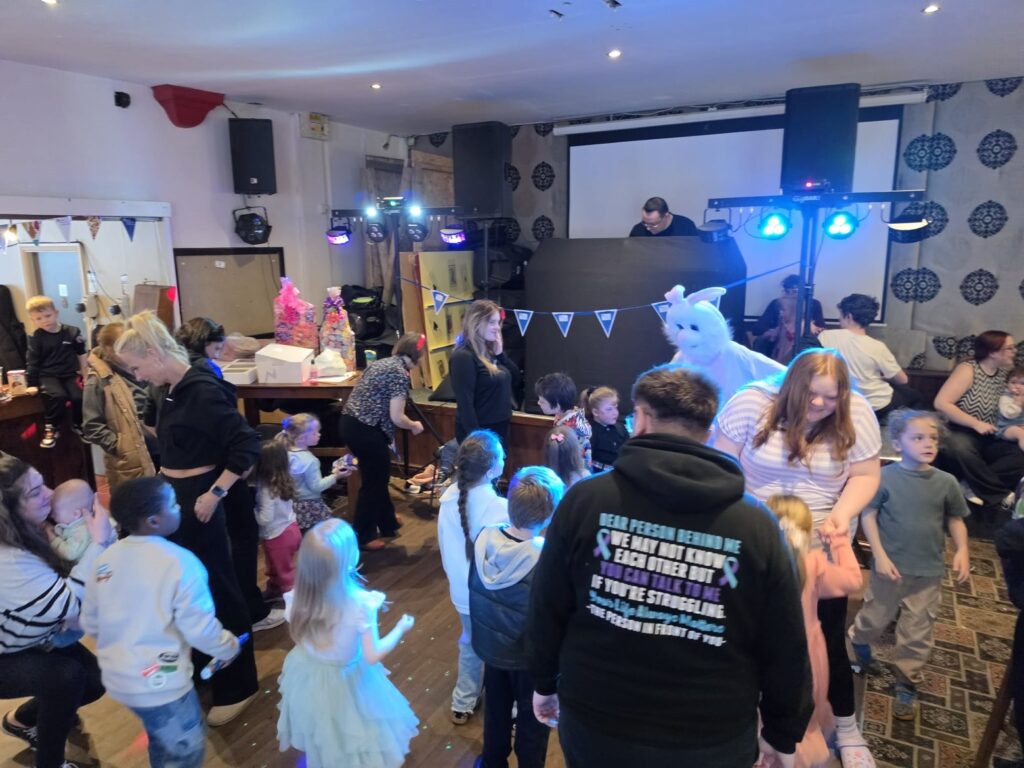
The support bubble also recently held an Easter Bunny party for families that raised £252 for Rotherham and Barnsley Minds.
Rhys said: "It was nice seeing smiles on the children’s faces and I think it was really good meeting new people and gathering together as one."

EFL League One: Rotherham United looking for consistency against playoff hopefuls Luton Town
Rotherham will be chasing a second win under a new manager tomorrow, as they welcome potential playoff candidates Luton Town.
The Millers have yet to secure a win at the AESSEAL New York Stadium since Lee Clark's appointment as manager last month, with a rather dismal record of one win, one draw and four losses in the past six games.
This is further compounded with the team confirming their relegation last week, in a 3-0 defeat to Wigan Athletic.
There are positives, though, as Lee Clark's men were able to end a nine game winless streak on Saturday in an emotionally charged 2-0 victory against potential relegation candidates Leyton Orient.
The match also had the backdrop of a personal family bereavement for the new manager combined with a cross country rush to attend the game on time for Mr Clark.
Speaking after the game, Assistant manager Peter Leven said: “It’s a good result, obviously the circumstances of last week and obviously with Lee’s family. It’s a very good performance.

"The trains were delayed and cancelled, he (Clark) had to jump in a taxi, he arrived here just before kick-off and he’s obviously then shot off again. It just shows his character; he wants to be here and wants to do well for the players and the club. It was good to have him here.”
Rotherham have a difficult uphill climb to continue their new momentum, however, as they face eighth place Luton Town, who are coincidentally on a nine game unbeaten streak, and are looking to secure as many points as possible in their push for a playoff position.
It looks as though the Millers will have a tough home game coming up, but the managerial staff appear to be determined for the future.
Mr. Leven said: “We’ve got a duty, we need to try and win every game we can, and we’ll keep going right to the end, no matter what.”
Today on Sheffield Wire
Hello and welcome to Sheffield Wire coverage for Monday 20 April 2026.

Our top stories today...
- The World Snooker Championships started on Saturday, a huge event for Sheffield. We will be running a live blog of today's events. Our reporter Camilla Sechi will be summarising the events so far, and looking forward to what's ahead.
- Registration for the local councillor elections closes tonight. Our reporter Eve Hutchinson will be interviewing the candidates to give you the key information. Rosie Peters-McDonald is speaking to voters about the issues that matter most to them.
- We also have a long-read on the ongoing impact of the Iran war on local industry, from Marcus Williamson. He has been talking to local manufacturers and residents to see how it's affecting them.
Sheffield Poverty Truth Commission: the charity putting people’s voices at the forefront to create change
One in four people in Sheffield is living in poverty and the city has one of the highest rates of child poverty in the UK.
The South Yorkshire city has some of the poorest neighbourhoods in the country with 31.2% of children experiencing poverty compared to a national average of 18.9%.
Martin McKervey, civic and business commissioner for the Sheffield Poverty Truth Commission (SPTC), said: “Those statistics anger me. I don’t feel a sense of frustration, I feel anger and agitation, that in 2026, we live in a city that seems to think this is acceptable and normal.
“At the commission, there is a very singular focus, we have to do something about this.”
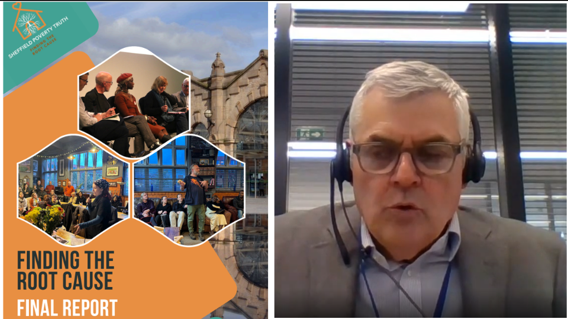
In a bid to help those in need, the SPTC has published a new report recommending public services use simpler language when offering support to residents who are struggling financially.
The brown envelope code focuses on clear communication around bills, benefits, debts, and services, to combat the intimidation and confusion many in poverty can feel.
“We are creating hope and helping to make Sheffield a better place,” said Mr McKervey.
The recommendations come after a year and a half of discussions, where community commissioners with lived experience of poverty told of their struggles in accessing information and support.
The SPTC have become a key voice in how the council makes decisions around poverty after being regularly invited to Sheffield City Council meetings.
What are Poverty Truth Commissions?
Poverty Truth Commissions (PTCs) are community-led initiatives designed to tackle poverty by bringing together people with lived experience of poverty and local decision makers.
The motto that underpins PTCs is, “nothing about us, without us, is for us”.
PTCs are split up into regional poverty truth commissions, with the SPTC established in September 2024.
The first meeting brought together community commissioners, people who have faced the struggle of poverty, and civic commissioners, who have had influential roles within South Yorkshire.
The SPTC’s report, entitled Finding the Root Cause, was brought forward for discussion in February this year, and has already impacted policy implementation by Sheffield City Council.
When the Council introduced £10m for the Crisis and Resilience Fund (CRF) over the next three years, the report was credited with “highlighting the need for more compassionate, dignified, and person-centred services”.
Part of the CRF was a ‘no wrong doors’ model, allowing residents to get help online, by phone, or through trusted places such as Family Hubs, a policy introduced to create person-centred support.
What else does the SPTC focus on?
As well as recommending changes to the system in place for people living in poverty to get help, Finding the Root Cause focuses on poverty-proofing education, and prioritising the impact poverty can have on people’s mental health.
Finding the Root Cause says: “There are strong societal forces that trap people in poverty, including the availability of secure work, housing costs and government choices on benefit levels and eligibility. Yet, poverty is not inevitable. We know that policy decisions can and do influence poverty rates.”
Through recommending city-wide implementation of the brown envelope code, and influencing the council in replacing the former Household Support Fund (HSF) with the CRF, they are going some way to changing how poverty is discussed in Sheffield.
Mr McKervey said: “This commission has been one of the most rewarding and important things I have ever taken part in.
“We take our lanyards off at the door, there is no power in this commission. The community commissioners are at the centre of everything we do, because that lived experience must be the leading voice, the determining voice in all that we discuss.”
However, Mr McKervey acknowledges poverty is a deep-rooted issue with no short-term fix, and change will not happen overnight.
“What our commission cannot be is just a conversation over a year, we all have a good time together, and then we all disappear into the ether,” he said.
“We must be very comfortable in the fact this is a long-term project, there is no quick fix in this.”
Inequality is another factor that plagues the city. If you were to take the 83 bus route from Fulwood in the west to Burngreave in the east, which takes approximately 40 minutes, female life expectancy drops by ten years from 87 to 77.
Douglas Johnson, Green councillor for City ward, sat on the Strategy and Resources Policy Committee that heard the SPTC’s report in February.
He said: “The SPTC was a chance to get under the skin of what poverty really looks like in Sheffield and how it holds the city back. It was also a chance for all the sectors in Sheffield - public, private, and voluntary - to think how they can help tackle poverty, or alternatively, how their actions make things worse for people on very low incomes.
“Everyone, especially in official bodies like the council and NHS, can help address poverty and hardship by being kind and trying to understand where individual people are coming from when they use our services.”
Video: What does Sheffield think of poverty in the city?
How urgent is the need to address poverty in Sheffield?
Sheffield residents agree that poverty is a prominent feature of life in the city.
Dr Lisa Thorley, 48, from Woodseats, said: “There’s a lot of evident poverty in Sheffield, with many ghettoised areas.
“If you look at Eccy (Ecclesall) Road and London Road, they’re nearly parallel, but economically they’re worlds apart.”
She believes the city is mainly divided along the lines of race. Her daughter was the only dual heritage student at her primary school in an affluent area of south Sheffield, while poorer parts of the city are often much more ethnically diverse.
Alessandro Leonardi, 38, a senior lecturer at the University of Sheffield, said: “In Sheffield, you just cross a neighbourhood and everything is different. In parts of the city centre there is so much homelessness.”
He said he was part of a family looking to adopt, and many of the children looking for adoption in Sheffield are from low-income areas.
What do residents think should be done?
Residents were sceptical about what could be done to combat poverty in Sheffield.
Dr Thorley said: “There’s not enough funding at the local level. There have been decades and decades of austerity and mismanagement.
“It’s good that the council is investing in the city centre, but some of it is still an absolute dump.”
Simon Clifford-Smith, 79, who is now retired, agreed that funding on the council level was a major issue.
He said: “The council doesn’t get paid enough to do what they want to do. There’s lots of social services that the council is trying to provide and they can’t because they don’t have the funds.”
Asked about one of the SPTC’s tenets, poverty-proofing education, Danijel Filipovic, 35, said: “I think more accessible learning and development could help, in England there is a big difference between who can afford to study and who can’t.”
Everyone who spoke to Sheffield Wire agreed that poverty was a pervasive feature in Sheffield.
Over a year and a half of discussions and research, the Sheffield Poverty Truth Commission has worked to put people with lived experience’s voices at the forefront to change how poverty is understood on a council and government level.
Sheffield City Council approves £1m Sport England investment
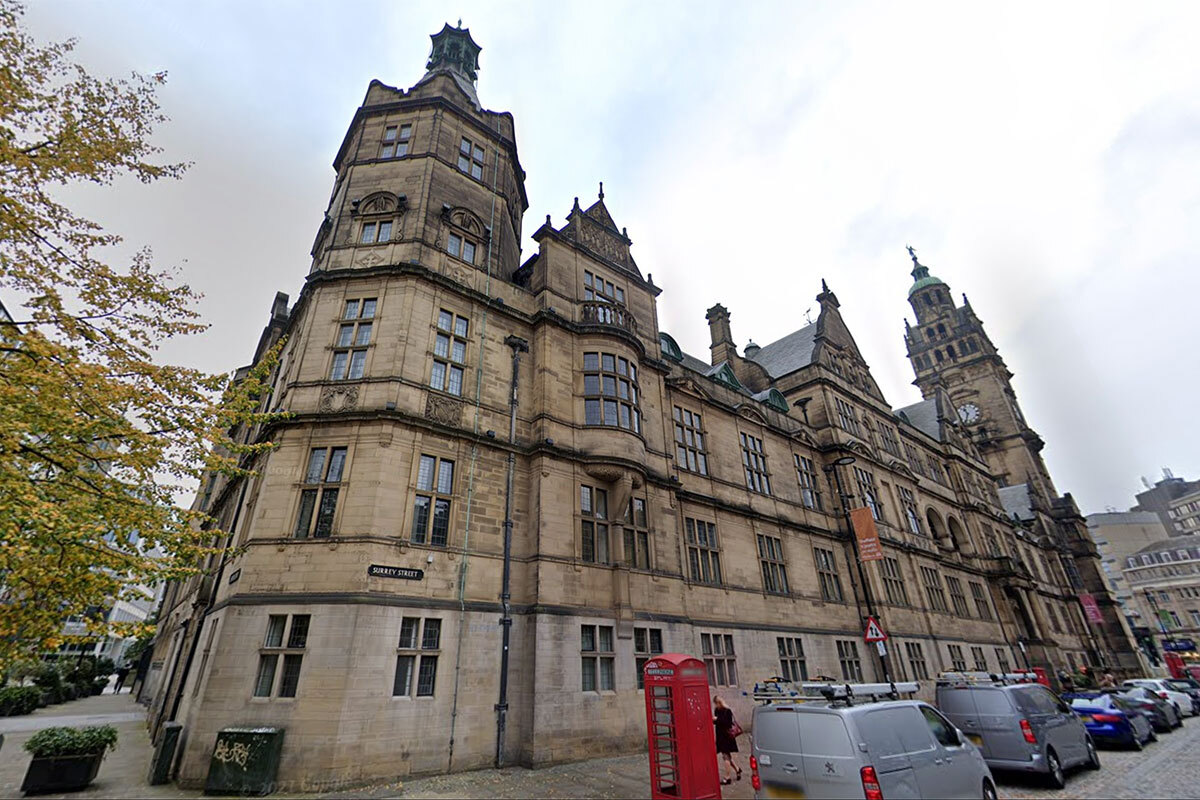
The Communities, Parks and Leisure Policy Committee has unanimously agreed to £1m of funding by Sport England to tackle health inequalities and physical inactivity in Sheffield.
As part of the agreement, Sheffield City Council will become the accountable body for the funding, and enter into a grant
agreement with Sheffield Hallam University Services Limited, which is the leading applicant in the investment.
The Council will be in charge of two main schemes "Community Development & Services", focusing on strengthening community delivery in local neighbourhoods, and the "Move Well" services, focusing on supporting residents, especially those with long-term health conditions.
The five Sheffield neighbourhoods chosen for this programme are Firth Park, Woodthorpe, Arbourthorne, Batemoor & Jordanthorpe and Tinsley, with each ward receiving £70,000 to £80,000, and can spend in accordance with community needs.
In each of the local areas, there will be a newly appointed community project officer who will host community listening and work alongside them to understand how they would like that money spent.
The council will also implement training scheme, working with local people to build their capacity, resilience, understanding and skillset to be able to deliver long-term change in their community.
The full conditions of the agreement will not be brought to the committee until the summer, likely in June.
While there is a risk of Sport England clawing back funds, Kathryn Mudge, Service Manager at the council's Physical Activity, Sport and Leisure committee, said the risk is "minimal".
She said: "The only opportunity for clawback is if we use the grant funding for other purposes than what we have applied for, so if the funds are misspent or spent not against agreed headlines.
"We won't do that and we'll look to ensure that we're spending as agreed."
"We have a close relationship and a really strong relationship with Sport England, so they're a part of the investment as well.
"They are on our committee board that oversee the investment. So they're with us all the way along and we have a really great working relationship with them."
Ms Mudge put herself forward as the point of contact if any residents want to engage or make any suggestions: kathryn.mudge@sheffield.gov.uk.

Sheffielders reveal mixed views about the city’s bid to become UK City of Culture 2029
People in Sheffield have voiced divided opinions about the bid to become the UK City of Culture 2029, with some believing local issues, including cost of parking and business rates, should be prioritised first.
As one of the nine longlisted cities, Sheffield will receive £60,000 to boost its entry for the 2029 title, but is this the most important thing for Sheffield?
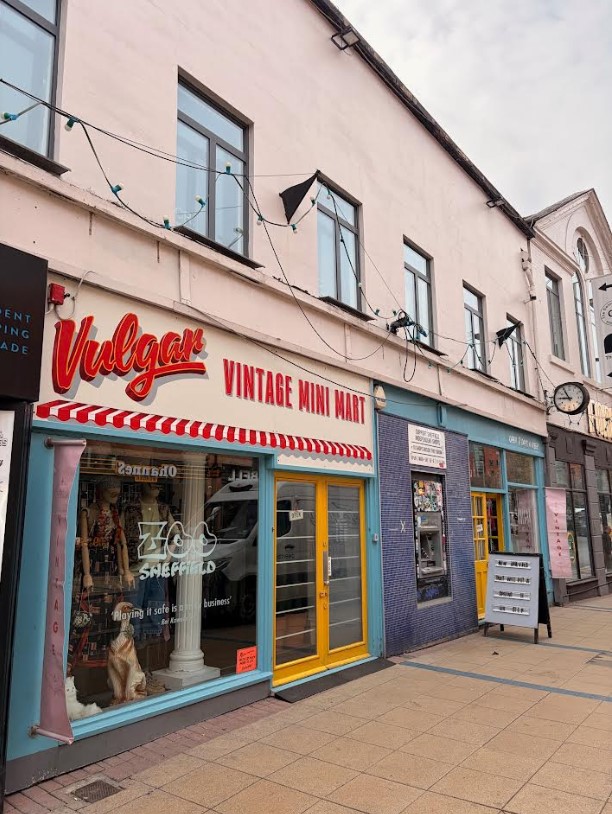
Amber Savage, co-owner of Vulgar, an independent vintage clothing shop on Devonshire Street, said: "I just feel like there's a lot of changes that could be made on the ground right now to make Sheffield better.
"If you speak to most people in Sheffield, they're terrified of driving into the town centre because they think it's going to cost so much, and things like that do affect all the businesses in the town centre day-to-day."
The winning city, which will be announced at the end of this year, will receive £10 million to deliver culturally-rooted events and projects with the hope of drawing in more visitors and investment opportunities.
Bradford won the title for 2025 and the city saw around 5,000 events with an approximate audience of three million that year.
Ms Savage believes that Sheffield should focus its investments into its younger generation of entrepreneurs.
"People who are in their early twenties that are thinking about setting up businesses are petrified by all of the rising costs, the business rates, staff wages, and all of the issues that we are all facing right now," she said. "There should be more support for the next generation."
However, some people believe the hardship many are experiencing could benefit from the projects and events which could happen as a result of the bid.
Sophia James, a staff member in a shop in Leah's Yard, said: "I think times are hard and creativity, and positive arts and music events could make things a bit easier."

The competition also highlights the possibility for a number of opportunities for local residents to take part in key projects throughout the year and embrace local strengths.
"It's a great thing for bringing a whole city together for events," said Lynne Davis, a Sheffield resident.
"Anything that brings more people into Sheffield city centre and shows them what has changed in the last year or two would be brilliant and all these events that bring people in make them then look at all the other things and see all the other businesses and hopefully bring them in more into the city centre."

South Yorkshire’s new system aims to make the city great again taking inspiration from Manchester’s Bee Network
South Yorkshire was once famed for its public transport system and now travellers have been promised it will once again be “world-class”.
South Yorkshire’s new £1.5bn People’s Network (SYPN) is being framed as a turning point and a chance to rebuild the region’s once-brilliant transport system.
The region was hailed as one of the most integrated and affordable public transport systems in the country in the 1970s and early 80s but deregulation in 1986 fragmented it under the Transport Act 1985.
The new scheme was inspired by Greater Manchester’s successful Bee Network.
The Bee Network service launched in Greater Manchester in September 2023 and has been considered largely successful with a 14% increase in the number of people using the service since last year.
While the plan clearly draws from that model of public control and integration, what is now taking place across South Yorkshire is rooted firmly in local need, local frustration and rising expectations from the people who rely on the system every day.
What can South Yorkshire learn from Manchester?
Nick Fairclough, Interim Deputy Network Director for Bus at Transport for Greater Manchester (TfGM) said: “Every region is different, but it’s really important not to underestimate the amount of preparation required before Day One. Transition programmes of this scale rely on strong programme management, deep operator engagement, clear communication with the public and workforce, and robust contingency planning. It’s also important to be realistic about phasing—franchising is a long-term transformation, not an overnight switch. Getting the foundations right gives you a far better platform for the improvements people want to see.
“Early, visible improvements made the biggest impact. In Greater Manchester, integrated Bee Network branding, simple £2 capped fares, and more reliable timetables helped build trust quickly. Clear communication - explaining that changes were coming in phases - also helped manage expectations so the public understood the direction of travel even before every improvement was in place."
Last week, South Yorkshire Mayor Oliver Coppard, announced at Sheffield Town Hall that the region would be undergoing a £1.5bn investment transformation.
The aims of the network include more affordable and reliable bus travel, more investment in trams, a new e-bike scheme and rail services.
The Mayor’s vision is a simple, long term vision to provide “a network that’s genuinely people-focused - one that works for every community, every day”.
Coppard said: “Public transport in South Yorkshire has been broken for too long.
“I promised to make change happen, to give South Yorkshire back the world class public transport system we once had, and that’s exactly what we’re doing.”
One of the most significant elements of SYPN is the bus reform and franchising as, under the current system, private operators largely control private fares, routes and timetables.
It is built around six key principles which include keeping transport affordable and prioritising people.
Residents often complained over hiked travel prices and unreliable bus times.
Marika Wyroslak on Facebook commented: “It’s been a disaster with the buses last week. It’s impossible to get to school or work.”
The South Yorkshire Mayoral Combined Authority (SYMCA) annual travel survey 2024-25 found that 72% of 1238 residents use public transport regularly.
However, many people were dissatisfied with these services stating the “frequency, length of waiting, timing and reliability” a major issue.
This new scheme would mean that all transport is under local travel authorities instead of private companies such as FirstBus and Stagecoach.
Greater Manchester’s Bee Network has shown that the franchising model can work at scale, offering a practical reference point for how to manage the shift.
Back in Manchester, Mr Fairclough said: “Under franchising, the relationship fundamentally shifts. That brings clearer accountability, a more collaborative working culture, and a shared focus on overall system performance.
“Operators have responded positively, and the contractual framework gives both sides clearer expectations and incentives.”
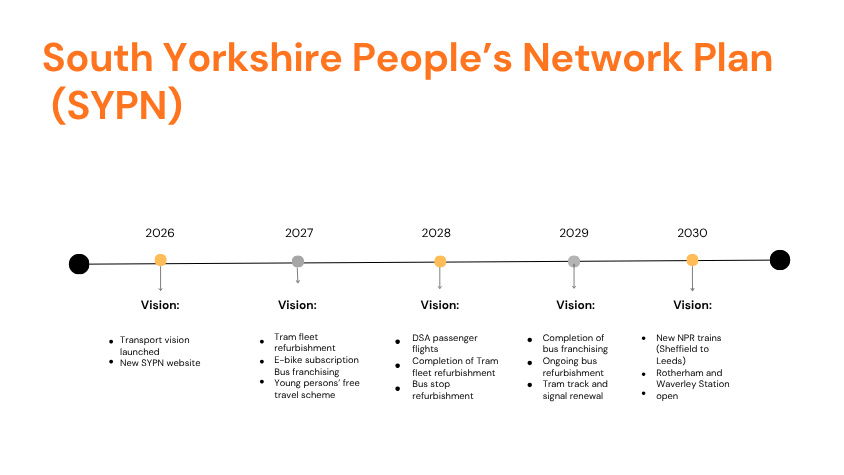
The first major step for the SYPN is the franchising beginning in Sheffield and Doncaster from September 2027 when it comes under public control, with the aim of completing it for Rotherham and Barnsley by 2029.
Outside of London, Greater Manchester was the first city region to bring bus services under local control.
This came after after 40 years of deregulation, with a failing system that almost halved the number of bus journeys in Manchester, effectively being the first city to reverse deregulation completely.
With the new announcement of South Yorkshire’s travel plans, many have compared it to Manchester and how they have managed it.
Mr Fairclough said: “In Greater Manchester, growing numbers of people are travelling on an affordable, increasingly expanding and much more reliable network and we have created a solid foundation for long term improvement that will support growth and benefit all our residents and businesses.”
One large difference between their new plan and the Bee Network is free travel for under-18s.
While Manchester launched the ‘OurPass’ which allowed 16-18 year-olds free travel from September 2019, SYPN’s plan will be making travel completely free for under-18s later this year.
This initiative has gone down particularly well with Sheffielders.
Jennifer Dunstan, on Facebook, said: “Never ceases to amaze me that little kids have to pay on buses when they don’t earn any wages.”
Many people on social media reminisced on the popular policy under SYPTE of 2p bus fare for children from 1974 to 1985.
The new services will have a molten orange, grey and asphalt black colour scheme with the colour scheme referring to South Yorkshire’s history of industry and ‘Northern grit and resilience’.
After the plan was launched by Coppard at Sheffield Town Hall, the vibrant buses went on tour around the four boroughs showcasing the new design.
However, there has been many mixed reviews on the colour and the name, comparing it to Manchester’s yellow Bee Network service.
One comment on Reddit, from 'flourypotato', said: “Very much in favour of bus franchising, but "The People's Network"; is that really the best they could come up with? Could literally apply to anything anywhere in the world. Couldn't have had something a bit more distinctive, like Manchester's Bee Network?”
This refers to how Manchester’s yellow buses and name refer to the city's 150-year-old emblem that represents Manchester’s hive of community.
On Facebook, Nick Mason commented: “Can we have a consultation on that name its generally really poor. You could of leaned into South Yorkshire history and gone for Steel Network/Steel Link.”
But not all comments are negative. Ahead of the new franchising from next year, Chukwudi Ndubueze on Facebook commented: “This is a much-needed, welcome development. A great leap for the South Yorkshire community. Congrats to SYMA and the SCC team.”

Rotherham TikToker inspires others with powerful speech impediment representation
A South Yorkshire content creator has amassed 23 million likes sharing his day to day life with a stammer, and is hoping to inspire others with a speech impediment.
Sam Bagshaw, 29, a warehouse operator from Rotherham first began posting TikToks to increase his own confidence.
“I noticed other people were doing videos and talking about their experiences with a stammer and I saw it was really helping them," he says. “So I started doing videos in my room to share my experience and then all the support in the comments is what kept me going to do more and more videos and become more confident."
Sam records himself in various everyday life scenarios, such as getting his hair cut and ordering in drive-through to spread awareness of stammers.
“They might find it hard with a stammer, especially with the ordering videos, I know a lot of people might get friends or family to order for them so it’s really good I show that. It's inspiring people to try it for themselves.
“People like that I’m doing things on my own and it’s not stopping me. I think it helps people with a stammer."
The content creator’s comment section is a testament to Sam's work, with thousands of heartwarming responses applauding him.
“Thank you so much for this, my daughter who is seven just got diagnosed with a severe stutter and started speech therapy," said one viewer. “I admire your courage and bravery so much and hope my daughter does the same.”
Another follower said: "I don’t have a stammer and I still struggle with ordering at restaurants, I always think of you when I do.”
Sam began posting TikToks during the first Covid lockdown, “I always thought when I was younger if I was able to watch someone doing my type of videos then it would have really helped me,” he says.
In 2022, Stamma, the national UK charity for people who stammer, commissioned a YouGov poll that exposed how little representation of stammering there is in the media.
They found that of over 2,000 people asked, 59% said they don't know a character in a TV series or film who stammered.
Only 2% could name five characters who stammered and many named characters such as Forrest Gump and Rain Man, neither of whom stammer.
CEO of Stamma, Jane Powell, said: "The poll shows just how badly the stammering community is served by our media.
“It is no wonder that people try and hide their stammer or face discrimination and being mocked because of how they talk.
“Most members of the public don't know how to react to a stammer because it isn't visible in our media.”
The survey led to a petition calling on all TV and radio stations to ensure that people who stammer are routinely represented in media spaces in all forms, on the news, on soaps and as experts and the campaign gained coverage on ITV, with the support of Ofcom.
Sam noted he has seen a positive change in the perception of speech impediments saying: “I think it has definitely got a lot more better since I was at school and it’s definitely helped with the social media side of thing."
Michael Wright, a trustee of Empowering Voices, a UK charity dedicated to helping those who stammer echoed the importance of representation saying: "For a long time, the media often used stammering as a joke or to show someone was weak, which simply isn't true.
“Positive representation is so important because it changes the story. When creators like Sam Bagshaw share their real, unedited voices, it is incredibly beneficial for the stammering community. It builds huge confidence and shows people they aren't alone.
“This visibility reminds everyone that you don’t need to speak perfectly to be smart, successful, or capable.”
What is a stammer?
Stammering, also referred to as stuttering, usually begins in young children.
"Stammering is a difference in the flow of speech which is neurological in nature. Someone who stammers may repeat or stretch sounds or silently block on a word," said Dr Lucy Dyson, a senior lecturer at the University of Sheffield.
"People might also have tension in their face or body or do things that become attached to the stammer to try to get the word out e.g. use filler words such as ‘um’ or tap their leg," she added.
Most children begin stammering between the ages of two and five and this is known as developmental stammering, however some people start stammering later on in life.
"It can sometimes start in adulthood too, for example, after brain injury," Dr Dyson explained.
According to Empowering Voices, at least 1% of the UK population having a stammer, that’s 690,000 in the UK, or 900 stammerers in a Wembley stadium capacity crowd. Worldwide, an estimated 80 million people around the world stammer.
The reason why people stammer is currently unknown, but research shows there's a slight difference in how the brain is wired in people who stammer.
Stammering often has a genetic link, around 60% of people who stammer have a family member who stammers or used to stammer.
People do not stammer due to nerves or level of intelligence, despite media representations pushing these misconceptions.
Aya Kawamura, from Action for Stammering Children , said: "Many children and young people who stammer experience a profound sense of isolation, often feeling that their stammer prevents them from connecting with others.
"Having positive representation of stammering in mainstream media is incredibly important to the children we support. It helps them see themselves reflected in the world around them and believe in what they can achieve."
Media representations, such as Sam, contribute to these positive representations.
"Perspectives are changing towards stammering, and now it is more helpful to view it as a ‘difference’ not something that needs to be ‘overcome’ or ‘cured’," said Dr Dyson.
For further information please see the STAMMA website.
Parents or adults can contact the local Sheffield Speech and Language Therapy service for support
“It’s all about hope”: A Barnsley charities message ahead of art exhibition
A Barnsley charity is hosting an exhibition where listeners can hear accounts of real examples and experiences of people who have had struggles with mental health and suicide, and how they "got through the dark days".
As part of Penistone Arts Week, local charity Suicide Sucks is holding its 'Voices for Hope' exhibition in which people who have have shared their stories which attendees will be able to listen to.
Artists such as Lorna Cooper, Tara Taylor, Rachel Mills, Charlotte Eastwood and many more have made artwork that is based on the voices within the exhibition, they will also be on display.
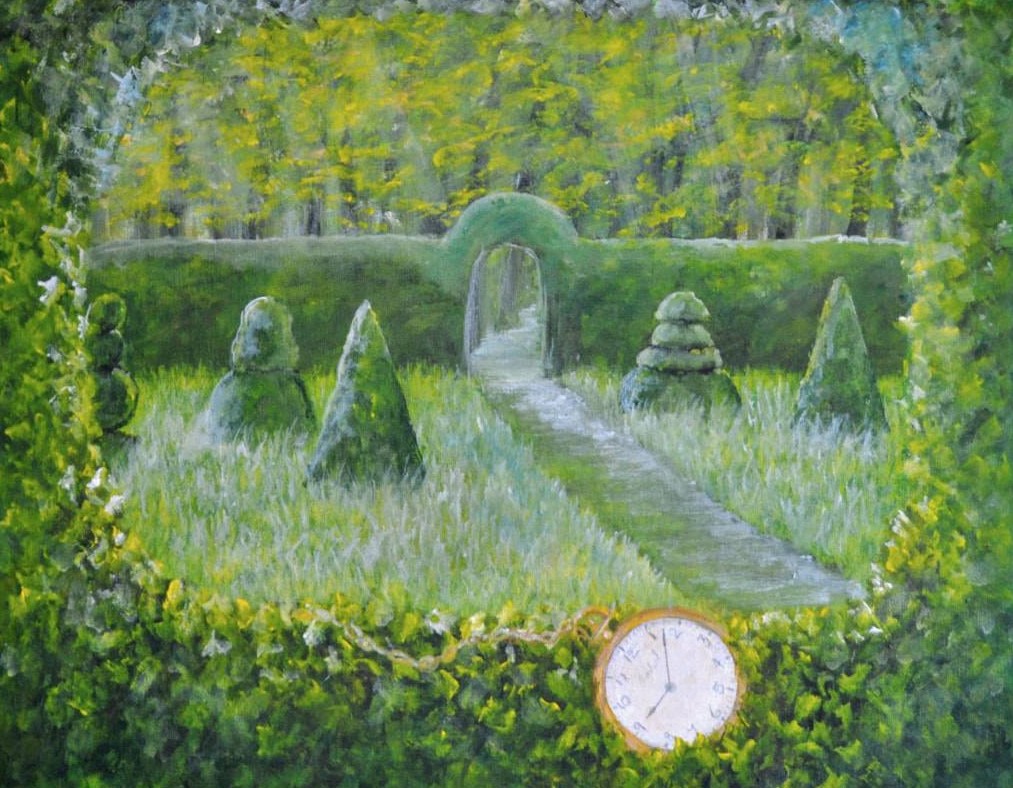



Some of the artwork that will be displayed
All the above - Credit Mick Rowe
Mick Rowe, the founder of the charity, hopes that people who attend will be able to take away some advice that may help them in the future.
Mrs Rowe said: "It's all about hope, and it's all about sharing what worked for them."
The exhibition will feature voices of those that have appeared on the Suicide Sucks podcast, and Mrs Rowe believes these people can be role models who show that talking can help.
She said: "That is what is so awesome about anyone that comes on the podcast, they have got to a point in their life where they are not embarrassed, they don't feel guilty about what they did because they are in a good place now."
One person featured in the exhibition will be Samii Soffe, who recently spoke at Friday's Stand Up To Suicide comedy night, in which she received a standing ovation for sharing her experience.

Ethan McIntosh was in the audience when Miss Soffe shared her experience with mental health and suicide and said: "It was heartwarming to have the courage to go on stage and say what she said, it was extremely powerful, and sent out a good message for those watching."
Listen to Samii's story below
You can listen to all of the stories shared on - Voices Of Hope Montage - YouTube
The exhibition will take place at St John's Church in Penistone, starting at 8pm on Thursday 26th March.

Sheffield Hatters take a step closer to the quadruple following Super League Basketball cup win
At a packed out AO Arena, Sheffield's own B. Braun Hatters claimed the cup over Manchester Basketball in a thrilling game that finished 90-71.
Sheffield native and GB athlete Georgia Gayle walked away with the Final's Most Valuable Player award, becoming just the seventh player to win multiple final MVP's in the Women's British Basketball League era, having won already won the Playoff Finals MVP during the Hatter's winning campaign last season.
She finished the game with 20 points, seven assists, and hit four of her seven three point attempts, with six points in the fourth quarter helping to get her team over the finish line.
The Hatters started off the first quarter strong, with Shauna Harrison scoring seven points as the team went up 22-14.
Manchester fought back but struggled to make up the deficit from the start of the game, with guard Tiarra East getting eight of her eventual 23 points as the half ended 49-39, as the Hatters began to break away from the home side.
In the third quarter the Hatters outscored Manchester 24-11, taking the game to 73-50 as their deep squad powered ahead, with Jess Eadsforth-Yates, Georgia Gayle, Nina Krisper, Antoinette Lewis and Megan Mullings all scoring at least four points.
Manchester managed to win the fourth quarter 21-17, but the Hatter's lead was too dominant and Manchester were unable to come back by the final buzzer.
Alongside Gayle and East's imposing performances, with teen star Irene Oboavwoduo a keen contributor for Manchester, scoring 16 points and going four-for-four from the free-throw line, although scoring just 38% of her field goal attempts.
For the Hatters, Megan Mullings had a filled sheet with 15 points, six rebounds, five assists and a steal and a block, while Antoinette Lewis had a points and rebound double double, finishing with 11 and 10 respectively.
The Hatters now look forward to the end of the SLB season, with just three games left to confirm another trophy as they sit top of the table, four points ahead of second-placed Caledonia Gladiators.
If they end the season at the top of the table, all that will be left for a historic quadruple is victory in the SLB playoffs.