

Blogs and social media: Can we have the best of both worlds?
The cover of Time magazine in 2006 was like a prophecy. The Person of the Year was You. Yes, you, me, and everyone who produces content for blogs, websites, social media profiles and many other platforms which feature user-generated content. Many years later, the world has seen the power of Instagram, Facebook, Twitter and other social media channels whose purpose is making us closer. But before that, people used blogs to share their stories, thoughts, and tips with others.
The word blog was coined in the late 1990s and since then many people started creating posts about different subjects such as politics, lifestyle, business, and travel. Whether as a hobby or a professional career, bloggers became influencers. Many people say that Instagrammers and TikTokers replaced the traditional Blogger. But do the numbers support this perspective? Is everything so clear cut?
Jake O’Neill, Head of Marketing for Vuelio, a market-leading software which ranks the most successful blogs, disagrees that those who craft blogs have become old-fashioned.
“Blogs are still going strong and for many influencers who have a blog, it is still a vital piece of the puzzle. It allows for flexibility in content creation and brings in a captive audience. They are not having to compete with thousands of other posts. For many influencers it is also a key part of their commercial relationships, again because content on blogs is typically considered higher value than on social media accounts," said Mr O’Neill.
The report “UK Influencer Survey 2020” commissioned by Vuelio, shows that 35 per cent of the bloggers see influencing as their current or planned future income. They seek compensation for their posts whether it is in form of a gift, a trip or sponsored posts.
Around 30 per cent of the blogger's collaborative work receives payment. Sponsored blog posts are likely to be paid, but the amount of money involved varies depending on the number of followers, page views, time to create the content and other factors.

Measures that are considered when negotiating compensation (%) Source: © Vuelio

Main platform used by gender (%) Source: © Vuelio

Watching Wilder’s Blades rebirth from the stands
Credit- Andrew (Flickr)
When Chris Wilder returned to take the reins at his club, apathy reigned supreme.
The side’s eleventh placed finish in League 1 was their worst since the 80s, and as Nigel Adkins’ charges undertook their ‘lap of appreciation’, the stands were almost completely empty.
Most simply didn’t care, and those who chose to stay were apoplectic with rage- berating a side unfit to wear the shirt, a team entirely disconnected from its supporters.
 However, the arrival of Wilder was to mark a near-unthinkable revival. A bloated squad was cut down, and the captain’s armband given to Billy Sharp, another boyhood blade. The likes of John Fleck, Mark Duffy and Jack O’Connell came through the door- players who were destined to belie meagre, even non-existent transfer fees and cement their status as heroes.
While the side stuttered as the season started, Wilder remained steadfast. A 2-1 defeat at Millwall might have drawn his ire, but as the team coach left The Den, Wilder’s man-management skills came to the fore.
He stopped at an off-licence, returning with as much beer as he could carry and a wallet that was £100 lighter. Fitness and conditioning went out of the window, but Wilder sent a much more important message- that he believed in every single member of his squad.
That belief almost immediately transferred to the pitch. This was a team that refused to believe it was ever beaten, with fans soon becoming hooked on the euphoria of last minute goals against Fleetwood, Bury and Peterborough.
Wilder moulded a team that worked hard yet possessed real quality, with his trademark overlapping centre-halves taking the league by storm. Almost all challengers were blown away, sealing revenge against the sides that so frequently frustrated the Blades in seasons gone by.
Previous United sides would have crumbled under the pressure of a title race- Wilder’s relished it. Their momentum was unstoppable, and even when they went 1-0 down at Northampton in the game that could seal promotion, there was to be only one winner.
John Fleck and Leon Clarke turned the game on its head, sparking absolute delirium. The fans stormed the pitch with corner flags and flares aloft, carrying Billy Sharp on their shoulders, as Wilder led the chants from the stands. Promotion to the Championship was sealed, United’s footballing purgatory was over, and that bond between fans and their players was stronger than ever.

Credit- Wikimedia Commons

Credit- Jamie Weaver

Netflix ice-skating drama filmed in Sheffield released
Credit- Isriya Paireepairit An ice-skating drama, 'Zero Chill', was released on Netflix today after being filmed in Sheffield. The teen drama was filmed in one of iceSheffield's Olympic sized rinks and focuses around 15-year-old twins Kayla and Mac, played by Grace Beedie and Dakota Taylor respecitvely. They move to the UK from Canada after one of them recieves an invitation to a prestigious hockey academy. The 10 episode series helps shows off Sheffield's vibrant ice hockey community with on-set coaches found among the local Sheffield talent. Angelo Abela, the executive producer of the show, ended up choosing Sheffield after coming here to meet Team GB's figure skating team captain, David Hartley. He said to Screen Yorkshire: "Amazingly, he offered us complete access to one of their three rinks for the duration of filming and we were able to hire David as our head coach at the same time!" The experience and skill of Sheffield's ice-skaiting industry was vital to the filming of the show. The series has released in full with all 10 half-an-hour long episodes available for viewing now. So far the series has had a mixed response although many reviews have not been released. Daniel Hart from 'Ready Steady Cut' gave the show 2 stars while Lissete Lanuza Sáenz from 'Fangirlish' said that at is core, it is a 'fun' show. Check out the trailer here:

MPs call for government to overturn funding rule impacting Sheffield schools
Labour MP Paul Blomfield has written to Education Secretary Gavin Williamson urging him to overturn a rule which is restricting funding for Sheffield College and other Sheffield schools. The government rule means schools which have grade three ('requires improvement') Ofsted ratings, or lower, will have caps imposed on their funding. Sheffield College, which has received a grade three Ofsted rating, teaches around 14,000 students and apprentices each year and their education could be affected by this ruling. Paul Blomfield, MP for Sheffield Central, said: “It is a critical issue given government plans to put FE colleges at the forefront of the UK’s economic pandemic recovery. “Our communities, employers and The Sheffield College should not be held back by this unfair funding rule.”

Paul Blomfield, 2017
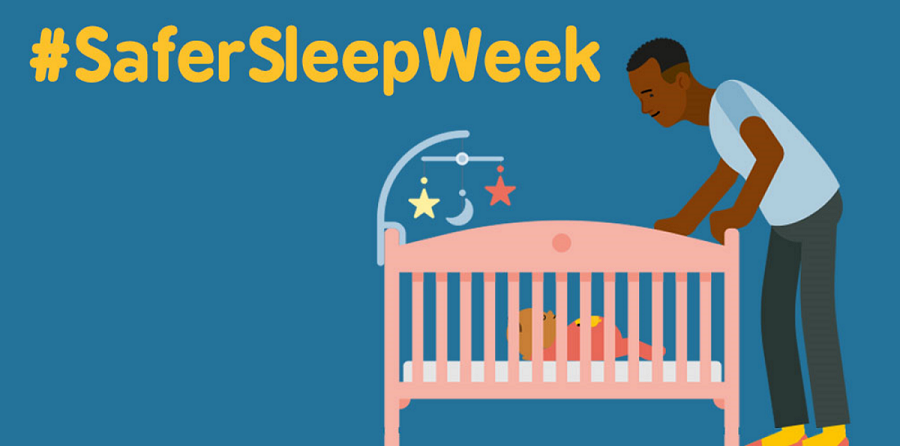
Sheffield Dads targeted in Safer Sleep Week campaign
This year's national Safer Sleep Week campaign (15-21 March) targets new and expectant dads, as a survey shows less than a third are shown how to safely sleep their baby and lower the risk of sudden infant death syndrome.
Sudden infant death syndrome (SIDS) is the sudden and unexpected death of a baby where no cause is found. Launched by The Lullaby Trust, Safer Sleep Week offers families potentially life-saving advice for sleeping their infants. It is supported by and promoted in Sheffield by the Baby Basics charity as part of their Baby Safe campaign in partnership with the NHS.
 Sheffield City Council have expressed their support for the campaign.
Stephen Green, a Senior Parenting Practitioner at Sheffield City Council and Baby Safe Champion, said: “There is so much to learn as a new parent that it can be overwhelming.
"By following safer sleep guidance for every sleep, parents can be reassured they are doing everything they can to reduce the risk of sudden infant death syndrome.
"It’s really important that dads have access to all of this advice too, as consistency is so important for babies.
"In our parenting programmes, available through Sheffield Parenting Hub, we try to be as inclusive as possible to make sure that dads and male carers are getting all the help and support they need.”
In Sheffield, new or expectant parents can contact their local Family Centre for support and advice on safer sleeping. Every Moses Basket or Cot given out by Baby Basics Sheffield always has a new mattress provided to help with safer sleep.
The campaign is designed to work with Dads, to better understand how to reach them and deliver information in a way which will be helpful to them. The Lullaby Trust's survey of over 500 new and expectant dads found less than a quarter had been able to attend all antenatal appointments and over 50% have not been allowed to attend any at all.Today marks the start of #safersleepweek Every Moses Basket or Cot we give out always has a NEW mattress provided to help with safer sleep. Every child deserves a safe space to sleep 🥰 @LullabyTrust pic.twitter.com/BTuaVx39ye
— Baby Basics (@BabyBasicsUK) March 15, 2021
 This has meant anxiety surrounding SIDS is high amongst Dads, with 74% stating they are "worried" or "very worried" about it.
Figures from the Office of National Statistics (ONS) show rates of SIDS grew in 2018 by 7% compared to the previous year, an increase which will likely be exacerbated by the pandemic.
Such results are a concerning indication that lockdown restrictions combined with the increased pressure placed on public health services by COVID-19 means less support and information for new parents, which is putting babies at risk.
A parliamentary report released in summer 2020 from the All-Party Parliamentary Group on Baby Loss stated that lockdown had increased risk factors for some types of baby loss, including sudden unexpected death in infancy.
Parents can find further advice on The Lullaby Trust website, which includes vital information such as the best position for babies to sleep in and other guidance that can reduce the risk of SIDS.

Sheffield Student Union votes 45-0 in favour of supporting rent strike
Sheffield Student Union voted to support a rent strike organised by University of Sheffield students. The vote, which took place on 11 March, saw 45 councillors voting in favour of the strike and none voting against. "It's a strong vote for," said SU president Beth Eyre. "I'm really happy to see students utilising the SU democracy routes" she added. The rent strike has been ongoing since 20 January. It calls upon the University to cut student rent by 30 per cent, and to offer all students a no-penalty early release clause. It also asks the university to reassess the support available to students. The strike currently consists of 103 students, whilst the demands and principle of the strike has been supported in a petition by over 700 students at the university, according to Dan Walsh, 19, who studies politics and international relations. "The uni have shown consistent disregard for student mental health and wellbeing," said Walsh. He criticised the packages being sold by the university to self-isolating students; the cost of the essential food and toiletries packages comes to £49.25. He expressed concern about the growing student suicide rates. "That could be a friend of mine," he said. A spokesperson for the University of Sheffield said: “We understand this has been an incredibly difficult year for students and throughout the pandemic we have been working hard to support them in the best possible way." Following negotiations with the SU, the university agreed not to charge students who couldn't make use of university accommodation between 4 January and 12 April, but this has not satisfied the rent strikers. "We legally could not access our accommodation," said Walsh in a speech to the SU council. "The refund from the most recent lockdown is the bare minimum. “We are getting an entirely different product than what we signed a contract for. It is logical that if you receive a different product then you pay a different amount," he added. Jess Kent, 22, a fourth-year maths student participating in the strike, shares this view.

Jess pre-pandemic at Marxist Society march (credit: Jess Kent)

‘I feel euphoric and terrified at the same time’: How the end of lockdown is threatening an anxiety epidemic in the UK
With the carpet rolled out for the country’s cautious meander out of Covid restrictions, and the bunting strung-up in anticipation of our bleak one-year lockdowniversary, the road to normality is finally in sight.
For Britons, eyes glistening with the ghosts of their last in-pub-pint, the prospect of a return to life as we knew it is a point of rabid elation. Though we had a rough start, we feel primed and ready to walk out full-stride into the roaring 2020s – a brave new and Chris Whitty-free world.
Punctuated by the promised reopening of the pubs on 12 April, the general feeling is one of jubilation. Even machinations of the inevitable swarm of 20-something lads - finally getting a moment in the spotlight after waiting months to share their thigh-slapping Coronavirus/ Corona beer material with a glassy-eyed woman at the bar - feel oddly charming.
For many, though, a reemergence from our year-long hibernation is a substantial trigger for anxiety. After what feels like an eternity inside the familiar four walls of our homes, thoughts of rubbing shoulders with unmasked strangers in clubs and restaurants can be terrifying.
 “I think the main thing for me would be general panic around being shoulder to shoulder with strangers. I feel uncomfortable and anxious constantly whenever I go shopping now at Tesco – and that’s even with a mask,” says Thomas Sparrow, 22, from Reading.
“I often find myself having trouble with breathing and feel constantly hyper-aware - which is not something I have ever felt - and I feel that may be something that will just get worse without masks and stuff.
“I’m a little worried it’s all too soon and I’m just a bit nervous about such a sudden change back to normality.”
It is no secret that, since the first lockdown in the UK, there has been a sharp increase the number of people suffering with anxiety. According to most recent data from the Centre for Mental Health, around 20% of people in England alone will need new or additional mental health support as a direct consequence of the pandemic.
With such enormous pressure to join in with the celebrations – to get on board with distant dreams of crowd-surfing through a room of sweaty, unsanitised bodies – those unsure as to whether they have the mental endurance for life on the outside are suffering detrimental blows to their mental health.
“It’s the weirdest feeling. I feel euphoric and terrified at the same time,” said Joanes Beitia, 21, of Sheffield.
Since schools returned to face-to-face teaching on the 8 March, these mental health concerns have begun to materialise at an alarming rate.
“We were very aware that our young people were going to be anxious about returning back into groups again," said Jane Gamble, a schools and young persons psychotherapist.
“From young people’s perspective, there is definitely anxiety around whether their friends are still their friends. A lot of them have lost the confidence to connect.
“By the middle of last week, a few days after the schools returned to face-to-face teaching, there was a big influx of referrals. We generally saw a lot of low-level self-harm at the thought of coming back.”
 Fears around the survival of friendship circles is a common trend among those bearing the burden of post-lockdown anxiety. With Zoom pub quizzes proving exhaustive, the toll of maintaining friendships has been keenly felt by young people in particular.
“Our social circles have diminished so much over the last year, it’s not certain that we will know how to socialise with loose acquaintances when things open," says Kara Gilchrist, 22.
“I think small gatherings will be what a lot of people are comfortable with for a while and not because of the COVID risk, but because of the social aspect.
“It scares me because how will anyone date again if they can’t do small talk anymore. Are people going to get too deep too quickly? Or are people going to settle for subpar connections?
“Meeting new people is officially a foreign concept.”
According to Mrs Gamble, this boom in anxiety levels has, in part, come as a result of young people witnessing changing behaviours within their family unit, often at the hand of alcohol and substance abuse as a means of coping with the enormity of the pandemic.
"Young people have seen an increase in domestic violence or marital discord – a lot of relationships breaking down. So, coming to school and being away from that, children often feel that when they are around they can try and hold their parents together by being ‘the good child’," she said.
"Going into school, they feel as if they are leaving the parental relationship a bit exposed.”
 Pressure to maintain good familial relationships and a stable group of friends is the albatross around the neck of many young people up and down the country looking out toward the horizon of life after lockdown.
In an attempt to manage these fears, many young people have developed maladaptive responses - something Mrs Gamble described as a self-destructive habit formed as a way of surviving the pandemic. Common responses include eating disorders, gaming addiction and over-exercising.
With the hailed return to public life drawing closer - to offices, schools, colleges, universities - the stark realisation that these behavioural crutches are unlikely to survive the pressures of normal life is giving rise to a surge of unease.
“I used to teach live fitness classes and training sessions before COVID. I’ve been online for almost a year now and the thought of going back into a face-to-face fitness setting makes me feel ill, if I’m honest,” says Mel Bridger.


Arctic Monkeys’ favourite Sheffield venue, The Leadmill, providing normality through virtual events
(Credit: The Leadmill) Sheffield’s longest running music venue and nightclub say online events are helping to push their brand. The Leadmill, who have hosted the likes of Arctic Monkeys and Oasis throughout the years, began virtual live-streaming during the first lockdown, in order to "boost morale." Promotions manager, Bethany Okogba, said the events have provided a taste of normality and showcased what they have to offer. She said: “We’ve had loads of regulars attending, so it has been fantastic to connect with them and show what we are working on. “The livestreams are free to join, but we do push for donations to pay that will support us and pay for the DJ’s, they are also important for the future of the brand.”
The music industry has faced a tough 12 months, with Sheffield’s longest running music venue amongst those who have struggled throughout the pandemic.perfect saturday night if you ask me @Leadmill pic.twitter.com/0N2Lwbyw4Q
— em (@emxlyyyy_xo) March 13, 2021
Funding from an Art Council grant and a crowdfunder by the Arctic Monkeys has enabled the Leadmill to stay afloat during these uncertain times. “It has been super tough and draining for us because we were never sure when we would be back, but the funding has helped us to the other side,” said Miss Okogba A week of events are set to take place between the 21-27 June, to celebrate its reopening after lockdown and getting things back underway. “We don’t do it for money, we do it for the love of live music and events, and to help bands who will one day go on to play at Glasto. It would be devastating if we had to reschedule opening again.”View this post on Instagram
Finally the news we’ve all been waiting for! 🎉
It’s looking like we’ll be back, running at full speed with standing capacity club nights at the end of June 🤞 Expect a full week of packed out parties, from the very second we’re allowed them! pic.twitter.com/NPMcc7hx7n — The Leadmill (@Leadmill) February 22, 2021

Sheffield City Council unveils plans for new Local Area Committees
Image credit: The University of Sheffield A new local democracy initiative is likely to be given the green light which will see a major shake-up to the way the city is governed. Sheffield City Council are set to introduce 'Local Area Committees' which will replace the 'Local Area Partnership' (LAP), representing a "fundamental power shift in Sheffield." The proposed initiative has come as a result of the extensive 'Big City Conversation' survey, conducted by the council in 2019 and early 2020, which found that Sheffielders wanted greater influence over local issues. The new Local Area Committees will be led by local councillors and given new devolved powers such as budgetary responsibility and delegated decision-making responsibilities. Each committee will have its own elected chair and vice-chair, who will act as a conduit between council leaders and residents. The council explained: "We want people and communities in every part of Sheffield to be in control and shape the decisions and issues which matter to them and their area. "As a City Council, we recognise that we need to match the knowledge, passion and insight that Sheffielders have for their local areas with the ability to take decisions at the local level which can deliver real change."

Sheffield Wards: Image Credit - Locus

It’s okay to admit Mother’s Day is hard as an estranged adult
For some of us mother’s day is like watching a dark cloud moving towards you. You see it coming and you can’t stop it. It finally reaches you and that day is a torrential downpour which leaves you feeling a tad worse for wear. Then the following days are a time where you have to dry off and get your life back on track. For anyone that needs to hear it, this is a reminder of how far you have come independently and the strength that it takes to do just that. As we wave goodbye to another mother’s day, those without a motherly figure in their lives may be left with feelings of sadness and loneliness that aren’t so easy to run from. The stark reminder of it being mother’s day is unavoidable as it drowns us in every corner of our lives. The shops are overflowing with buckets of flowers. TV’s are flashing adverts urging us to send cards with personalised messages. And then there is social media - a place where seemingly everyone is singing praises for their mum with family pictures and heartfelt words, with ‘BEST MUM’ ‘COULDN’T LIVE

Samantha Grace and her award from Stand Alone charity.
 Sam says: “Now I celebrate Mother’s Day by dedicating it to my grandparents and by thinking about all of the influential women around me and the role that they play in my life. Then I’ll order myself a takeaway.
“I also try and focus on the role that I played in raising myself too. I’ve had to put myself first in every situation and be my own mum through everything. I’ve had to be my own support network, my own safety net without relying on anyone else.”
Everyone’s grief is unique by their own experiences, but the important thing is to recognise your grief and how it’s affecting you. We’re also battling a pandemic so if all you do is survive the wave then that is also fine.
“Not only is it hard on Mother’s Day but it is hard every day. It’s difficult seeing everyone on social media posting their mums as it makes me feel different to everyone else. Or when I see my friends doing things on the day I don’t really have that. I try not to compare my life to others, but it’s hard when people's parents can help them out in life. It really annoys me when people assume that I have that too.
“I just wish people could understand that it isn’t my fault or any sort of personal fault in you that you are estranged from your parents. It’s definitely normal to feel the weight of it all.”
 Sam emphasises how important it is for people to openly talk about their feelings with estrangement because of it being such a taboo topic. It’s good to raise awareness and make people feel included, especially when there is so much stigma around everyone having a traditional family support line on days like Mother’s Day.
“If you’re struggling, ask for help and reach out to talk. It’s a scary thing to do but it’s always best to ask and I think the worst that someone will say is no. For me it was the only way I was able to get proper support so it’s definitely worth it. But also keep trying if the first person isn’t helpful, there will be so many others in similar situations.”
Sam takes comfort in looking after yourself by staying off social media until the stories die down. Take time for yourself in whatever way you feel best and for however long you need to recharge. Chat with a friend or go for a walk, just do something.
“I think on a day like mother’s day it’s okay to be passive if that helps you get through, but maybe coming off social media for a while will help you or simply doing something nice for yourself. For the most part I try and surround myself with people who understand, and I won’t tolerate anything less.”
If you are having a hard time seek help and visit the Stand-Alone website here.

Believe this: Taking suicide seriously on social media
Social media allows everyone to voice their opinion anything. With that comes a greater responsibility to take care about what we say about other people because we never know who will be reading what we send. Last week was a prime example of this: Actor Meghan Markle revealed that she had felt suicidal during her pregnancy, and many responses on social media and from members of the press said: "We don't believe you." There is data to suggest that such reactions online can be dangerous to others feeling suicidal. So how can we be better? The public refusal of the truth of Markle's confession, and the reaction around it on social media, was concerning. However, many UK mental health charities rose up to combat the stigma against suicide and tried to change the course of the discussion over the week.
How not to report on suicide
The morning after Markle's interview where she revealed she had experienced suicidal thoughts, Good Morning Britain host Piers Morgan claimed he "didn't believe a word" of what she said. This comment prompted over 41,000 Ofcom complaints, and later Morgan left as host of the ITV show. UK mental health Charity Mind tweeted in response to Morgan's comments, saying: "It’s vital that when people reach out for support or share their experiences of ill mental health that they are treated with dignity, respect and empathy." The day after Morgan's comments, Simon Gunning, the CEO of the suicide charity CALM (Campaign against living miserably), released a statement in response. Gunning said: "Recent events in the media serve as a timely reminder that no one should suffer in silence, and that we must continue to challenge the stigma surrounding mental health and suicide." He went on to say that CALM were "deeply disappointed by Piers Morgan’s comments on Good Morning Britain." Rather than focusing on Morgan's comments like many others did, Gunning chose to focus on the message that there is still a long way to go for everyone. Gunning ended by saying: "While progress has been made in recent years to change the discourse and help people open up about how they feel, there’s still a long way to go in tackling the stigma surrounding mental health. The tragic rise in suicide amongst men, and women aged 10-24 years old is a poignant reminder of how far there is to go."The figures and the facilitator
In December last year, the Office for National Statistics (ONS) showed that there were 10.6 suicides per 100,000 people in 2018 – the highest rate in 14 years, which increased from 9.7 suicides per 100,000 people in 2016. In the graph below, the bars show the number of people who contact the NHS mental health services each month, slowly increasing each time. The line inside shows the number of adults using the services. Suicide and mental health issues are still rising issues in the UK. Twitter storms like last Monday's do not help, and the internet can often worsen the situation and cause serious harm to someone who may be feeling suicidal. Professor Keith Hawton, Director for the centre of suicide research at Oxford University says: "There is abundant international evidence that media reporting and portrayal of suicide can be extremely influential. Poor media practice can cause further loss of life, especially in more vulnerable groups such as the young and people with mental health problems. On the other hand, careful and responsible media handling of this important issue can contribute to suicide prevention." Furthermore, research undertaken by Samaritans and the University of Bristol found "at least a quarter of patients who had self-harmed with high suicidal intent, had used the internet in connection with their self-harm. Likewise, a national inquiry into suicides by young people found there was suicide-related internet use in nearly half of suicides by young people every year." How should we be talking about the issues of suicide and mental health on social media? To what standards should we hold people like Piers Morgan to when they make comments like "I wouldn't believe a weather report from her?"The solution
The Samaritans has a set of media guidelines for organisations to follow, and in the guidelines are pieces of advice that everyone, not just journalists, can use regarding suicide on social media. Some of the following things you should be aware of when talking/reading about suicide online:- Include references to suicide being preventable and signpost sources of support, such as Samaritans’ helpline. This can encourage people to seek help, which could save lives.
- Speculation about the ‘trigger’ or cause of a suicide can oversimplify the issue and should be avoided. Suicide is extremely complex and most of the time there is no single event or factor that leads someone to take their own life.
- Coverage that reflects the wider issues around suicide, including that it is preventable, can help reduce the risk of suicidal behaviour.
- Steer clear of presenting suicidal behaviour as an understandable response to a crisis or adversity. This can contribute to unhelpful and risky normalising of suicide as an appropriate response to distress.
 Samaritans last week launched a new set of online safety resources to support those who are writing online about self harm and suicide.
Lydia Grace, Samaritans Policy and Research Programme Manager for Online Harms said: "We know the online environment can provide a vital source of support for individuals experiencing self-harm and suicidal feelings but it also creates opportunities to access potentially harmful and triggering content. It’s therefore essential that young people have the tools they need to stay safe online and access the benefits of the internet, whilst minimizing potential for harm."
Suicide is a serious issue in this country. The statistics show it, and the reaction on social media and in the news last week proved it further. We all have a responsibility to take people seriously when they open up, and to be empathetic and help them when they need it. By taking some of the steps outlined here, and encouraging others to do so too, we can all improve the wellbeing of others in the UK.
Mental Health Charities Contact Information:
Samaritans: 116 123 CALM: 0800 58 58 MIND: 0300 123 3393 Sheffield Flourish: 0114 273 7009 (Featured Image credit: Sydney Sims, Unsplash)
Boost for Sheffield’s small businesses: Covid grants to be extended until April
A further government support grant is set to provide a boost for Sheffield's small businesses. In Rishi Sunak's Spring budget, he announced that Covid-19 support grants for businesses - which have been available since the pandemic began - are being extended until the end of March. The extension will be applied automatically for businesses who have previously been receiving the support. Businesses who have not yet received a government grant are encouraged to apply for the financial support by 31 March. "It’s so important that as we enter another month in lockdown we ensure that businesses continue to have access to the right support to sustain them until our economy begins to reopen" Councillor Mazher Iqbal, Cabinet Member for Business and Investment at Sheffield City Council told SheffNews.

Creative Commons: Adam Bruderer

Creative Commons: Tim Dennell