

South Yorkshire Fire & Rescue Responds after “Exposure of Prejudice” at London Brigade
South Yorkshire Fire & Rescue is looking at the report revealing discrimination within the London Fire Brigade to see what they can learn from it.
Chris Kirby, Chief Fire Officer of the South Yorkshire Brigade, said that the service has "clear policies in place on bullying, harassment and discrimination" but are looking to improve their policies to further combat these issues in the workplace.
South Yorkshire Fire & Rescue have responded with reassurance for the local community after publication of the report on the culture within London Fire Brigade.
They have criticised the London Brigade, saying "there is absolutely no place for the negative behaviour and attitudes described in the report".
The Independent Culture Review revealed that the Brigade has a problem with racism and struggles with a culture of bullying, even getting so bad as to cause someone to be diagnosed with PTSD.
It also detailed an incident where a black firefighter discovered a noose hung above his locker, and another occasion where a Muslim firefighter had sausages and bacon placed into his coat pockets and then had a terrorist hotline sign placed on his locker.
Minority groups, including women, disabled people and LGBTQ+ members of the team do "less well" in their careers at the London Fire Brigade.
The review was commissioned by the London Fire Brigade after firefighter Jaden Matthew Francois-Esprit took his own life in 2020, reportedly due to racial abuse at work.
Fire commissioner, Andy Roe, says he is taking on the 23 recommendations set out in the report and will test providing staff with body cameras for home fire visits after complaints of misconduct from the public.
Commissioner Roe said: "Anyone accused of discrimination, harassment and bullying will be immediately suspended and dismissed if the accusation is upheld".
Additionally, all complaint cases from the past five years are being reviewed to ensure they were dealt with appropriately.
The report concludes by saying "The exposure of prejudice in the workplace at one of the world’s largest firefighting and rescue organisations should put other brigades on notice" and goes on to imply that other fire brigades likely have similar issues.
The full Culture Review can be found here
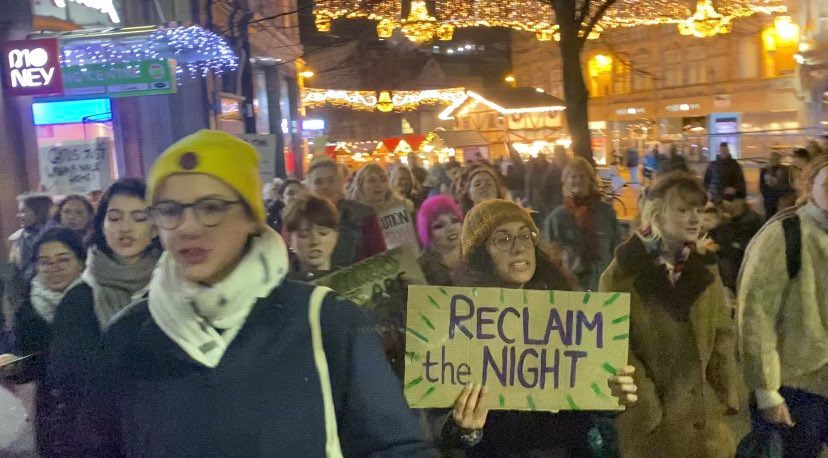
Sheffield Reclaim the Night protestors harassed by onlookers during march
Protestors who took part in Sheffield’s Reclaim the Night march said they were harassed during the demonstration on Saturday 26 November.
Several women and non-binary attendees reported men catcalling and confronting them soon after the protest began.
A young student attending the event said, “It was honestly so scary.
“We’d just set off and there were rowdy men shouting at us, wolf-whistling and getting in the way… it explains why we’re doing the march in the first place.”
Reclaim the Night demonstrations take place anually in cities across the UK to protest against sexual harassment and gender-based violence.
Around sixty people joined the march which set off from outside Sheffield Cathedral. It then moved through the Fargate shopping area and along West Street before reaching the University of Sheffield Student Union building.
When protestors were in Fargate, I watched one man stand in the way of protesters and ask why they were marching, before calling them sexist. I heard other onlookers make comments asking women for their social media accounts soon after.
A non-binary person said offensive and misgendering remarks were made towards them during the event.
“At the start, there were people who shouted ‘that’s a man’ at me and some of my other non-binary friends,” they said.
Reclaim the Night protests began in Leeds in 1977 after women were told to stay inside at night whilst the Yorkshire Ripper was at large. He was finally arrested in Sheffield.
One woman said she had been attending Reclaim the Night marches for over 40 years.
“It’s depressing to think that we still have to protest about exactly the same thing,” she said.
“I thought the women handled the harassment from members of the public really well - they used humour, and were careful not to get drawn into any argy-bargy.
“What men fear most is that women will laugh at them, but what women fear most is that men will rape and kill them.”
This year’s march marks the start of the University of Sheffield Student Union’s series of events commemorating the UN's 16 Days of Activism Against Gendered Violence campaign
The union says that Saturday's event aims to commemorate the history of the march, resist violence against women, and reclaim the streets of Sheffield.
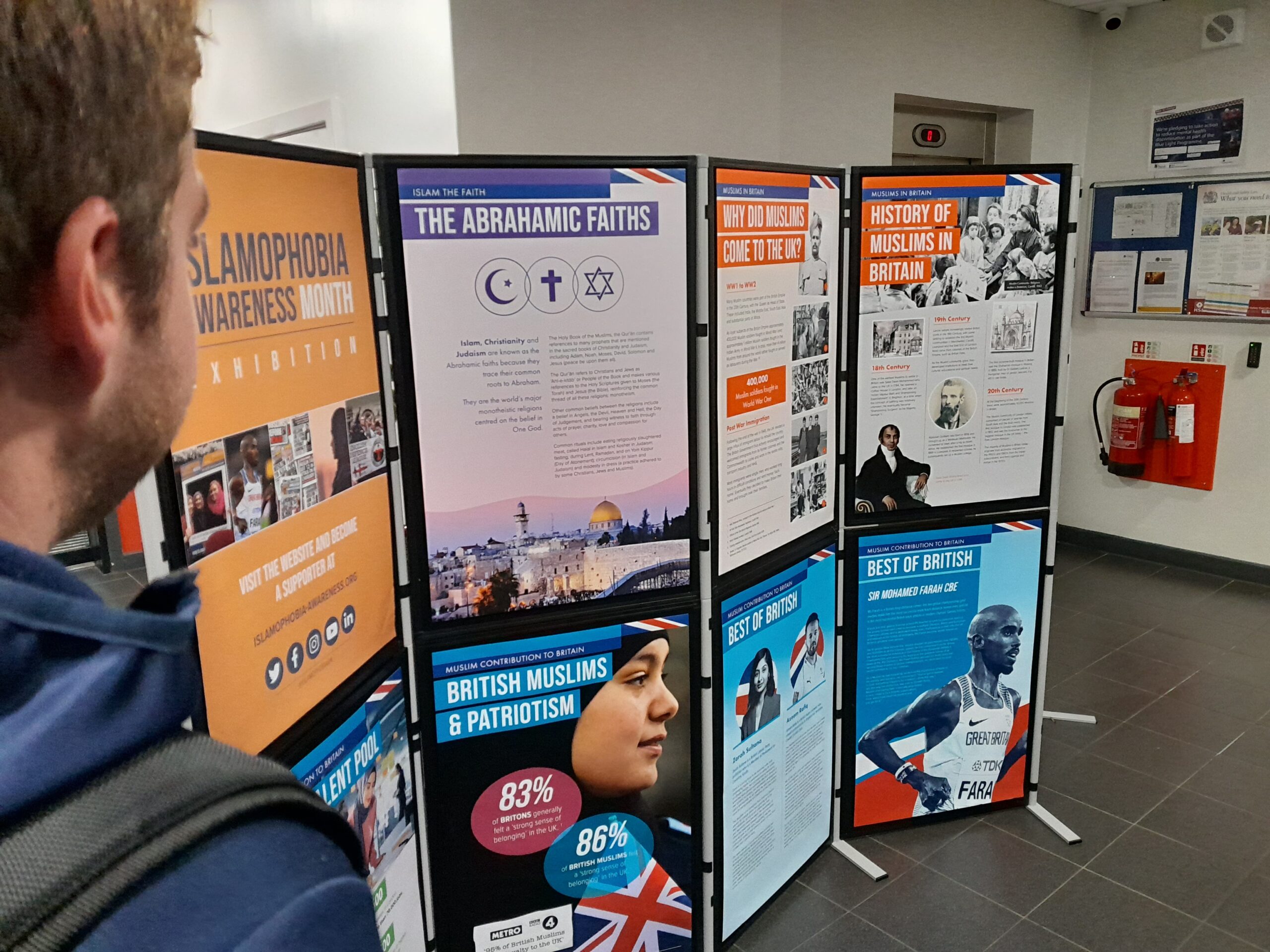
Islamophobia Awareness group continues to tackle religious misrepresentation in Sheffield
An exhibition has been raising awareness of "harrowing examples of abuse" suffered by Muslims across South Yorkshire.
The Islamophobia Awareness Exhibition drew to a close at South Yorkshire Fire and Rescue's headquarters this week, with a virtual version still available online.
It outlined the contributions of Muslims to British society, aiming to educate members of the public on positive Muslim contributions to society.
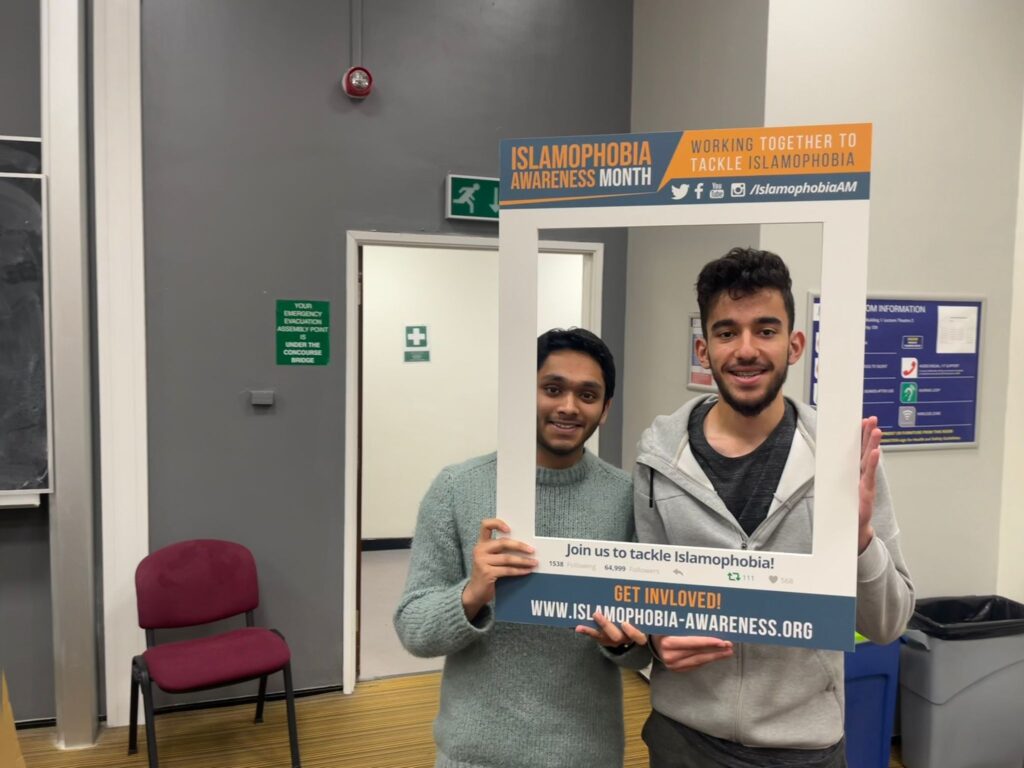
The organisation - called Islamophobia Awareness Month - tackles the presence of Islamophobia in today's society, particularly the representation of Muslims through the media, throughout the year.
Leslie Hayhurst, 52, people officer at South Yorkshire Fire and Rescue, said: "It needs to be more about understanding similarities, not differences, to prevent harrowing examples of abuse."
She said SYFR is continuing to train its staff to be aware of hate crime so they know how to recognise and deal with it.
This year's exhibition theme, #tacklingdenial, focuses on the acknowledgement of Islamophobia in society and has seen over 200 events and more councils and organisations publicising the event.
Nahid Roshanali, 28, who is a part of IAM, said: "People don't want to address Islamophobia" and that the exhibition is "encouraging people to become supportive and to create those changes."
Muslims make up 4.4% of UK society but a report by the Centre of Media Monitoring found that over a third of articles reported, misrepresented or generalised Muslim stories.
Now that Islamophobia Awareness month is over, the organisation is still encouraging members of the public to educate themselves through the resources available on their website: https://www.islamophobia-awareness.org/resources/ .
The information packs include information on why Islamophobia awareness matters and how people can get involved.

“The Most Wonderful Time of the Year”, or is it?
A mental health charity is campaigning to raise £85,000 in a single week to help those who struggle with their mental health through the festive season.
For many Christmas is traditionally thought to be a time of joy, peace, and goodwill to all men. Yet, for those who suffer with anxiety or depression December can feel the exact opposite.
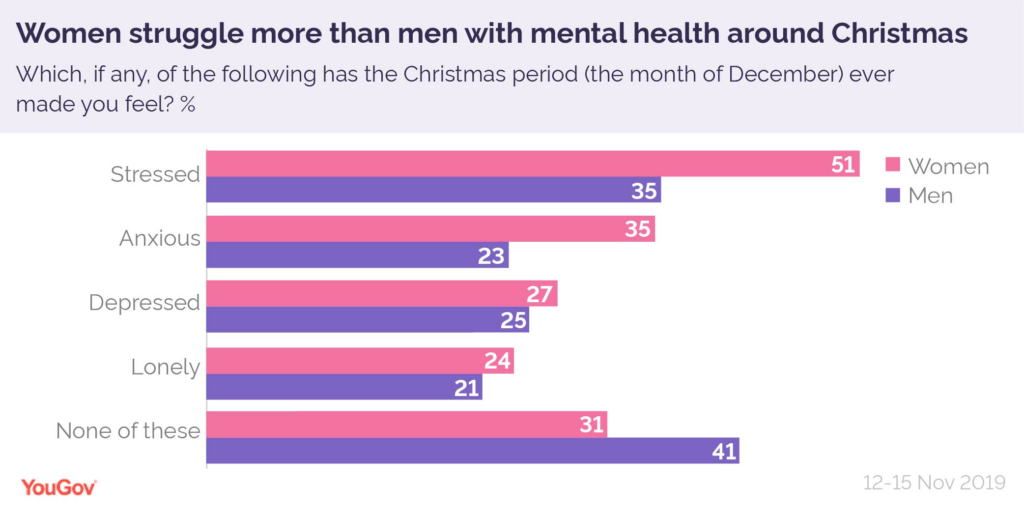
A study conducted by YouGov found more than two in five British people have felt stressed during the festive season, with one in four dealing with depression and anxiety, and women struggling more than men.
Shout, who have the UK's only text helpline, has launched their latest initiative in a bid to keep "their lifeline" open over holidays.
Last Christmas they helped 14,000 users, many of which had contacted the helpline feeling suicidal. The money raised from the fundraiser is predicted to help 8,500 people in moments of crisis, with conversations which they say could save their life.
Emma Wilson, fundraising manager for Shout, said: "There's lots of young people in particular that don't want to or don't feel comfortable ringing a traditional support line and so the text part is vital. This is new to mental health support in the UK.
"Other services at Christmas reduce their hours, have to close and they can't run a full capacity, but we are there.
Shout have a key word for users in Sheffield to text; "Steel" to 85258.
This allows Shout to see if certain issues are more prevailing in one area than another, or if more children are struggling in that area who can then be referred to local services.
"We know that these feelings don't stop for Christmas. If anything, they're going to be exacerbated," said Ms Wilson.
"The pressure of buying presents and keeping the house warm... there's a lot of people's plates at the moment and we're really there for them."
The fundraiser is matched by the Big Give, which means every pound from donations are doubled, supported by Selfridges and the Monday Charitable Trust.
Ms Wilson, who explained Shout are expecting 20,000 people to use their helpline over that festive period, said: "We also see a peak when kids go back to school in January.
"It's a really bleak time. People worry about all sorts of things over the Christmas period, so that's when we see our highest numbers when people are going back to school or back to work.
"We also tend to see the highest numbers around what's in the news. If the news is really stressful at Christmas, like when Christmas was cancelled three days before in 2020, our numbers massively spiked."
Ms Wilson explained the cost of living crisis directly correlates to an increase in anxiety, depression, low, mood suicide or thoughts.
She said: "We are seeing around 2000 people every single day, and even if people aren't directly messaging about those practical issues in their conversations with us, we tend to find we can link back to them."
"If you feel anxious or low, it's very normal to feel that way. A lot of people feel pressure to try and make Christmas perfect."
Depression and anxiety aren't the only conditions that can be impacted by Christmas.
Francesca Baker, who has experience with an eating disorder, spoke about how the festive season in particular affects her.
"I usually dread Christmas due to anxiety around eating in front of other people due to having severe and enduring anorexia, and trying desperately to recover," she said.
"There's so much pressure to eat certain foods and be jolly about it, and I just can't. It works me up a lot and means I can't enjoy the family time.
"I have certain foods I will eat, and any deviation really stresses me and makes me very worked up. I hate it because I miss out on so much fun."
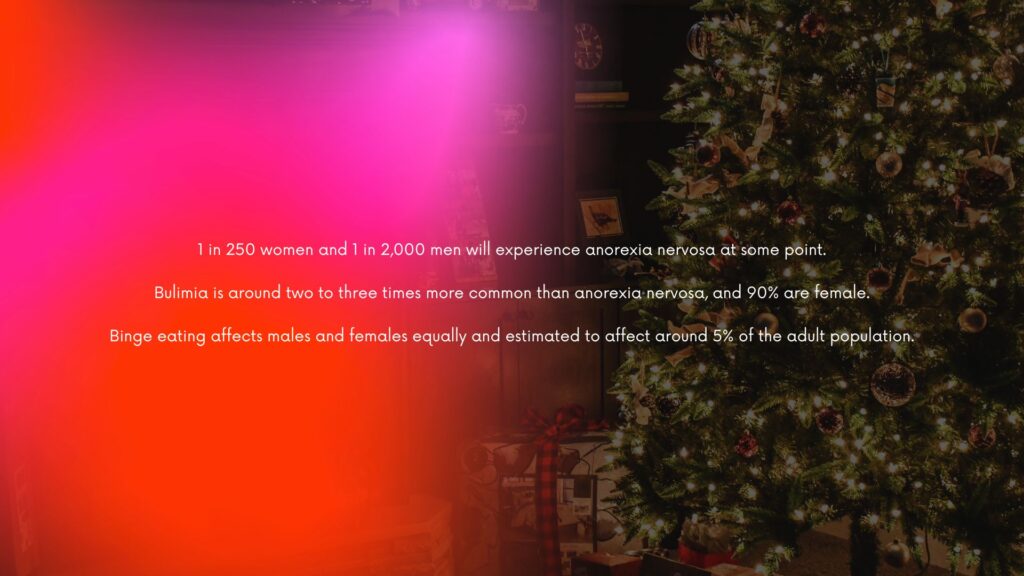
The most commonly recognised eating disorders are Bulimia Nervosa, Binge Eating Disorder and Anorexia Nervosa.
According to the leading UK eating disorder charity, Beat, around 1.25 million people in the UK have an eating disorder, with women in particular affected by eating disorders:
Sheffield Mind are hosting a Christmas event to help those who are struggling locally to cope with the emotional impact of season.
'Open Minds' will be held on 9 December at The Wellbeing Centre in Sharrow. It is hoped people can come together and share experiences in an informal, social setting.
Margaret Lewis, CEO of Sheffield Mind, said: "We’re keen to speak to our service users, and other users of mental health services, about their experience of getting support; what works, what doesn’t.
"In that way, we can adapt our approaches if necessary. We’ve decided to do this in a fun and friendly way, at a Christmas social.
"Sometimes New Year is busy, family arguments, isolation at Christmas, money worries, drinking too much, there can be lots of reasons why people might seek help in the New Year."
The charity's services begin in 1978, with a group of people who wanted to see changes in the way people with mental health difficulties were treated.
The early aim of the service was to work collaboratively around fundraising and supporting volunteers, to improve community-based services.

If you’re worried about your own or someone else’s mental health, you can contact the following:
-Beat, the UK’s eating disorder charity, on 0808 801 0677.
-Shout on 85258.
-Sheffield Mind 0808 801 0440.
Inquiry launched after death of five-year-old Rotherham boy
A family have spoken after an inquiry was launched into the death of a five-year-old little boy who was turned away from Rotherham General Hospital due to a lack of available beds.
Yusuf Mahmud Nazir fell ill last month after contracting tonsillitis which spread to his lungs, causing pneumonia.
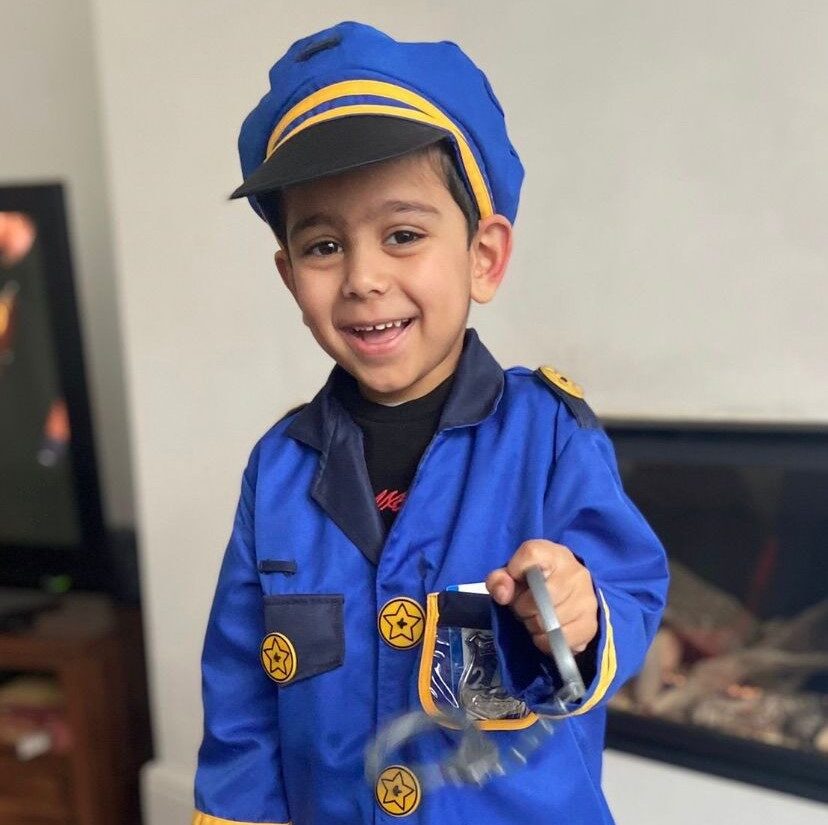
The youngster's uncle, Zaheer Ahmed, who described his nephew as “a playful and joyful kid who loved dressing up and eating donuts” told Sheffield Wire the family won't rest until they get answers.
He said: "I don't want this to happen to anyone else as his death could have been avoided."
After Yusuf first fell poorly, his family took him to Rotherham General Hospital, but they were told he couldn't be admitted as there wasn't enough doctors or beds.
The little boy was later seen by a GP who prescribed him antibiotics that initially helped, but Yusuf fell ill again a few days later and was taken to Sheffield Children's Hospital, where his condition deteriorated quickly.
He then sadly died five days later, surrounded by his heartbroken family.
Rotherham NHS Foundation Trust requested an internal inquiry, but the family, who have taken legal advise, are demanding a separate third-party private investigation.
Mr Ahmed has had a meeting with the Chief Executive and Chief Nurse of Rotherham General Hospital, who offered their condolences, as well as an apology, and have assured the family they have taken immediate measures.
He said: “They added an extra doctor in the A&E and reduced waiting times in the paediatric department."
MP for Rotherham, Sarah Champion, reached out to the family and has raised the case in parliament.
Mr Ahmed said: “She isn’t taking this matter lightly and is speaking to the Health Secretary and the Prime Minister. She is doing an amazing job."
Yusuf’s parents buried their son in the privacy of close family and the school is now in the process of organising a memorial to celebrate his life.
Student to solo row 3,000 miles across the Atlantic ocean
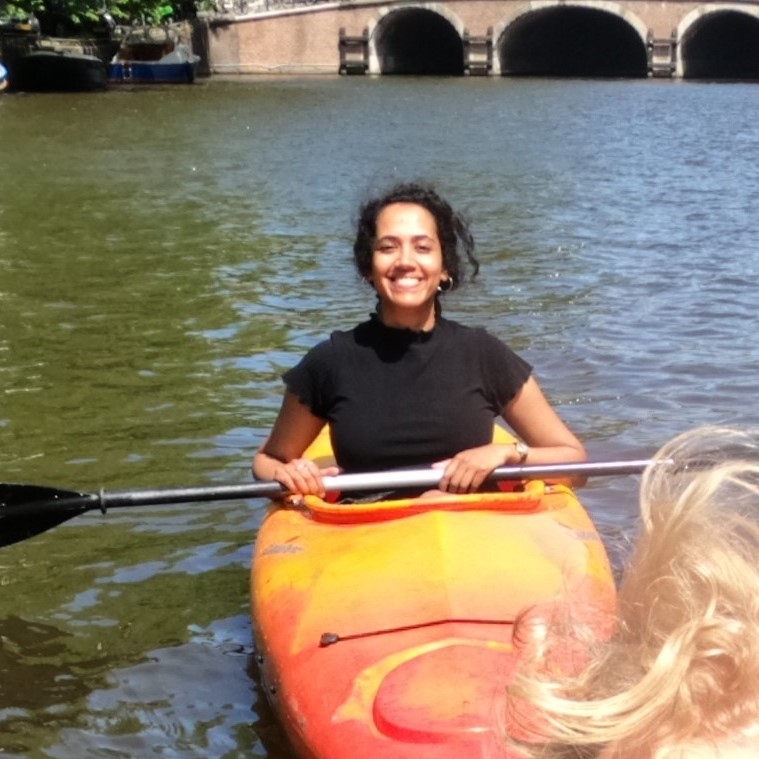
A University of Sheffield student is attempting to become the first woman of colour to row solo and unsupported across an ocean.
Ananya Prasad is raising money for The Mental Health Foundation and the Deenabandhu Trust raising £50 per mile of ocean.
The event is part of the Talker Whisky Atlantic challenge, held every year in December, and Miss Prasad discussed her main motivations in pursuing this daunting challenge.
She said: "I hope to inspire a lot more women and women of colour to do this and put themselves out there, whether it's in their personal life or sports or their work.
"There have been less than 30 women who have done that at all. And none of them have been women of colour.
Miss Prasad has close ties with one of her chosen charities, the Deenabandhu Trust, which was founded by her uncle in 1992.
She said: "It is a school for children who are from very impoverished backgrounds or orphaned.
"A lot of these children have gone on to become architects or engineers or healthcare professionals.
"Without that, they probably would not have had the opportunity they would have been exposed to a lot of poverty, not many opportunities and exploitation.
"So it's a way to give back to them as well."
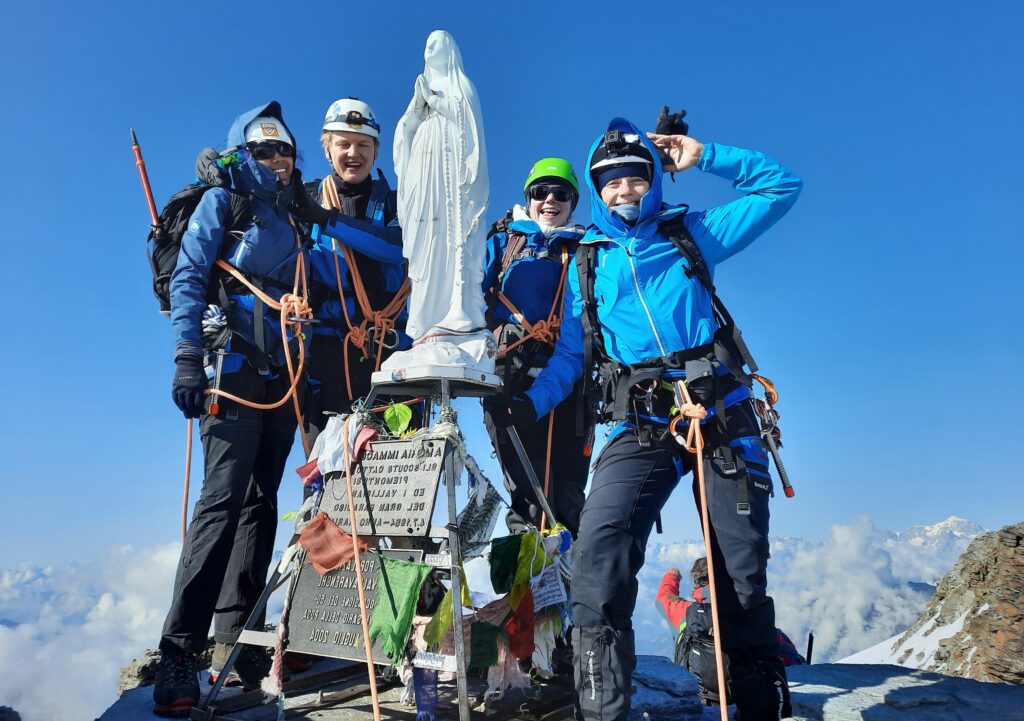
Economics undergraduate Miss Prasad isn't averse to a challenge, having scaled multiple mountains in the past.
"We hold ourselves back more than you think. We're capable as humans of a lot more than we think we are.
"You have to work hard for it. But it's just about putting yourself out there."
Miss Prasad is scheduled to race in 2024 and has raised £556 of her £150,000 total in just a few days through her GoFundMe page.

Tree disease leads to “last resort” felling operation
A highly destructive disease which is ravaging large trees has led to a felling operation in a Peak District nature reserve.
Wyming Brook is home to larch and sweet chestnut trees, which are particularly prone to the disease known as Phytophthora ramorum.
It has no cure and so the only solution is to chop down the affected species of tree.
James Hargreaves, from Sheffield and Rotherham Wildlife Trust which manages the reserve, said: “It’s unfortunate and felling trees is always a last resort but it has to be done.”
“The disease came from abroad decades ago and is pretty much ravaging large trees across the country.”
As a result of the felling operation Wyming Brook Drive, the main road running through Wyming Brook, and the car park off Redmires Road, will close.
It is unclear if the closures will allow for vehicle access, as is it not definite whether other car parks will remain open.
The operation will be in two phases, the first beginning in January or February and lasting until Spring.
This allows the sections of the reserve closed due to the operation to reopen for spring and summer, with the second phase beginning next September.
Reopening for the spring allows the brook to be open during the time when the number of visitors peaks, as well as minimising the impact on local wildlife, as spring marks the start of bird-nesting season.
Mr Hargreaves said: “We are hoping to facilitate as much normality in the area as possible but there is the possibility that horse and bicycle access will be disrupted."

Hoyland library renovated as part of a one million pound investment
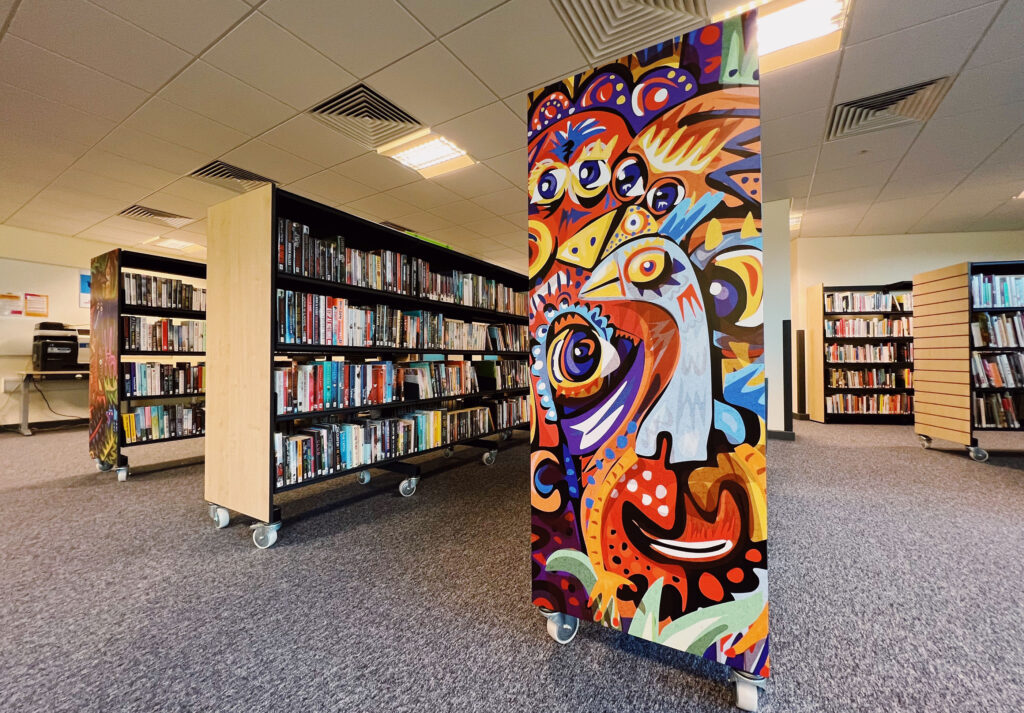
Hoyland library is the first to benefit from Barnsley Council's million-pound scheme to improve local libraries across the borough.
The space re-opened its doors on Monday with the official launch planned for tomorrow.
Barnsley Council put aside one million pounds back in 2018 to make sure their fifteen community libraries have access to modern computers, books and resources.
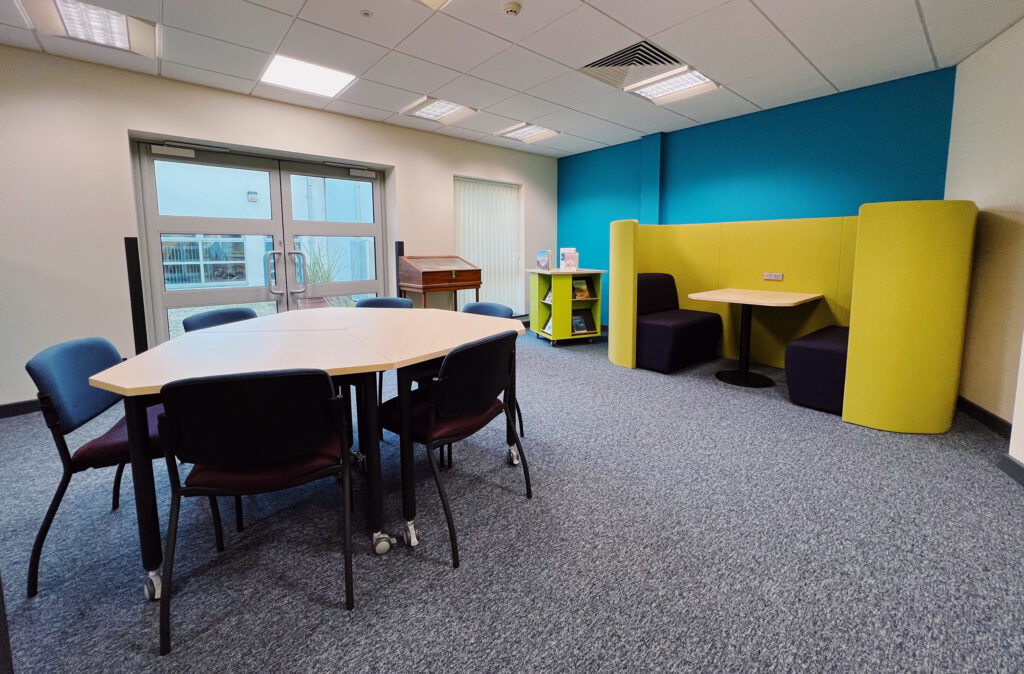
Hoyland is the first Library to receive this funding with the relatively small renovation focusing on providing work and study spaces and improving resources for children.
Barnsley Council’s Transformational Officer, Jemma Conway says locals can expect to see a “lovely bright atmosphere. The redevelopment was focusing on our children’s library which has brought a modern feel to it and its more interactive and accessible. We have also added some smart working booths so you can call in their to work or to study."
The official launch takes place tomorrow from 9:30am until 2pm with a series of drop in family friendly events including science experiments, craft activities, story telling and an opening speech from the Mayor.
Councillor Caroline Makinson, Cabinet Spokesperson for Public Health and Communities, said: “We hope that residents in the area will come and see it for themselves and make use of this new space, whether that’s attending one of the activities or events or using the new drop-down space where they can work and study.”
The next to be renovated is Dodworth Library which is planned for the new year.

Donations needed for Doncaster man’s life-changing surgery
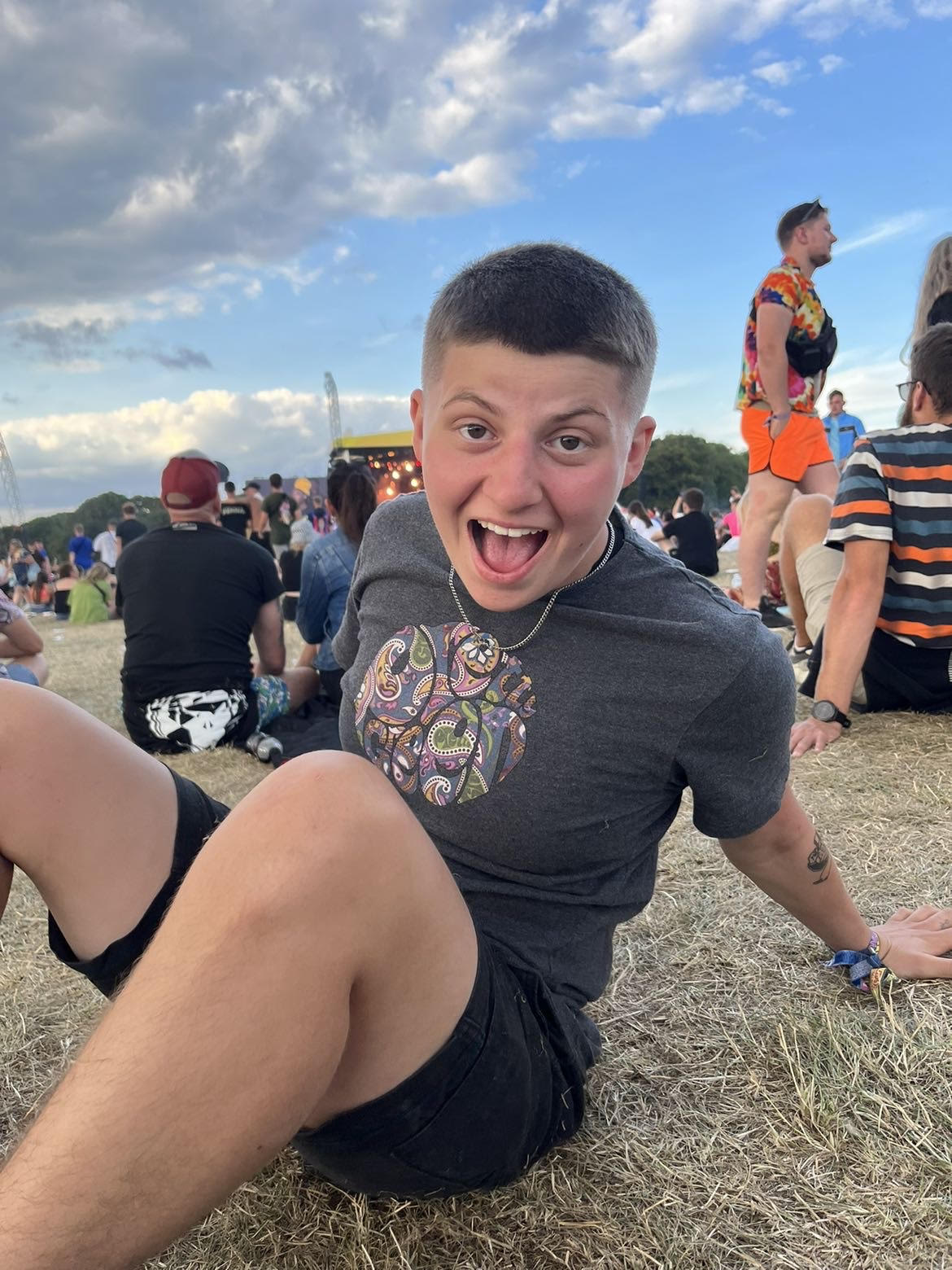
A young trans man has launched a crowdfunder in the hopes of affording his expensive top surgery.
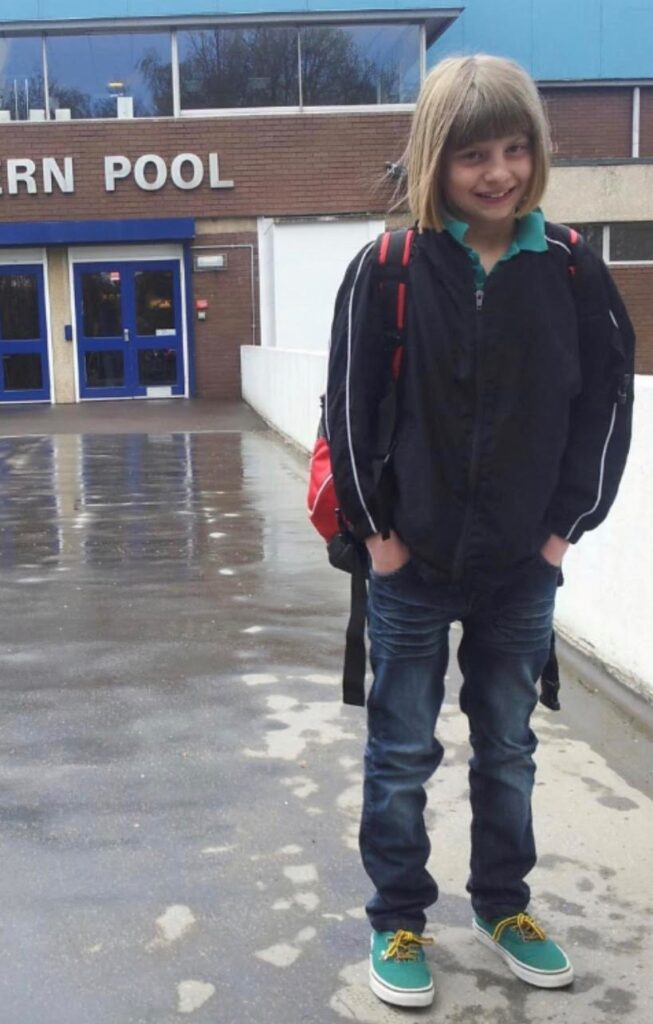
Finley Blower, 19, of Conisbrough, first realised “something didn’t feel right” when he was given the role of Mary in his church’s nativity at the age of three.
Mr Blower said: “I was just in absolute tears about it, and I couldn’t wrap my head around why I was Mary and not Joseph.”
Throughout school, Mr Blower had labelled himself as "lesbian" due to his attraction to women and typically masculine short hair.
This never felt right to him, and it was on New Year's Eve in 2019 that Mr Blower told his girlfriend of four years that he was trans.
He came out to his parents the following year in October, when his provisional licence came through the post naming him as ‘Mr Finley Blower.’
Mr Blower said: “I remember the evening I told my parents. My dad called up the stairs: ‘Finley, do you want a cup of tea?’ I think I cried from how happy I was hearing my dad say my new name.”
The Go Fund Me page was set up to help raise the £4,500 deposit for Mr Blower’s surgery, which will cost him double the amount.
The teenager started his transition on testosterone in 2021, deciding to go private after facing years on the NHS waiting list.
According to the Sheffield Gender Identity Clinic, the longest waiting time as of October 2022 is 55 months.
Left "exhausted" having to work long hours alongside his studies to fund his transition, Mr Blower was confident it would pay off.
He said: "It feels like I’m finally living as my true self. It’s allowed me to become so much more confident and not feel like I’m living a lie."
Despite this, Mr Blower's ribs are left in "agony" every night from the binder he currently uses to flatten his chest, and previous time spent taping it down has left him with painful blisters and rashes.
He said: “I want to be able to do normal things like take a shower and not want to cry every time I see my chest.
“This surgery means everything to me. I just want my body to match how it should look in my head.”
To donate to Finley Blower’s Go Fund Me page, follow:
https://www.gofundme.com/f/wdwspz-help-finley-get-top-surgery?qid=802e2899dfb127bd708c6a94507a57eb
Students to host fundraising fashion show to tackle period poverty
A fashion show to raise money for period poverty in Sheffield and "showcase passion and talent" will be held this Sunday.
The show, in collaboration with the University of Sheffield's Fashion Society and Irise International, aims to reach a total of £500. A GoFundMe page has already raised £190.
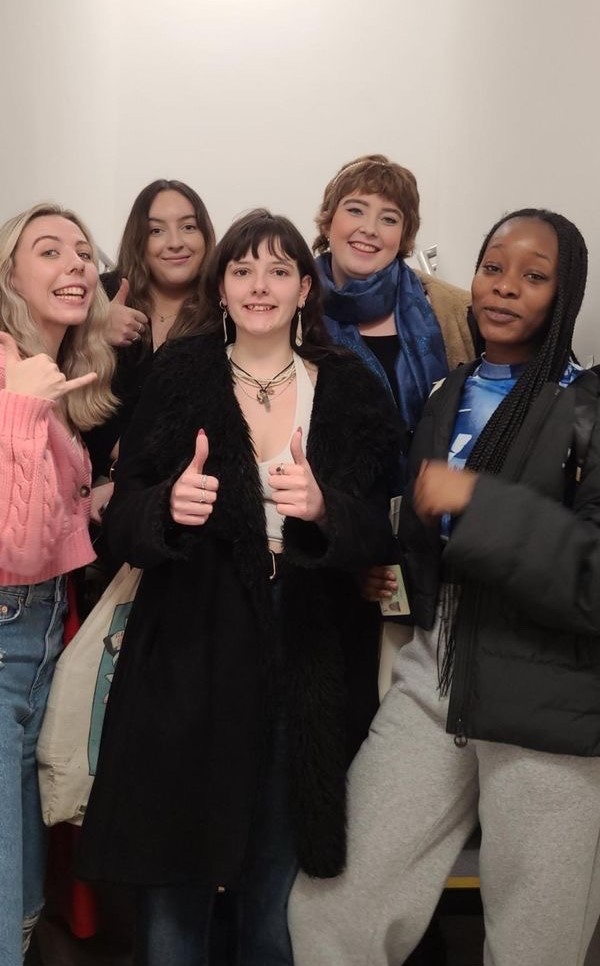
It was the brainchild of a group of female undergraduate journalism students, whose campaign No Period Left Behind forms part of their Your Sheffield website.
Campaign manager Keren Ossou, 20, said the idea had come from personal experience.
“When I was in school there were no period products available in the bathroom, or really any effects to tackle period poverty.
“After doing research , we found that period poverty was quite a big issue in Sheffield especially since Covid and with the cost of living crisis that we are currently having. We wanted to do something to make a difference.”
She added that only half of Sheffield schools take part in the government’s scheme for free period products.
Eight members of the university’s Fashion Society will be modelling a selection of clothes, some of which are handmade.
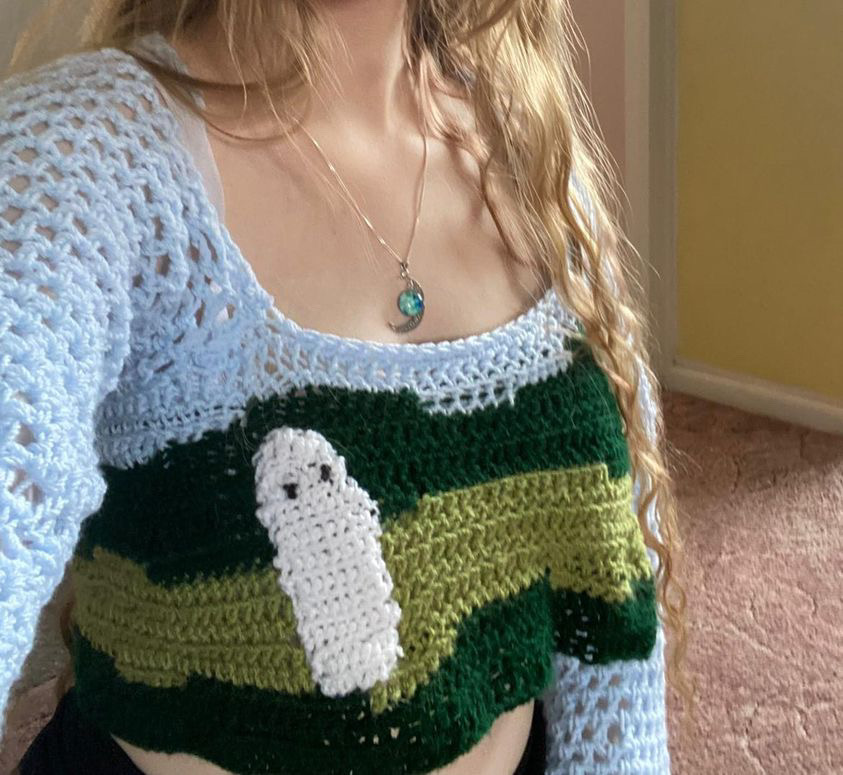
Its president, Olivia Booth, also 20, said they were grateful for the opportunity to be involved.
“What interested us in joining the fundraiser was, of course, the charity aspect. Period poverty is obviously a huge issue.
“On top of that, we really wanted to be able to showcase everyone’s passions and talents. It allowed our members to create and model for a good cause.”
She hoped the idea of a fashion show will interest more people, specifically students, to donate.
Irise International is an award-winning charity based in Sheffield.
It has led and been involved in a number of initiatives to improve period poverty, specifically in Sheffield.
Emily Wilson, CEO of Irise International, said: "Period poverty and shame are holding people back around the world. We work with young people in the UK and East Africa to end the stigma and realise period equality for all."
Last month, Sheffield City Council discussed “Committing the Council to Tackling the Stigma of Menopause and Period Poverty” at a council meeting.
It agreed that “period poverty is a serious issue for women in the city.”
The fashion show and fundraising event will take place at the Nelson Mandela auditorium in the Students' Union, this Sunday at 3pm. Door open at 2.45pm.
Tickets to the fashion show are available here or you can donate via GoFundMe.

Sheffield businesses come out on top as Black Friday sales fall across the country
A new study shows Black Friday profits fell in the UK by three quarters of a million pounds this year compared to last.
But Sheffield shopkeepers defied the odds with many saying it was busier than expected.
An assistant from the Body Shop said "We improved on last year which we weren't expecting. No idea why that is because as far as I'm aware that's not following any trends".
With the cost of living crisis ongoing it was unclear whether Black Friday would appeal to shoppers this year.
After the lifting of Covid restrictions in person sales were up nationally by half a million pounds but there were fewer online purchases.
The popularity of Black Friday has decreased for some people in Sheffield who believe the sales to be a scam. We spoke to locals who said they think shops put the prices up and them reduce them to give the illusion of a bargain.
Some shoppers said they stayed home this year as they feel it is "too much hassle" with "people running about like headless chickens".
Businesses like Lush chose not to take part in Black Friday saying as a sustainable company they feel sales can undercut fair pay to suppliers.
As the UK enters a recession we may see more signs of people holding back on shopping.
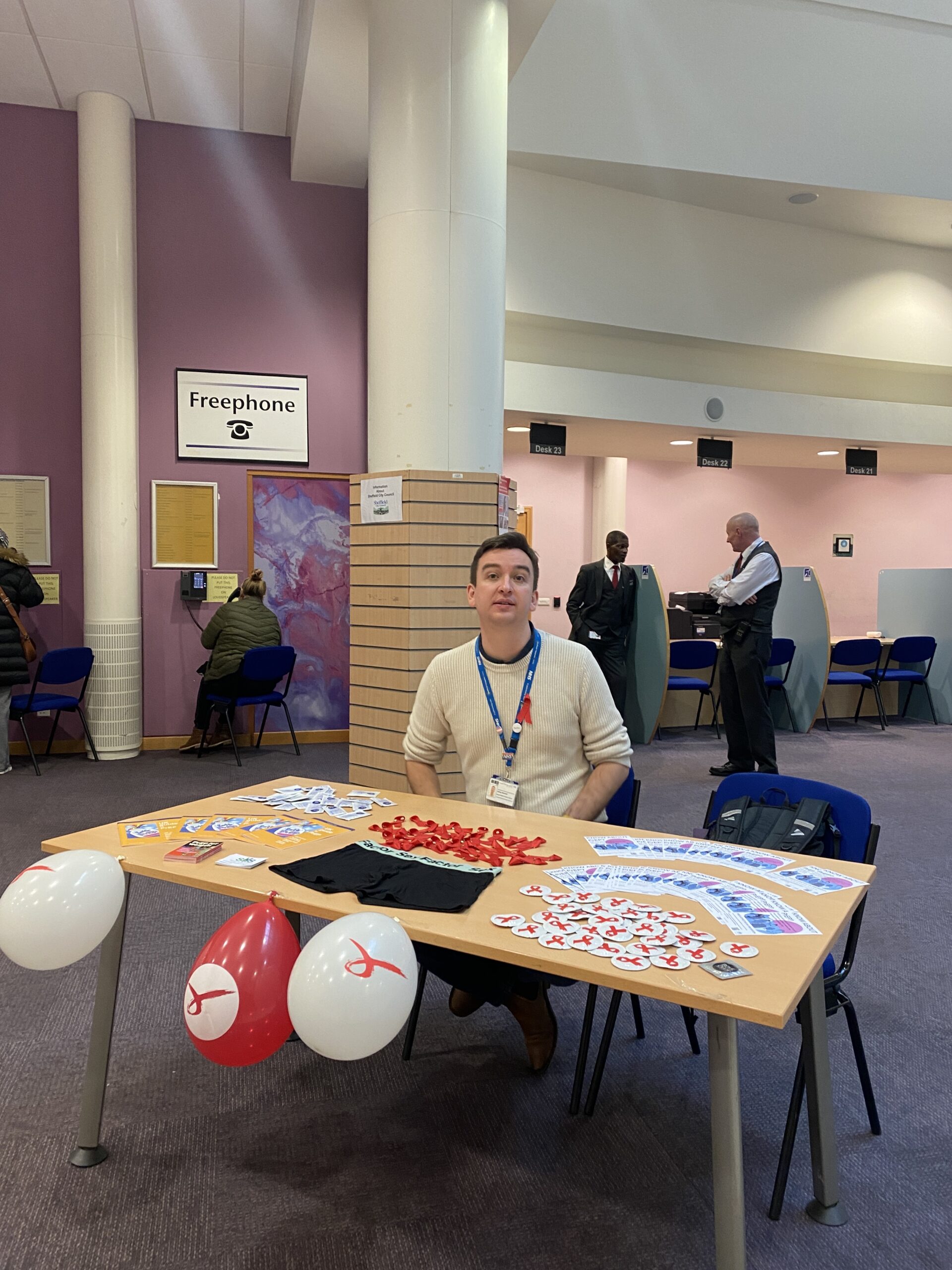
Sexual Health Sheffield team up with City Council to raise awareness for HIV treatment
The clinic is attempting to improve levels of sex education in Sheffield after the city was ranked as the second worst in the UK for the quality of its service.
Two stalls were set up this morning, one in Burngreave and the other at Howden House in the city centre, with the aim to offer anonymous support, advice from experts, and contraception regarding HIV.
In a statement, Sheffield Teaching Hospitals urged people to use the clinic for preventative and post-exposure treatment.
Pre-exposure Prophylaxis is a tablet taken to stop an HIV infection with a 99.9% success rate.
Dr Becky Green, Senior Clinical Psychologist for the NHS Foundation Trust said: "HIV can affect anyone regardless of age, and the COVID pandemic means that we all have a lived experience of what it is like to fear a virus and how talking about it freely and sharing public health information can reduce stigma."
Last month, Superdrug conducted a study exploring factors behind STI stigma across the UK, placing Sheffield near the bottom of the list.
Eighty per cent of participants rated the quality of sex education in Sheffield as poor or basic, second only to Liverpool, 11% higher than the UK average of 72%.
Dan Bermingham-Shaw, a researcher for the study, said 8% were not bothered by schools failing to cover sexually transmitted infections, while 4% thought it was good that they didn't.
Sexual Health Sheffield is encouraging people to speak openly about viruses such as HIV in order to battle stigma that surrounds the virus. The average life expectancy of those infected is the same as those without.
Mr Bermingham-Shaw said: "One of the main findings of the study was that a lot of people who have an STI diagnosis won't want to talk about it. While most people said they were comfortable to talk about it with a doctor, they are a lot less likely to talk about it with their friends and family, even their partners. So, a lack of conversation around the topic reduces the amount of education people have on it''
You can read about the full study here: https://onlinedoctor.superdrug.com/simply-talk-about-it/
If you enjoyed this then head over to the Sheffield Wire Page or my Twitter @luke_reevey for more!