
Wandering around Sheffield’s Sustainable Market, it was clear as people mingled from stall to stall, there is an appetite to buy products that will help the environment.
Around 500 people attended the event last weekend, (April 25 2026) at the city’s Victoria Hall, visiting over 20 stalls, that were selling anything from sustainably sourced food products, toiletries, jewellery, plants and household goods.
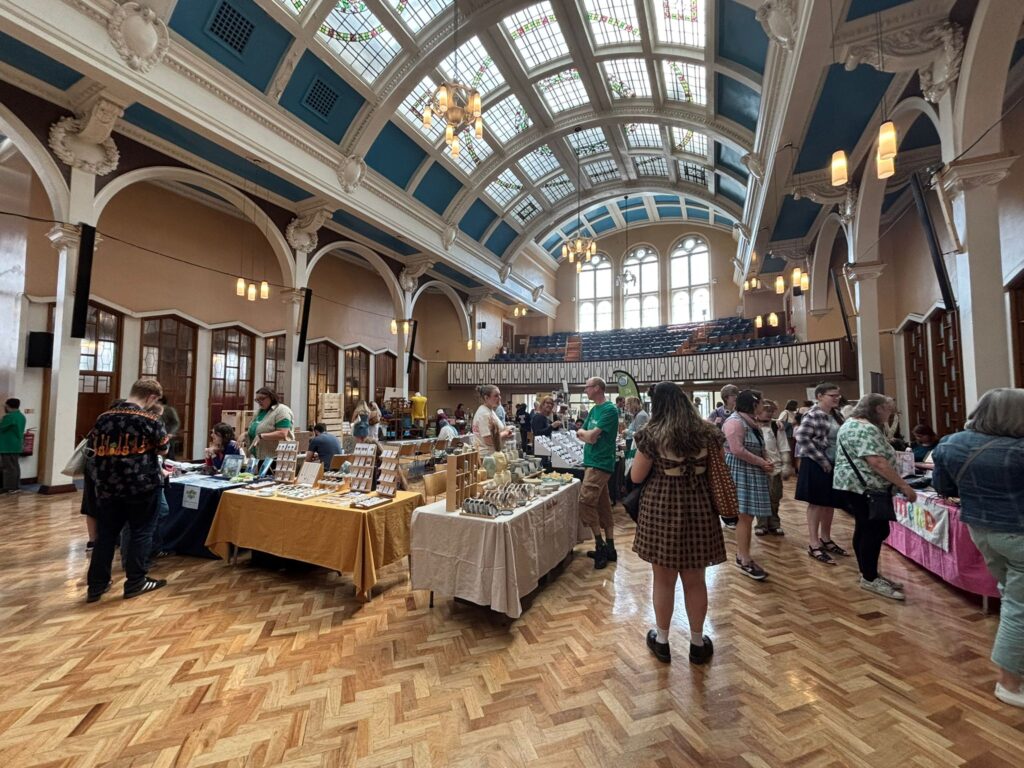
Sheffield Action on Plastics (SAoP) hosted the second spring edition of the market in a bid to promote a more environmentally conscious lifestyle.
One stall holder was Matthew Richards, who started up The Bare Alternative as a low-waste lifestyle shop in Sheffield, in November 2018.
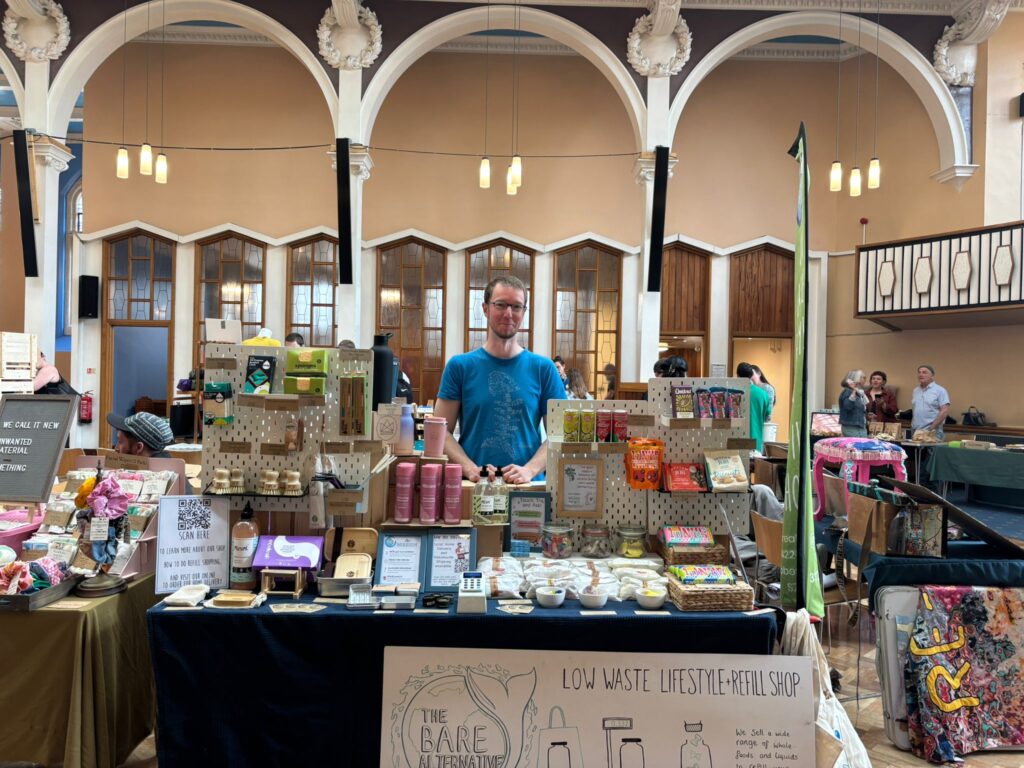
“We are not just here to make profit,” he says. “We’re wanting to make sure that people have got these sustainable products and that they’ve got the alternative to the supermarket. That’s why we have it in the name The Bare Alternative.“
Located on Abbeydale Road, the store sells sustainably sourced food, drinks and household goods, as well as running a popular refill service where people bring their own containers, all in the name of sustainability and cutting out waste.
Matthew isn’t alone in the fight to reduce waste across the city: across Sheffield and South Yorkshire there is a concerted effort to push sustainable and low-waste lifestyles.
Another stall holder, Lizzie Stygall is a project manager at Sy Ecofit, a South Yorkshire based company who are dedicated to improving energy efficiency in homes and community centres.
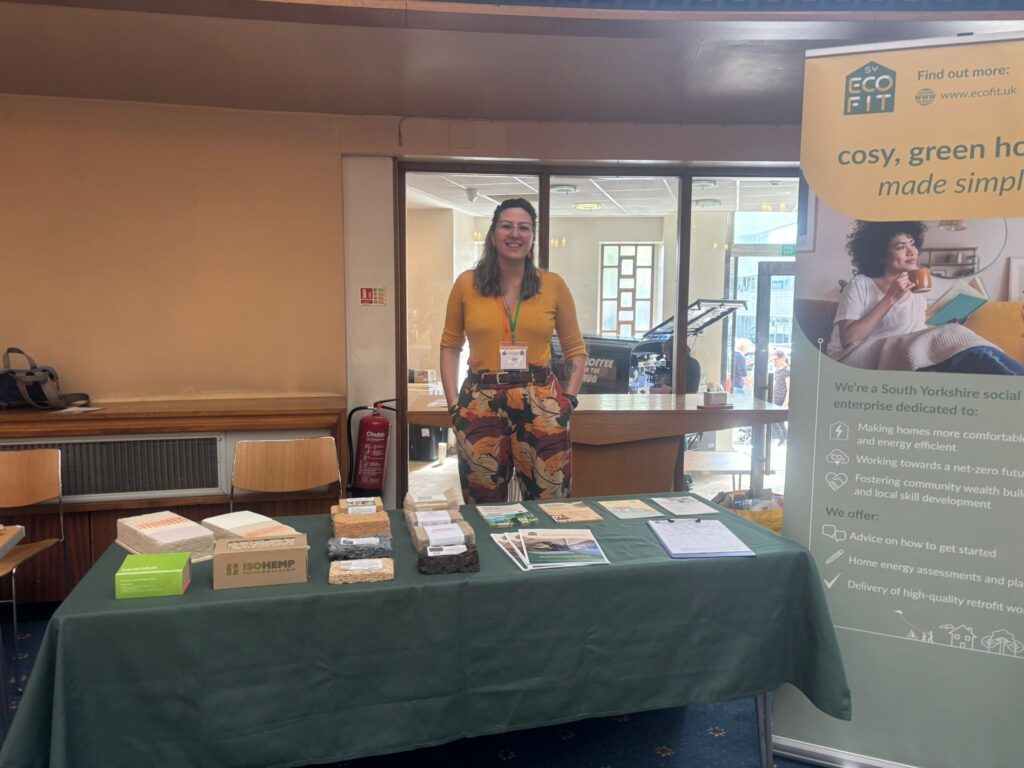
“We really do believe in reducing carbon, in everything that we put into our homes,” says Lizzie. “So when they start to think about insulating, we don’t really believe in using fossil-fuel-based plastics, because they’re producing more carbon to put into your home.”
However, according to Lizzie, these choices are becoming more and more difficult as the cost-of-living crisis continues to affect everyday people, and conflicts across the world make life more uncertain for us all.
“A really good example actually would be when Ukraine was invaded,” she says. “The price of a huge amount of materials went up massively, and that actually affected a lot of wood and wood fibre and things that were used in construction. And some of those prices quadrupled.”
As a result, many sustainability and green initiatives across the UK and the world have taken a backseat, faced setbacks, or even been cancelled altogether.
The UK formally stepped back from the cross-party consensus of a target of Net Zero by 2050, instead looking at a more flexible timeline to reduce the burden on households caused by the cost-of-living crisis.
Furthermore, the EU deforestation regulation, a landmark law which required companies to prove products weren’t sourced from deforested land, has been delayed by a year.
“We struggled a bit through like cost of living, Ukraine war, now the Iran war,” says Matthew. “People are very conscious about the money in the pocket but we’ve got that local community that supports us, and we’re really grateful for their support.”
Despite these challenges, both individual groups and Sheffield’s council are still continuing to push forward with legislation.
SAoP are leading the way on sustainable initiatives across the city, including setting up the Sustainable Markets and their reusable cup scheme, where companies and events can hire out reusable cups rather than buying single use plastic ones.
Greg Hewitt, founder of SAoP, 37, says: “We have about 4,000 reusable cups now that we hire out for events. A lot of people want to choose that and use the sustainable option when running an event. We get them washed, and we use and reuse over again, which is really good to contribute to the circular economy.”
His determination to work collaboratively with Council to reduce plastic in the city centre. This includes a water fountain on Fargate and banning traders from using single use plastic cups at events, such as the Tramlines Fringe and the Christmas Markets.
“I think this is a huge win because this isn’t national government legislation to ban single use plastic but the city council,” says Greg. “Because of the pressure that we’ve put on them, they have decided to go that extra effort, which is really exciting.”
This year, South Yorkshire Mayor, Oliver Coppard, announced £92.7 million to launch 186 electric buses as well as The Grey to Green initiative that looks to build corridors of biodiversity whilst also capturing “24,000 bathtubs” worth of water every year to ease the strain on sewers and lowering urban temperatures during the summer.
This month the Council also introduced a larger brown recycling bin to encourage more people to increase their recycling habits.
However, Greg believes there is still a long way to go. “I do think Sheffield is lagging behind a few other places,” he says, and explained how Manchester City Council have implemented a rule against single-use plastic food containers at their Christmas Market.
“Sheffield should be seen as the green city. So why is Sheffield still like lagging behind?”
Matthew, from The Bare Alternative, also believes more still needs to be done and is sceptical about the new brown recylcing bins.
“I think that could actually have a bit of a negative impact,” he says. “I think that people are going to continue to buy and expand the amount of plastic packaging because they think they can just recycle it.”
SAoP is looking to educate people to help them get more involved in sustainability. “We also believe that education is power,” says Greg.
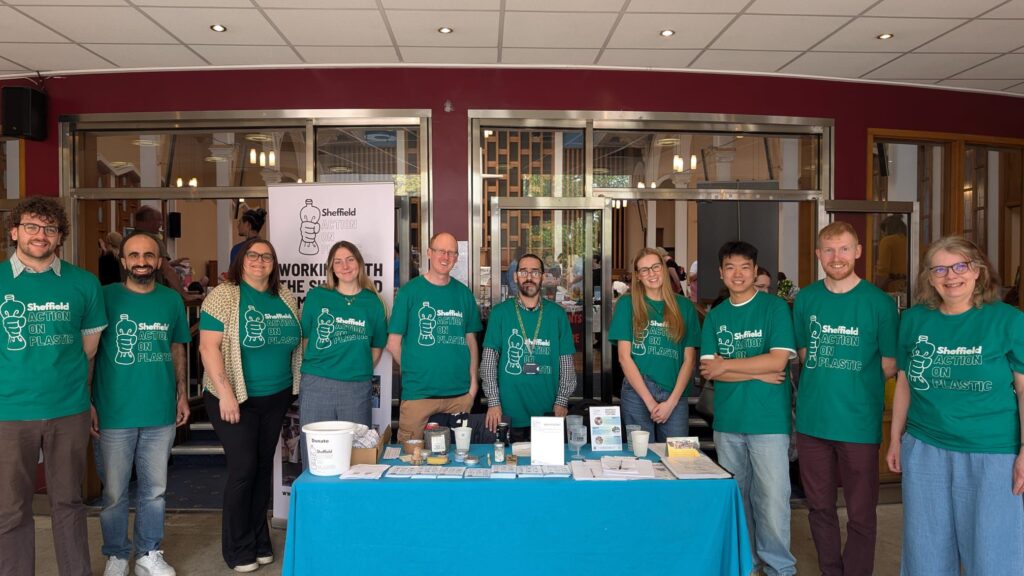
Volunteer, Emma Andrews, who has a background in teaching, has created a 12-week training package to help people create sustainable habits in their day to day lives. She is now hosting a face-to-face workshop, in May, with the aim of encouraging people to get more involved with their own communities.
“Talk to friends, talk to shops, talk to pubs,” says Emma. “If people go into a pub and they see the business using single use, and they know there’s a solution in speaking to them and having the confidence to do that.”