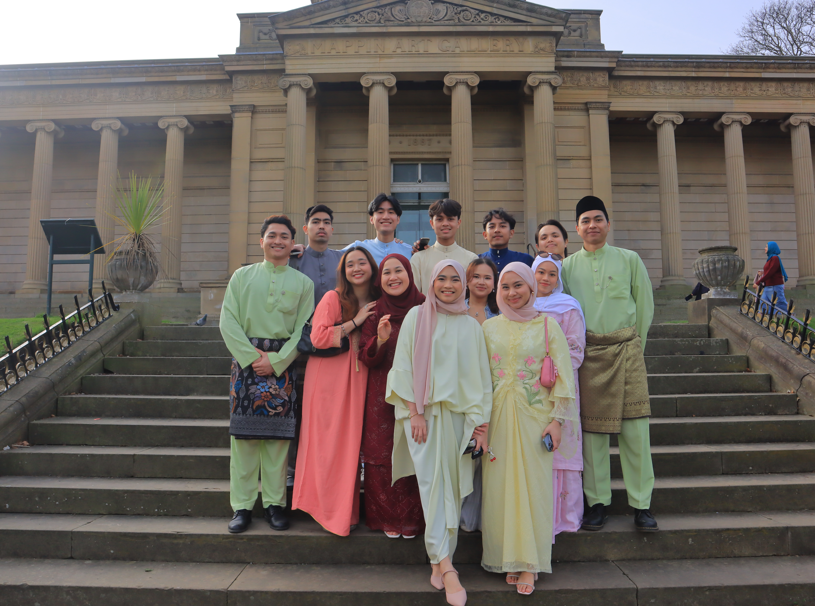
Sheffield’s Malaysian community came together last week to celebrate Eid-ul-Fitr, a festivity marking the end of Ramadan, a month of reflection, study, and fasting.
This year it was celebrated on the 20th of March and so Eid coincided with the arrival of spring and the blooming magnolias and cherry blossoms around the city, with many people decided to take their celebrations in parks and green spaces such as Weston Park.
Yusuf Rick, a Sheffield Hallam software engineering student, said: “It’s beautiful. We’re here for the background, to post on Instagram and let people know we celebrate this, in Malaysia we go all out for Eid-ul-Fitr instead of Eid al-Adha.
“It’s a day for Muslims to celebrate after fasting for 30 days, but in Malaysia we celebrate for a whole month. The first two days are when you go all out with your outfits. It’s a day where we come together and eat and just celebrate family”.
In fact, a big part of this celebration is in the clothes being worn by those taking part in the celebrations.
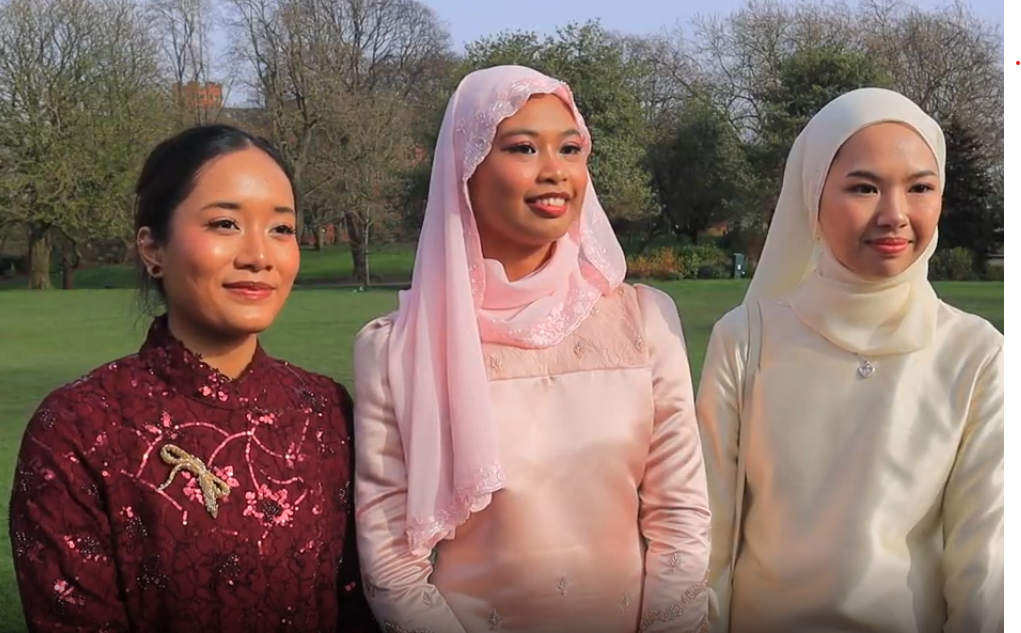
Wanzafreennafissa, a second year business management student at the University of Sheffield, said: “For me it’s a celebration, that’s why we dress up so nicely and decorate ourselves. It’s like a victory because we have been fasting for 30 days and it’s not easy.”
She showed us her dress, a blush baju kurung, a traditional Malaysian dress and next to her Aufiya, a Sheffield Hallam computer science student, wore a burgundy piece known as a janggan kebaya.
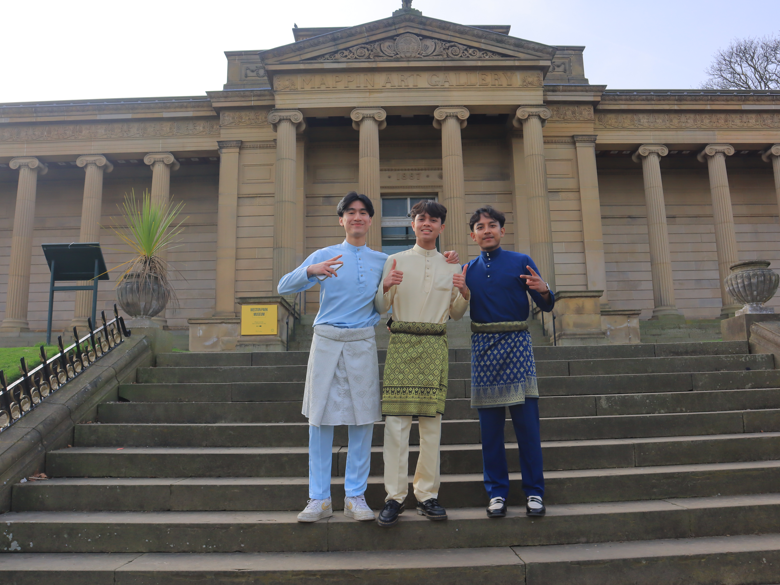
Most of the men at the park were wearing baju melayu, a traditional Malaysian outifit, in an array of bright colours but they are not just decorative, as Lydia, a University of Sheffield accounting student explained.
She said: “The way you wear it is a message to the people that are looking at you. When you wear it above your knees it means you are single, if it reaches below the knees it means you are married or taken.
“It’s the same as in the regency era, how they used fans to call other people to signal you are married or you want to meet someone.”
Other celebrations include the food they have to break their fast, the most common dishes being lemang and ketupat, sticky rice cooked inside of either banana or pandan leaves for the former, and bamboo for the latter, as well as a dish known as daging dendeng, slow cooked beef with a gravy made out of soy sauce.
In addition, they receive money from their family, Yusuf explained.
He said: “After you are done fasting for 30 days you meet with most of your family. The people who have started working take a bit out of their pay cheque to give out to children and people who haven’t started working will get the money.”

The act of receiving money can turn into a competition of who has received more among siblings.
Despite this playful competition, Yusuf said: “Today, we are all winners”.