
The Government is calling for evidence from those with a “lived experience” of student loans, as the Treasury Committee opens an inquiry into mounting levels of graduate debt.
According to its website, the inquiry aims to find out whether current loan repayment agreements are fair for graduates, and to tackle “widespread dissatisfaction among graduates who may not have fully understood their repayment terms and the possibility they could change.”
Student loans are offered to any student enrolled on a recognised full-time higher education course, and are split into tuition loans, to be paid directly as fees to the university, and maintenance loans, which change depending on the needs of the student.
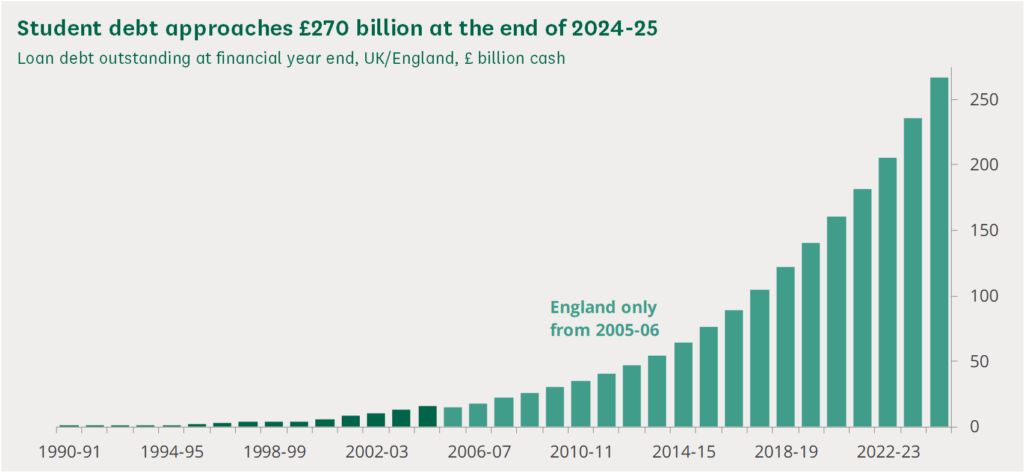
According to the House of Commons Library, there is £267bn of student loan debt in the UK, with a new £21bn given out each year between around 1.5 million students.
Estimates suggest total student loan debt will reach £500bn by 2050 based on current repayment rates.
The average debt per person for those who left university in 2024 was £53,000, with many doubtful they will ever be able fully repay them.
In the 2025 budget, the Government announced it would freeze the loan repayment threshold for those with plan 2 loans, which is most people who joined university between September 2012 and July 2023 for three years.
This means that these graduates will begin to pay their loan back on any income over £29,385, paying 9% of anything earned over this threshold.
At the same time, those with plan 2 loans will get 6.2% interest on their debt whilst studying.
The freeze means that the repayment threshold will not increase alongside inflation as it has previously, with National Union of Students (NUS) vice-president Alex Stanley saying it is now “dangerously close” to the minimum wage.
A study by the Higher Education Statistics Agency found that the average graduate salary in Yorkshire and the Humber was only £28,165, meaning that the majority of people would not even reach the threshold to start repaying their loans.
On their website, the NUS have called the freeze a “stealth tax” on graduates, and called for better terms which allow graduates to pay their debt off faster than it grows.
At the same time, very few students appear to fully understand the terms of their loans, and how much debt they will have after they graduate.
The Government inquiry will aim to look at whether the student loan repayment system is currently unfair and, if not, how it should be changed to make it more equitable.
Potential measures being considered include scrapping interest on student loans, and altering interest rates depending on income.
You can submit evidence to the inquiry here.