Off the court, British Basketball is in disarray. The British Basketball Federation (BBF) fell into liquidation earlier this year, meaning the sport in Britain is constantly teetering over the abyss. On the court, it stands to reason that the bane of the one-year contract should represent a defect. It’s a gimmick that allows players to swoop in, steal our hearts with a crafty jump shot or dramatic chase down block, before flying off to greener pastures out in Europe or Australia before the honeymoon phase is over.
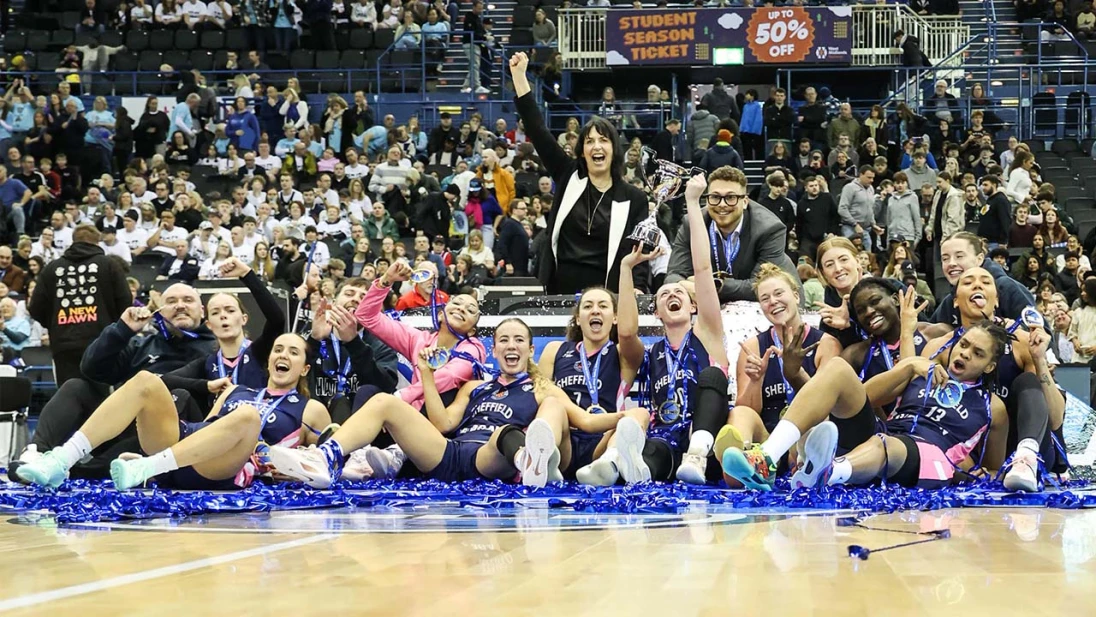
However, it’s not all doom and gloom, as fans of Sheffield basketball are enjoying immense success as the last year has seen plenty of wins and silverware. In the Super League Basketball Women’s division, the Sheffield Hatters are enjoying one of the greatest regular seasons of all time, as their recent win over Essex Rebels took them top of the table, while achieving a berth in the SLB cup final, and having won the Betty Cordona Trophy (named for the mother of their long-time head coach, Vanessa Ellis).
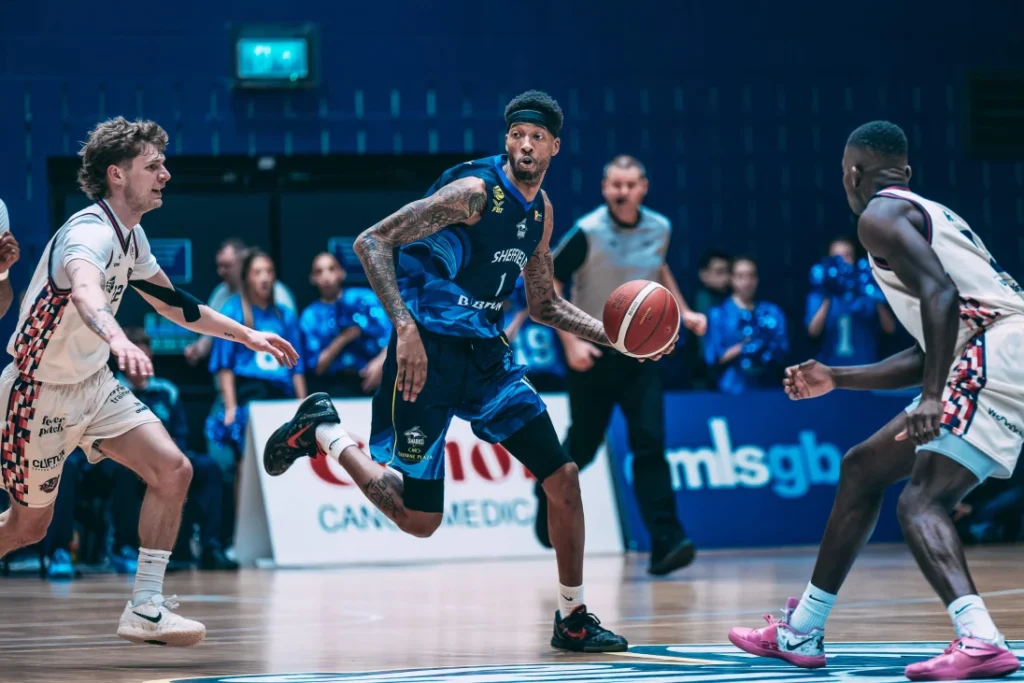
Meanwhile in the men’s division, a Sheffield Sharks team led by Prentiss Nixon and Dirk Williams is fighting for a high finish. While London sit comfortably at the top of the table despite playing six less games, the Sharks are just three wins off second-placed Cheshire Phoenix.
The teams have their differences, and share one major similarity: they are bound by the struggles of maintaining a consistent roster. Much of last years SLB cup winning team left the Sharks this summer, while the Hatters had four of their 12-player roster return this autumn. As these squads are in constant rebuild, steadying the ship every year seems a tiring endeavour.
However, according to Atiba Lyons, the Sharks’ head coach of 18 years, British teams have an advantage. The biggest crop of talent for British recruitment comes from the American college system, and changes to transfer rules and the introduction of NIL (name image and likeness) deals mean players enter professional basketball equipped to move clubs regularly. Additionally, Lyons said: “It’s easy to pitch Sheffield to players, it’s a vibrant city, and there’s no culture shock.

It only affects our playstyle slightly, we’re still a defence focused club, and these players only improve the state of play in the club and across the country- as long as they want to remain competitive- it’s not hard to retain them.” While institutional issues persist in the British Basketball Federation, the club remains competitive through players and investment, as the Sharks moved into the Canon Medical Arena back in 2023.
Sheffield Hatters star Megan ‘Mo’ Mullings, a ten-year professional, has been on one-year contracts since she left college in 2016, this her first year in Britain. The 33-year-old forward says “The chemistry depends on the dynamic, but it’s easy to have an impact when you’re getting paid, it’s about helping the team grown in confidence and leaving the sport better than you found it.”
Mullings says it’s been one of the easiest teams to fit into, even with new signings and shifting roles for their returners. “I was such a stress-head,” she says, reflecting on the first half of her career. “I got so wound-up about making an immediate impact, but experience has chilled me out, you gotta get straight in.”
Now, as returning players such as Shauna Harrison step into a starting role and signings like Antoinette Lewis have an immediate impact, the Hatters have won 10 of 12 games this season.
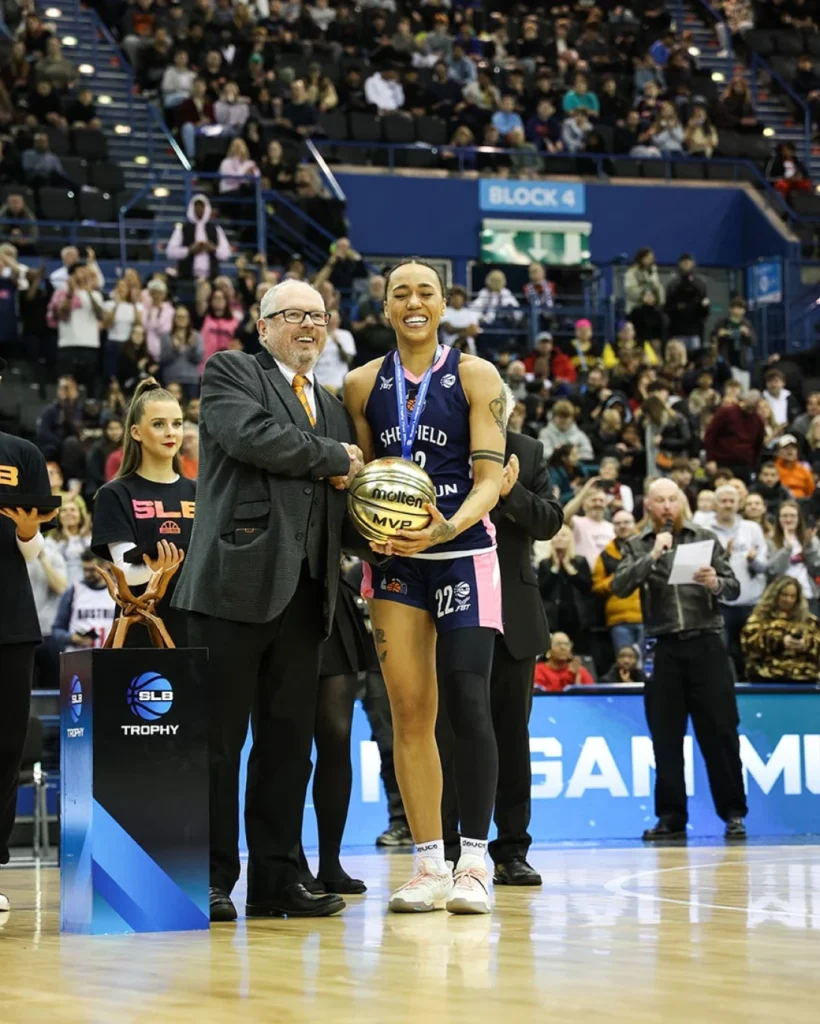
For the men’s teams, one-year contracts are just as common, in fact a motivator for players trying to enjoy their career while it lasts. Prentiss Nixon, one of the SLB’s premier point guards, has been at the Sharks for three years now and is taking it a year at a time. “It’s difficult to see players chop and change, especially with guys like Jake [Groves] and Don [Clay] last year, but it’s normalised,” Nixon says. “Guys want to make the most of a career that might last ten years, make money, play at the highest level, explore the world.”
He agrees the Yorkshire city is welcoming. “Sheffield is an easy place to stay in, I met my girlfriend here, the competition is improving each year, and there’s no language barrier.” While Nixon wants to take contract negotiations a year at a time, he’s motivated to stay, and finds the club to understanding of the wants and needs of talent.
Starting shooting guard for Sheffield Sharks, Dirk Williams, is a nine-year pro who has been moving clubs since he entered the professional game. This is his third spell in Sheffield, where his family have made their home. “Clubs have always been really great with the transition,” he says. “You get housing, meals, a translator if you need it. I’ve been across Britain, I’ve played in Hungary, Israel, each time you get used to it.”
Williams, does understand it can be difficult moving to a new team. “I’ve had teammates who struggled with the distance, especially being away from their families,” he says. “I’ve spent seven, eight months away from my wife and kids, that’s not easy, but it keeps me coming back to Sheffield.”
As the players face the tail end of the season, some will already be looking for their next team. Many will be following Prentiss Nixon in waiting until the summer to see what offers come their way. However, for these players and coaches, it is just another part of the job. In the meantime, they will be hoping to maximise their team’s success. The players know they have been brought in to be competitive and deliver the winning spirit, even if it is only for one season.